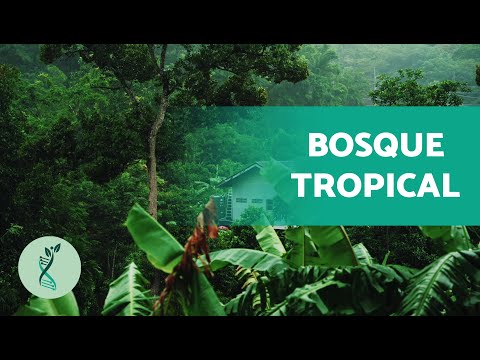
¿Qué es el BOSQUE TROPICAL? 🥭 (Flora y Fauna, Paisaje y Clima del Bosque Tropical)
What You Need to Know About Tropical Forests
Introduction to Tropical Forests
- Tropical forests are rich biomes located near the equator, characterized by high biodiversity and warm temperatures ranging from 20 to 25 degrees Celsius.
- They occupy about 6% of Earth's surface but host approximately 80% of documented species globally.
Types of Forests
- There are three main types of forests based on latitude: temperate, coniferous (taiga), and tropical. Temperate forests have fertile soil and a variety of species like oaks and bears.
- Coniferous forests feature colder climates with less fertile soil, home to pines and animals such as moose and wolves.
Characteristics of Tropical Forests
- Biodiversity: Home to an extensive number of species; one square kilometer can contain up to 100 tree species.
- Location: Found between the Tropics of Capricorn and Cancer, primarily in regions like South America, Africa, and Southeast Asia.
- Climate: Warm temperatures year-round due to consistent sunlight penetration through dense foliage.
- Rainfall: High precipitation levels support lush vegetation; rainfall can exceed 2500 mm annually in some areas like the Amazon rainforest.
Types of Tropical Forest Ecosystems
- Tropical Rainforest: Receives over 2500 mm of rain annually with no dry season; exemplified by the Amazon rainforest.
- Tropical Deciduous Forest: Experiences seasonal changes with annual rainfall between 1000 - 2000 mm; trees shed leaves during dry periods for survival.
- Tropical Dry/Semi-Dry Forest: Characterized by lower rainfall (500 - 1000 mm) with distinct dry seasons; found predominantly in Africa where drought is less threatening to wildlife survival.
Flora and Fauna
- The flora includes large trees like ceiba, mahogany, rubber trees, ferns, palms, bromeliads, orchids, cacao plants, bananas, almonds, and chicozapote trees which hold commercial value.
- The fauna consists of diverse animal species including tapirs, spider monkeys, howler monkeys, white-tailed deer, various amphibians (frogs/salamanders), insects (beetles/ants), birds (macaws/vultures), reptiles (iguanas/boas), and big cats like jaguars that thrive in these ecosystems.
Importance & Threatened Status
Ecological Value
- Tropical forests play a crucial role in maintaining global biodiversity by providing clean air/water purification while regulating regional climates through biomass retention and moisture regulation that prevents soil erosion and landslides.
They also contribute significantly to oxygen production and aquifer conservation while mitigating climate change impacts caused by human activities such as deforestation or unsustainable land use practices.
Threatening Factors
- Major threats include unsustainable land use without conservation planning leading to habitat destruction from infrastructure development or extensive livestock farming alongside illegal logging practices that diminish forest cover gradually.
Natural Wealth of Tropical Biomes
Deforestation in the Amazon
- The transcript discusses the significant loss of tropical forests globally, highlighting that in 2018, the Amazon rainforest lost approximately 1.7 million hectares of its territory.
- This loss raises concerns about biodiversity and ecological balance within these vital ecosystems.
- The discussion emphasizes the urgency to address deforestation and its implications for natural wealth and environmental health.
- A quiz question is posed regarding a specific topic related to the forest, with an answer confirming "B" as correct.
- The segment concludes with a brief mention of interesting facts about tropical forests, indicating a focus on education and awareness.