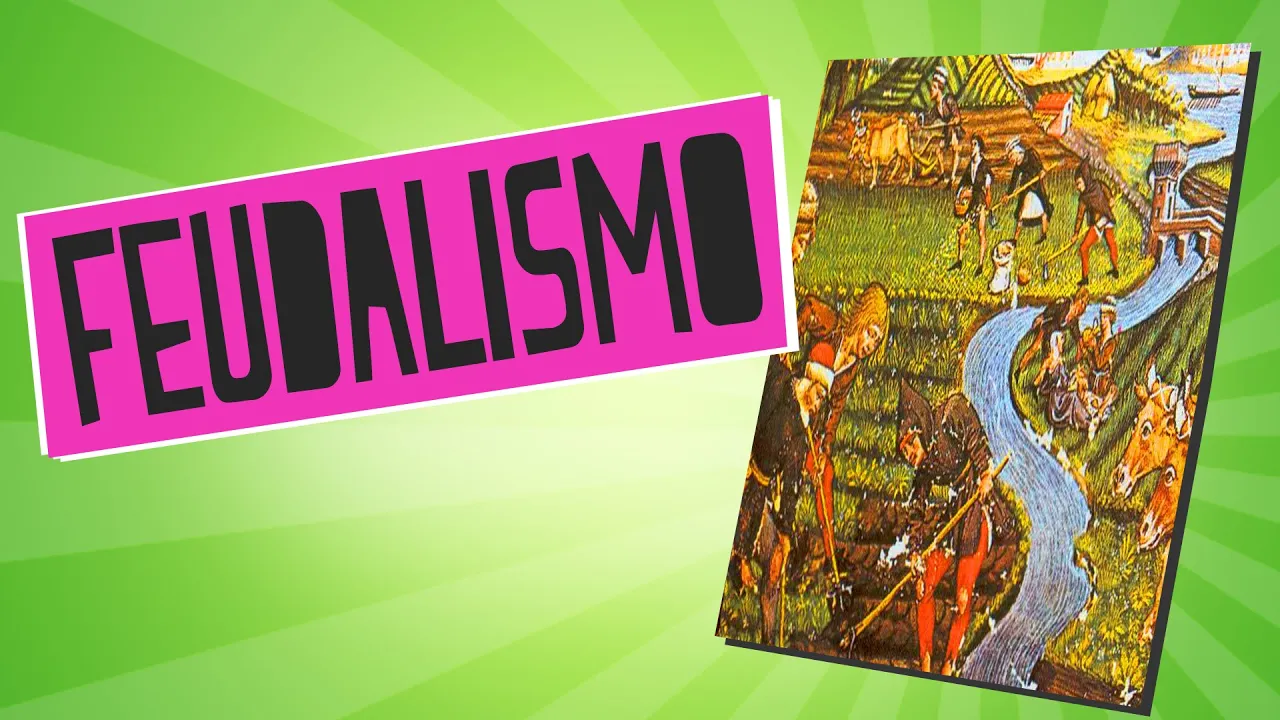
Feudalismo - Historia - Educatina
What is Feudalism?
Definition and Historical Context
- The video introduces feudalism as a familiar term in world history, particularly during the Middle Ages and early Modern Age.
- Feudalism is defined as a political, economic, and social organization that began to develop from the 9th century until the 15th century, significantly altering European history.
Origins of Feudalism
- The discussion invites viewers to explore the early Middle Ages, highlighting Constantinople as a key economic center before the 8th century.
- By the 8th century, Baghdad became prominent, marking a shift in Western relations with Northern Germanic tribes.
- The Carolingian Empire's decline is identified as a critical factor leading to feudalism's emergence due to weakened European kingdoms.
Causes for Emergence of Feudalism
- Invasions by Vikings and Slavs created widespread insecurity across Europe during the 9th and 10th centuries.
- Economic conditions worsened due to scarce money and declining agriculture; livestock farming became essential but was not accessible to all.
- This insecurity combined with diminishing power among rulers led to class divisions forming the basis of feudal society.
Social Structure of Feudal Society
- A pyramid structure illustrates feudal society: at its peak were lords or feudal lords, followed by high nobility (dukes, counts), high clergy (archbishops), low nobility (knights), low clergy (monks), peasants, and serfs at the bottom.
- Peasants and serfs were considered non-privileged classes within this hierarchical system.
Characteristics of Feudal Relationships
- The lord owned land known as a fief where he exercised control from his castle; he was at the top of this social hierarchy.
- Relationships between different classes were characterized by mutual obligations; lords provided protection while vassals offered loyalty in return for land.
Understanding the Social Hierarchy in Feudal Society
The Structure of Feudal Society
- The social structure is depicted as a hierarchical pyramid, illustrating the division among different classes: feudal lords, high nobility, low nobility, peasants, and serfs.
- The feudal lord played a crucial role in directing warfare and overseeing religious indoctrination within the community.
- High nobility held significant power and influence over land and resources, while low nobility had lesser status but still participated in the feudal system.
- Peasants and serfs formed the base of this hierarchy, often working the land under various obligations to their lords.