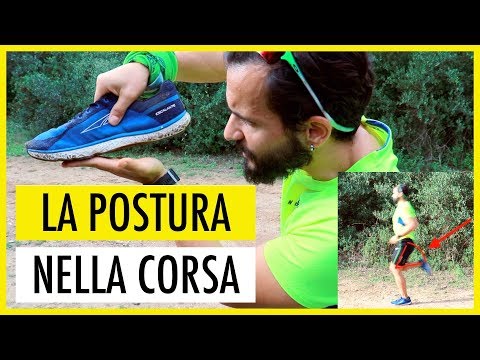
Come CORRERE CORRETTAMENTE ✅ La postura nella corsa - Tecnica di corsa - 3° Video 💪🏼
Introduction to Running Technique
In this video, the speaker introduces four fundamental points for proper running technique: posture, cadence, relaxation, and breathing. They emphasize the importance of gradually transitioning to a new running technique and seeking professional guidance if needed.
Posture and Foot Placement
- The speaker highlights the difference between walking and running as two distinct motor patterns.
- Concentrate on aligning the shoulders, hips, and ankles during running.
- Gradually transition to a new running technique to avoid injury.
- Apply the recommended techniques over time for improved efficiency and speed.
Foot Placement and Stride
- Focus on where your foot lands while running. Avoid landing too far forward or on your toes.
- The foot should land slightly behind your center of gravity with an aligned ankle, hip, and shoulder.
- 2m 9s Lean slightly forward from the hips to utilize gravity for propulsion.
- Initiate the forward lean from the hips rather than the shoulders.
Proper Foot Strike
- Land with a midfoot or forefoot strike rather than striking with your heel.
- Allow your foot to land underneath you instead of reaching out in front of your body.
- Avoid running solely on your toes or never allowing the heel to touch the ground.
- Proper foot strike helps absorb impact and prevents injuries.
Conclusion
The speaker emphasizes that these techniques should be practiced gradually over time for optimal results. By focusing on posture, foot placement, and proper foot strike, runners can improve their efficiency and reduce the risk of injury.
Walking vs Running Movement
The speaker discusses the differences in movement between walking and running, emphasizing the circular motion of the foot during running compared to the pendulum-like motion during walking.
Differences in Movement
- During walking, our legs move in a pendulum-like motion, while during running, there is a circular motion of the foot.
- Running requires a push-off from behind, with the foot rising up, passing underneath, and then moving forward to touch the ground again.
- Pay attention to the push-off from behind; avoid dragging your feet too much underneath you.
- Example: Eliot's marathon record video demonstrates a high push-off and excellent running form.
Benefits of Proper Running Form
The speaker explains that using proper running form leads to increased efficiency and speed. He emphasizes the importance of engaging glute muscles for better propulsion.
Benefits of Proper Form
- Using proper running form leads to more efficient muscle usage and increased efficiency.
- Engaging glute muscles provides more propulsion and speed.
- Focus on developing a high push-off from behind for optimal performance.
Importance of Foot Push-off
The speaker highlights the significance of foot push-off during running. He advises paying attention to foot placement and ensuring a strong push-off for effective running technique.
Foot Push-off Importance
- The strength and effectiveness of foot push-off are crucial for proper running technique.
- Pay attention to where your feet land and ensure a strong push-off from behind.
- Adjust your stride length based on speed; faster speeds require a higher push-off.
Transition Period for Technique Change
The speaker emphasizes the importance of transitioning gradually when changing running techniques or habits. He advises against sudden changes to avoid injuries.
Transitioning Technique
- Changing running technique should be done gradually to avoid injuries.
- Similar to transitioning to new shoes or a zero-drop shoe, take your time and make gradual adjustments.
- Start working on improving your running technique gradually for better results.
Running Frequency and Stride Length
The speaker discusses the relationship between running frequency (steps per minute) and stride length. He explains that increasing steps per minute while shortening stride length can lead to improved running mechanics.
Running Frequency and Stride Length
- Increasing running frequency (steps per minute) while shortening stride length can improve running mechanics.
- Shorter strides allow for better foot placement and push-off, leading to more efficient movement.
- Adjust your steps per minute based on your desired speed and goals.
Summary of Key Points
The speaker summarizes the key points discussed in the video, including foot placement, foot push-off, proper form, and transitioning techniques gradually. He also mentions additional resources for further learning.
Key Points Recap
- Proper foot placement is essential, with the foot landing under the hip during each step.
- Focus on a strong push-off from behind for effective running technique.
- Engaging glute muscles provides more propulsion and speed.
- Transitioning techniques should be done gradually to avoid injuries.
- Adjust stride length based on speed; shorter strides are more efficient.
For further learning:
- Check out the speaker's course on natural running instruction (link provided).
- Explore the speaker's online running course (link provided).
The language used in this summary follows the language of the transcript.