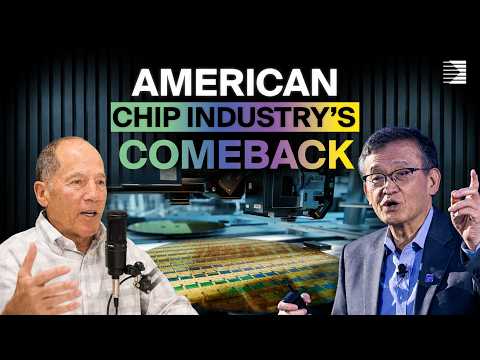
Intel CEO Lip-Bu Tan on the Comeback of American Chip Industry
Intel's Vision for the Future
Embracing New Technologies
- The speaker reflects on Intel's past failures to capitalize on major technological waves like mobile, cloud, and AI, emphasizing a commitment to not miss future opportunities.
- A long-term perspective is highlighted, with a focus on strategic planning over the next 10 to 15 years rather than short-term gains.
Personal Motivation
- The speaker expresses a desire to make an impact in technology despite being at an age where retirement is an option.
- Introduction of the Tech Surge Deep Tech podcast by Michael Marks, focusing on emerging technologies and venture investment.
Semiconductor Industry Insights
Market Growth
- Discussion of the semiconductor market reaching over $790 billion in sales last year, marking a significant growth of more than 25%.
- The industry aims for $1 trillion in annual sales by 2030 and is projected to achieve this goal four years early.
Historical Context
- Lip-Bu Tan has been investing in silicon since 1987 and has played a role in funding companies that disrupted computing.
- Intel is noted as the only U.S. company capable of producing leading-edge semiconductors at scale.
Investment Philosophy and Background
Long-standing Relationships
- The speaker shares his long friendship with Lip-Bu Tan, highlighting their collaboration in founding Celesta Capital.
Career Journey
- Lip-Bu recounts his journey from Malaysia to Silicon Valley, initially pursuing nuclear engineering before shifting focus due to industry changes.
Interest in Hardware Investments
Diverse Investment Portfolio
- Lip-Bu discusses his broad investment interests beyond hardware, including early investments in Google and LookSmart that yielded high returns.
Focus on Problem-Solving
- He emphasizes the importance of solving real industry problems through investments while building strong teams around these solutions.
Resurgence of Hardware Importance
Shift Back to Hardware
- There’s recognition that after two decades dominated by software development, hardware is regaining significance within tech discussions.
Nvidia's Influence
- Nvidia's rise as a trillion-dollar company has shifted perceptions about hardware’s value within the tech ecosystem.
Contrarian Investment Approach
Early Skepticism
- Lip-Bu recalls initial skepticism from venture firms regarding semiconductor investments but chose to pursue them as contrarian opportunities.
Current Success
- He notes how semiconductor companies are now among the most valuable globally, reflecting a successful turnaround from previous doubts.
Importance of Smaller Companies
Recognizing Hidden Gems
- Discussion highlights numerous smaller companies making significant contributions within the semiconductor space alongside larger players like Nvidia.
Early Investments
- Lip-Bu emphasizes his strategy of identifying promising startups early on and supporting their growth through investment.
Learning Through Board Membership
Gaining Insights
- Joining boards like Flextronics provided valuable insights into supply chain management and operational scaling for Lip-Bu.
Continuous Learning
- He stresses learning from every opportunity presented through board memberships while contributing back based on accumulated knowledge.
Investing in Innovative Startups
SambaNova Case Study
- Discussion about SambaNova illustrates how recognizing potential disruptive technologies can lead to successful investments.
Power Efficiency Focus
- Emphasis placed on addressing power consumption issues associated with GPUs led him to invest heavily in innovative architectures like SambaNova’s data flow design.
Global Technology Landscape
International Investment Strategy
- Lip-Bu discusses investing across various countries including Israel and India while seeking out top talent globally.
Adapting Business Plans
- He acknowledges that many startups pivot their business plans based on market changes; adaptability is crucial for success.
Leadership Lessons from Cadence
Transformational Experience
- Reflecting on his time at Cadence where he turned around its fortunes after stepping into an interim CEO role unexpectedly.
Customer-Centric Culture
- Establishing a culture focused on customer feedback was pivotal; he actively engaged with customers which improved relationships significantly.
Strategic Direction at Intel
Vertical Integration Strategy
- Discusses Intel's shift towards vertical integration—designing and manufacturing devices—to create more value for customers.
Future Outlook
- Emphasizes importance of advanced packaging technologies alongside CPU architecture improvements as key areas for future growth at Intel.
The Role of Technology in Investment
Insights on Technology and Startups
- The speaker emphasizes the importance of technology in investment, highlighting the excitement of learning from innovative startups at prestigious universities like Stanford, MIT, and Berkeley.
- Engaging with professors helps the speaker understand emerging frontiers in technology that could shape future investments.
Connecting with the VC and Startup Community
Strategic Partnerships
- The speaker discusses supporting small companies to benefit larger corporations like Cadence and Intel, ensuring they stay connected with venture capitalists (VCs) and startups.
- Reflecting on past mistakes, such as missing significant trends like mobile technology and AI, the speaker expresses a commitment to not overlook future opportunities.
Enhancing Core Business through New Technologies
Integration of Innovations
- The conversation shifts to how new technologies can enhance core business operations rather than being viewed as separate entities.
- The goal is to create a more extensive platform by integrating various technological advancements into existing business models.
Adapting to Rapid Changes in Technology
Future-Proofing Strategies
- Acknowledging the fast-paced changes in technology, the speaker stresses the need for continuous development and adaptation within their company.
- There’s an emphasis on either developing new technologies internally or acquiring promising startups to expand capabilities.
Revisiting Memory Business Opportunities
Potential Market Re-entry
- The discussion touches upon Intel's historical focus on memory versus microprocessors, raising questions about re-entering the memory market.
- Current high demand for CPUs leads to considerations about innovations in CPU architecture that could also impact memory solutions.
Innovations in Memory Architecture
Exploring New Frontiers
- The speaker notes a lack of innovation in traditional memory markets but sees potential for new architectures that could change this landscape.
- Hiring experts from leading companies indicates serious intentions toward exploring these innovations further.
Long-Term Vision for Industry Impact
Commitment to Sustainable Growth
- Emphasizing a long-term perspective, the speaker shares their approach of staying involved with startup companies for extended periods (10–15 years).
- This long-term vision aims at building platforms that will significantly benefit both industry players and consumers alike.
Relationships Among Competitors
Navigating Friendships and Competition
- Reflecting on longstanding friendships within the tech industry despite competitive dynamics highlights a collaborative spirit among peers.
- The speaker values relationships over competition, believing there is enough market space for all players involved.
Learning from Peers
Mentorship Dynamics
- Acknowledging connections with influential figures serves as both inspiration and mentorship throughout their career journey.
Conclusion: Legacy of Silicon Investment
Shifting Perspectives
- Highlighting his consistent belief in silicon's foundational role amidst changing industry valuations reflects resilience against skepticism over decades.
Turn any video into a summary like this
YouTube links, meetings, lectures. With transcripts, search, and chat.