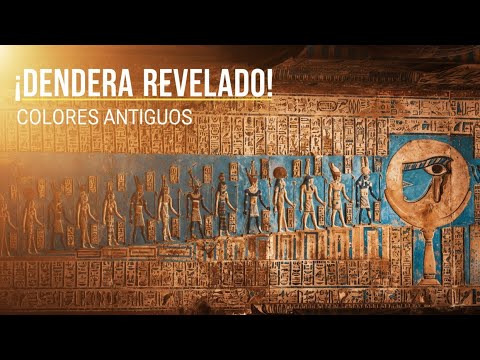
Documental Completo: Dendera, El Santuario de Hathor y el Cosmos Faraónico
Introduction to Dendera Temple Complex
Overview of Dendera
- The Dendera temple complex is located 60 km north of Luxor, where the desert sands meet the Nile's waters, embodying ancient rituals and architectural grandeur.
- It serves as a portal to the world of gods and pharaohs, primarily dedicated to Hathor, the goddess of love, beauty, music, and motherhood.
- The temple's remarkable preservation offers insights into ancient Egyptian religious practices and artistic achievements.
Historical Significance
- Known in antiquity as Iunet or Tantere, it was a capital of Upper Egypt's sixth province and a vibrant center for religious activities over millennia.
- The desert sands have protected Dendera from time’s ravages, allowing visitors today to connect with an almost intact past.
Architectural Marvel
Design Features
- The temple showcases faded colors on walls that hint at its original vibrancy and artistic expression during the Ptolemaic and Roman periods.
- Each ruler contributed to its construction over centuries, making Dendera a living chronicle of Egypt's spiritual evolution.
Cultural Fusion
- The site reflects a blend of ancient Egyptian traditions with Greco-Roman influences in art and religion.
- Construction represents not just physical building but also faith-driven ambition across generations.
Ptolemaic Influence
Transition to Roman Era
- Ptolemaic rulers adopted Egyptian traditions for legitimacy; they initiated significant constructions like the grand temple dedicated to Hathor.
- This cultural continuity persisted even under Roman rule when emperors added their images alongside traditional deities.
Resilience of Culture
- Despite foreign dominance, Dendera maintained its core beliefs while adapting new influences throughout history.
Temple Interior Insights
Sacred Spaces
- The temple known as "the castle of Sistrum" symbolizes Hathor’s earthly presence connecting mortals with divinity.
- Its architecture embodies cosmic principles reflecting ancient Egyptians' understanding of their universe.
Ritual Significance
- Elements like columns adorned with lotus motifs symbolize life forces; ceilings painted with stars represent celestial navigation.
Spiritual Journey Within the Temple
Pathway Through Divinity
- Visitors transition from brightly lit areas into darker sanctuaries symbolizing spiritual enlightenment leading up to the innermost sanctuary reserved for high priests only.
Divine Connection
- Each space within reinforces Hathor’s divine influence on daily life through meticulously designed rituals honoring her presence.
Zodiac of Dendera
Astronomical Masterpiece
- A zodiac map housed in a small chapel illustrates ancient Egyptians’ sophisticated astronomical knowledge blending Greek-Roman signs with traditional constellations.
Cultural Impact
- Its design symbolizes eternal cycles linking celestial movements with themes of death and rebirth central to Egyptian belief systems.
Broader Complex Features
Additional Structures
- Beyond the main temple lies various sacred spaces including lakes for purification rituals and temples dedicated to other deities like Isis.
Community Role
- Dendera served not only as a place for worship but also as a hub for healing practices reflecting communal life intertwined with spirituality.
Mysteries Beneath
Light Relief Controversy
- Intriguing relief carvings resembling bulbs have sparked debates about potential ancient electrical devices versus symbolic interpretations by Egyptologists.
Symbolism Over Technology
- These representations are more mythological than technological; they illustrate deeper meanings rather than practical applications in lighting techniques used by Egyptians.
Legacy Preservation
Historical Narratives
- Walls contain rich narratives including depictions involving Cleopatra VII emphasizing political legitimacy through divine connections.
Ongoing Discoveries
- Continuous archaeological efforts reveal layers adding depth to our understanding while preserving this vital link between humanity and divinity across ages.
The Sacred Importance of Medinet Habu
Historical Significance
- Medinet Habu has maintained its sanctity and importance through changing dynasties, continuously attracting powerful figures and devotees to its sacred land.
- The history of Medinet Habu extends beyond the fall of pharaohs; during the Coptic period (2nd to 7th century AD), it became a refuge as Christianity spread in the Nile Valley.
Transformation into a Christian Community
- Once known as Yeme, the site evolved into a prosperous Coptic city, with residents building homes within temple courtyards, integrating their lives with ancient structures.
- The second courtyard transformed into a grand Christian basilica, showcasing how the original purpose of the temple radically changed over time.
Architectural Changes
- Columns were reorganized and an altar erected; vibrant Pharaoh festival reliefs were covered with plaster and painted over with images of Christian saints.
- Medinet Habu serves as a living chronicle of human history where echoes of empires and beliefs converge, beginning from Ramses III's ambition to centuries of change.
Layers of History at Medinet Habu
Continuous Reuse
- Walking through Medinet Habu reveals layers from ancient pharaohs to Coptic Christians, indicating that it was never abandoned but always repurposed.
- Ancient Egyptians viewed death not as an end but as a transition—a journey toward eternal life prepared for throughout their lives.
Beliefs About Afterlife
- Their obsession was not with death itself but rather with life; preparations for afterlife reflected love for life and desire for eternal joy.
Evolution of Egyptian Beliefs Over Time
Religious Integration in Daily Life
- In ancient Egypt, religion intertwined deeply with daily life; belief in an afterlife was universal among Egyptians, providing shared purpose and understanding.
Role of Deities in Afterlife Journey
- Osiris and Anubis played crucial roles in guiding souls through death—proper burial rites were essential to avoid losing one's soul forever.
Funerary Practices: A Pathway to Eternity
Investment in Burial Rituals
- Egyptians invested significant resources into funerary practices—elaborate tomb construction aimed at ensuring safe passage into the afterlife.
Development of Writing
- The advent of writing revolutionized funerary beliefs by allowing ideas to be recorded and standardized across society.
Textual Guidance for Souls
Importance of Funerary Text
- Funerary texts served as guides for navigating dangers in the underworld (Duat), containing spells necessary for overcoming obstacles faced by souls.
Judgment Process
- The climax involved weighing the heart against Maat's feather; if heavy with sins, it would be devoured by Amit—the ultimate fear being total annihilation.
Conceptualizing Eternal Life
Rewarding Just Lives
- If deemed just, souls would reunite with their preserved bodies (mummies), entering Seket Ahau—a paradise reflecting idealized Egypt filled with abundance.
Motivations Behind Egyptian Practices
Pursuit of Immortality
- Elaborate funerary practices aimed at transforming death’s finality into hopeful new beginnings—testifying to their belief in cosmic order.
Evolution from Simple Burials to Grand Monuments
Architectural Progression
- Early rulers transitioned from simple underground chambers to majestic pyramids serving dual purposes: tomb protection and resurrection engines.
Textual Evolution Over Time
Accessibility Beyond Royalty
- As time progressed, sacred texts expanded access beyond royalty—texts like "Book of the Dead" provided instructions on avoiding dangers post-death.
Cultural Significance Of Funerary Text
Lifelines For Souls
- Funerary texts became lifelines for souls navigating beyond death—each scroll uniquely tailored containing prayers and magical instructions.
Mapping Spiritual Journeys
Cosmic Navigation
- Books like Amduat illustrated Ra's nightly journey through darkness while representing rebirth allegorically tied to kings' resurrection over chaos.
Reflections on Changing Beliefs
Evolving Perspectives
- These texts reflect evolving beliefs about immortality earned through knowledge & righteousness—not guaranteed but achieved via rituals.
Momification: Science Meets Sacred Ritual
Preservation Techniques
- Embalmers began purification rituals shortly after death involving organ removal placed in protective canopic jars symbolizing safeguarding essence vitalities.
Ritualistic Preparations
Ensuring Safe Passage
- Each preparation echoed deep faith that proper rites ensured awakening & thriving soul amidst eternity’s lush fields awaiting them post-mortem.
Initiating Soul's Journey
Transitioning Beyond Death
- Upon closing tomb doors & offerings silenced—the true journey commenced guided by sacred spells leading across celestial rivers towards Duat’s labyrinthine challenges ahead.
Navigating Through Duat
Trials Awaiting Souls
- Within Duat awaited trials requiring secret knowledge or protective spells inscribed within funerary texts guiding souls past daunting guardians guarding thresholds between realms ahead.
Judgment Day: Weighing Hearts
Divine Evaluation
- In judgment hall presided by Osiris—the heart weighed against Maat’s feather determining fate based on purity versus sinfulness defining eternal destiny thereafter unfolding ahead!
Consequences Beyond Judgment
Paths Diverging Post-Judgment
- Depending upon balance outcome—souls either welcomed into Seketaru or devoured by Amit facing oblivion marking end journey altogether!
Lake Of Fire: Final Test
Purification Or Destruction
- For those failing judgment lake represented annihilation threat yet also potential renewal offering chance rebirth amid flames cleansing imperfections endured throughout mortal existence lived prior!
The Encounter of Two Civilizations: Greeks in Egypt
Initial Greek Presence in Egypt
- The Greeks were drawn to Egypt, leading to a significant cultural exchange as merchants, soldiers, and scholars arrived along the Nile.
- Their interactions with Egyptian pharaohs and priests resulted in lasting historical records inscribed on stone and papyrus.
- Over centuries, Greeks became integral to Egyptian society, influencing and being influenced by local customs.
Establishment of Greek Communities
- By the 7th century BCE, formal Greek presence began with mercenaries securing power for local rulers and establishing trade posts.
- Early Greek settlers maintained their identity while forming tight-knit communities that supported each other culturally and religiously.
- Cultural blending occurred as Greek mercenaries contributed to political stability within Egypt.
Alexander the Great's Influence
- In 332 BCE, Alexander the Great entered Egypt with minimal resistance from Persian forces, welcomed as a liberator by Egyptians.
- He respected Egyptian traditions by visiting temples and was declared son of Amón at Siwa Oasis, solidifying his legitimacy among locals.
- His founding of Alexandria marked a pivotal moment where Hellenistic culture merged with Egyptian traditions.
Alexandria: A Cultural Beacon
- Alexandria quickly became an intellectual hub with its famous library preserving ancient texts and attracting scholars globally.
- Despite challenges during Cleopatra's reign, including her struggle against Roman dominance, Alexandria continued to thrive under Roman rule.
Transition into Roman Rule
- Following Cleopatra's defeat at Actium in 31 BCE, Egypt transitioned into a Roman province but retained its cultural significance through Alexandria.
- The division of the Roman Empire in 395 CE saw Egypt become part of the Eastern Roman Empire (Byzantine), maintaining its importance for grain supply.
The Byzantine Era: Christianization and Cultural Shifts
Rise of Christianity in Egypt
- During the Byzantine period, Christianity spread throughout Egypt; Alexandria emerged as a key center for theological development.
- Influential figures like Athanasius and Cyril shaped Christian doctrine significantly beyond Egyptian borders.
Transformation of Religious Landscape
- Pagan temples were gradually closed or repurposed as large churches were built across the Nile Valley during this transformative era.
Islamic Conquest: A New Political Order
Arrival of Islam in Egypt
- In the 7th century CE, Arab armies led by Amr ibn al-As swiftly conquered Byzantine-controlled Egypt amid local discontent over high taxes.
Fatimid Dynasty Impact
- The establishment of the Fatimid Caliphate in 969 CE fostered cultural prosperity while allowing Greeks to maintain their commercial ties.
Mamluk Sultanate: Challenges for Non-Muslim Communities
Mamluk Rule Dynamics
- Under Mamluk control starting from 1250 CE , non-Muslim communities faced fluctuating conditions ranging from protection to persecution based on political climates.
Ottoman Ascendancy: Resurgence of Greek Influence
Integration into Ottoman Empire
- In 1517 , Ottoman conquest ended Mamluk rule , incorporating Greece into an expansive empire that lasted four centuries.
Prominence within Ottoman Administration
- Many individuals of Greek descent rose to influential positions within Ottoman governance due to existing administrative frameworks established prior.
Lasting Legacy: Synthesis Across Cultures
Enduring Connection Between Greece & Egypt
- Throughout history , Greeks have left an indelible mark on Egyptian culture , shaping identities through commerce , religion , art , language .
Turn any video into a summary like this
YouTube links, meetings, lectures. With transcripts, search, and chat.