Cellular Respiration Part 2: The Citric Acid Cycle
Citric Acid Cycle Overview
In this section, Professor Dave discusses the citric acid cycle, highlighting its significance in generating energy for higher organisms through aerobic respiration.
The Evolution of Energy Production
- Glycolysis is an anaerobic process that provided limited ATP for early organisms.
- Oxygen produced by plants enabled the evolution of aerobic respiration in higher organisms.
Mitochondria and Endosymbiotic Theory
- Mitochondria, eukaryotic organelles, play a crucial role in the citric acid cycle.
- Endosymbiotic theory suggests mitochondria were once independent organisms incorporated into eukaryotes for respiratory functions.
Steps of the Citric Acid Cycle
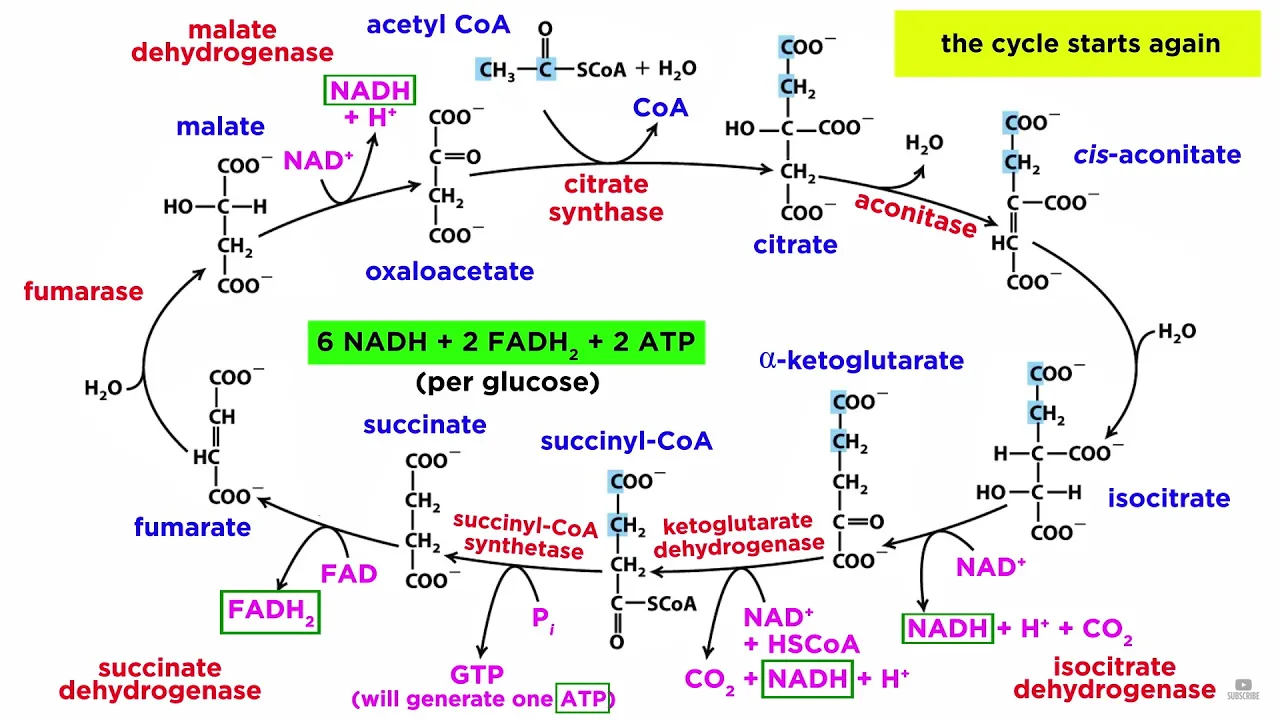
This section delves into the detailed steps of the citric acid cycle, elucidating how acetyl CoA is processed to produce energy-rich molecules.
Acetyl CoA Entry and Citrate Formation
- Pyruvate from glycolysis enters mitochondria to form acetyl CoA with Coenzyme A.
- Citrate synthase catalyzes the formation of citrate by combining oxaloacetate and acetyl group.
Isocitrate to Succinate Conversion
- Isocitrate dehydrogenase converts isocitrate to alpha-ketoglutarate via oxidation and decarboxylation.
- Succinyl-CoA synthesis involves multiple steps leading to GTP production and succinate formation.
Fumarate Formation and Oxaloacetate Regeneration
- Fumarase catalyzes hydration of fumarate to malate.