Смена экосистем. Экологическая сукцессия. 7 класс.
Introduction to Ecosystem Change and Ecological Succession
Overview of Ecosystems
- The speaker, Antonina Anatolievna Zabolotnaya, introduces herself as a biology teacher discussing ecosystem changes and ecological succession.
- Ecosystems vary in size, from vast ocean ecosystems to small pond ecosystems; boundaries between them are often indistinct.
- The Earth is described as a massive ecosystem known as the biosphere, which includes the lower atmosphere, upper lithosphere, and hydrosphere inhabited by living organisms.
Understanding the Biosphere
- The biosphere operates under its own laws and encompasses various ecosystems categorized by geographical features such as mountains and plains.
- Different types of ecosystems include grasslands, forests, deserts, oceans (with coastal zones and deep-sea areas).
What is Ecological Succession?
Definition of Succession
- Ecological succession refers to the gradual process of change in ecosystems over time. It can be primary or secondary.
Primary Succession
- Primary succession occurs in lifeless areas where soil is absent (e.g., bare rock), starting with pioneer species like lichens that do not require soil for survival.
Role of Pioneer Species
- Lichens are identified as pioneers; they consist of fungi and algae that create organic matter while breaking down rocks into soil.
Secondary Succession
- Secondary succession happens after disturbances (e.g., fires or floods), leading to new ecosystem development on previously occupied land.
Example of Secondary Succession
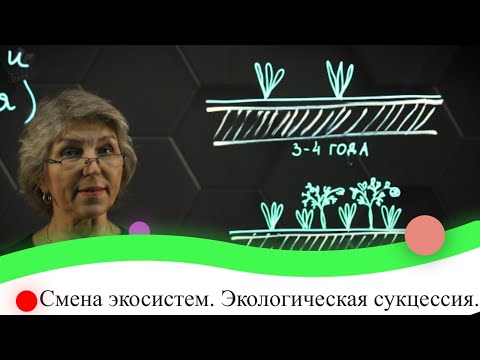
- After a fire destroys vegetation, seeds remaining in the soil or brought by wind/birds lead to regrowth. Initially, annual plants dominate before perennials establish themselves.
The Process of Ecosystem Recovery
Stages of Recovery
- Over 5 to 25 years post-disturbance, annual grasses give way to perennial plants and shrubs. Eventually, light-loving trees like birches or pines emerge.
Long-term Development
- Full recovery can take up to 100 years for deciduous forests or even longer for coniferous forests (200–250 years), illustrating that succession is a lengthy process.
Conclusion on Ecological Processes
- The discussion emphasizes that ecological succession is a sequential process essential for understanding how ecosystems evolve over time.