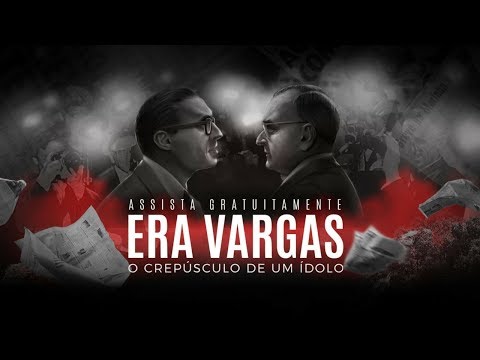
Era Vargas: O Crepúsculo de um Ídolo
The Vision of a Parallel Brazil
Commitment to Education Reform
- The speaker reflects on the uncertainty and risks involved in pursuing the mission of transforming Brazil's education system, emphasizing the personal sacrifices made for this dream.
- Acknowledges that mere complaints won't solve issues; action is necessary, as demonstrated by their project "Brasil Paralelo," which gained audience trust and support.
Achievements and Future Aspirations
- Highlights the success of their series "Brazil: The Last Crusade," noting that over 5 million Brazilians now have a better understanding of their history and cultural pride.
- Expresses a plethora of ideas for future projects but stresses the importance of viewer confidence and contributions to continue making impactful content.
Engaging the Audience for Change
Call to Action
- Encourages viewers who resonate with their content to help spread awareness among other Brazilians, reinforcing community involvement in cultural education.
- Offers an exclusive discount to incentivize membership, aiming to increase support for future documentaries while inviting viewers to be active participants in change.
Historical Context: From Conquest to Independence
Early Conflicts and Cultural Formation
- Discusses historical invasions by Muslims leading to Christian resistance, highlighting early alliances among diverse groups within Brazil that contributed to its unique identity.
- Emphasizes miscegenation as a significant aspect of Brazilian culture, showcasing how various ethnicities blended together throughout history.
Key Figures in Brazilian History
- Introduces Dom Pedro I's journey towards independence influenced by Enlightenment ideals from European thinkers like Rousseau and Voltaire.
- Describes pivotal moments leading up to Brazil's independence declaration, including Dom Pedro’s symbolic rejection of Portuguese ties with his famous proclamation: "Independence or Death."
Social Progress and Political Turmoil
Abolition Movement
- Princess Isabel’s commitment to abolishing slavery is highlighted as she prioritizes freedom over her royal status, illustrating moral courage amidst political risk.
Transition from Monarchy to Republic
- Explains how the Republic emerged from personal rivalries rather than popular support, marking a significant shift in governance after expelling the royal family.
Reflecting on National Identity
Unveiling Historical Truth
Understanding Brazil's National Identity and Political Evolution
The Legacy of Brazilian History
- Brazil's national identity is shaped by a complex mosaic of cultures, influenced by four centuries of historical legacy that has impacted its political development.
- The transition from monarchy to republic in 1889 marked a significant rupture with the past, leading to the replacement of national symbols and an identity crisis regarding Brazil's heritage.
- This shift initiated a regression in governance, characterized by inconsistent promises from various governments and a lack of solid institutional foundations.
Confusion Between Regimes
- Many countries today identify as republics; however, their actual political regimes can vary significantly, as seen in North Korea’s dictatorship despite its name.
- China presents another example where it identifies as a People's Republic but operates under a single-party oligarchy rather than true democratic principles.
Democracy Beyond Nomenclature
- True democracy is not limited to republican forms; constitutional monarchies like Australia and Canada also exemplify successful democratic governance.
- Understanding a nation's government requires delving into its history, culture, beliefs, and values rather than relying solely on labels.
The Slow Construction of Democracy
- Achieving democracy is portrayed as a gradual process filled with challenges and setbacks rather than an instantaneous transformation.
- Following the coup that established the republic in Brazil, there was an artificial creation of national identity through new symbols that disconnected citizens from their historical roots.
Censorship and Historical Erasure
- Key figures from the Monarchical Era were censored or erased from public memory due to their association with the previous regime.
- The 1891 Constitution emerged amid political tensions but was often disregarded by leaders who struggled with democratic governance.
Authoritarianism Under Floriano Peixoto
- Floriano Peixoto’s presidency was marked by extreme repression against dissenters and monarchists, reflecting one of Brazil's most authoritarian periods.
Political Dynamics in Brazil's Old Republic
The Duel of Clans
- The political landscape of Brazil during the Old Republic was characterized by a "duel of clans," where oligarchic elites competed for power, leading to a fragmented political environment.
Corruption and Collusion
- A systemic corruption emerged as an unwritten law, with collusion between political and economic forces persisting from the coffee barons of the early 20th century to contemporary contractors.
Oligarchies and Federalism
- Coffee producers from São Paulo and Minas Gerais collaborated with regional oligarchies to protect their interests against federal government interference, maintaining local autonomy through mutual agreements.
The Power of the Coronels
- Local landowners known as "Coronels" exerted significant control over their regions, using coercive tactics such as vote buying and intimidation to maintain political dominance.
Economic Dependencies
- The Brazilian economy relied heavily on coffee production, which shaped its political structure. This dependency hindered industrialization efforts during a critical period in global economic development.
Illusions of Autonomy
- The supposed autonomy granted to states under federalism was largely illusory; it served only to reinforce existing power structures dominated by elite interests supported by central authority.
Vicious Cycles of Power
- A vicious cycle existed where wealth and power were intertwined; those in power remained affluent while those outside faced poverty, perpetuating corruption without any virtuous alternatives.
Governmental Financial Strategies
- To stabilize coffee prices amidst surplus production, the government intervened by purchasing excess stock, effectively injecting funds back into the hands of wealthy producers rather than fostering broader economic growth.
Historical Debt Commitments
- The "Funding Loan" represented a commitment to foreign debt that financed agriculture but did not promote genuine investment or development within Brazil’s industry.
Stagnation and Strategic Mistakes
- Brazil's commitment to agricultural oligarchies stunted industrial growth during a time when other nations were advancing rapidly due to industrial revolutions.
Political Control Through Corruption
- For two decades, entrenched corruption among coffee elites ensured that presidential candidates aligned with their interests were elected repeatedly, maintaining a status quo that favored oligarchical rule.
Breaking Agreements: Prelude to Change
The Rise of Getúlio Vargas and the Liberal Alliance
Formation of the Liberal Alliance
- The Liberal Alliance was established to compete against the "paulistas" in elections, uniting various factions including the tenentista movement and discontented oligarchies.
- This new political group aimed to launch a candidate who would significantly alter Brazil's political landscape.
Getúlio Vargas: A Complex Leader
- Getúlio Vargas is described as an internally conflicting figure, balancing authoritarianism with a façade of popularity, often referred to as a "beloved authoritarian."
- His leadership style combined authority with charisma, leading many to view him as a "cuddly authoritarian," influenced by contemporary positivist ideas.
Political Context and Support
- Vargas emerged during a time when fascism was gaining traction globally, adopting similar rhetoric about modernization and strong leadership.
- He garnered support from industrialists, bankers, and military figures rather than traditional agricultural oligarchies.
The 1930 Revolution
- The Liberal Alliance nominated Vargas against Júlio Prestes; despite losing the election, he orchestrated a revolution that led to Prestes' presidency being thwarted.
- The revolution began in Porto Alegre with military actions that quickly spread across Brazil, resulting in significant resistance from state governments.
Establishment of Authoritarian Rule
- On November 1, 1930, Vargas assumed the presidency following a military coup that ended the old republic and dissolved Congress.
- He ruled by decree after repealing the 1891 constitution and arresting former President Washington Luís along with other politicians.
Tensions with São Paulo Oligarchies
- As tensions rose between Vargas' government and Paulistas due to appointments like João Alberto Lins de Barros as governor of São Paulo, dissatisfaction grew among local elites.
- This period saw personalism overshadow institutional governance; Vargas became known as “Getulião,” embodying populist ideals while failing to deliver on constitutional promises.
Civil Unrest and Conflict
- Discontent culminated in armed revolt from Paulistas against Vargas’ regime due to lack of federal constitution; this unrest marked Brazil's civil war era.
- The killing of four young Paulistas by government troops sparked further outrage leading to organized revolutionary efforts under the MMDC group.
Conclusion: Path Towards Nationalization
- After three months of civil war ending October 2nd with Getulist victory, elections for a constituent assembly were held on May 3rd, 1933.
Getúlio Vargas: A Complex Legacy
Protectionism and Fascist Influences
- Getúlio Vargas closed Brazil to foreign trade, adopting an extremely protectionist stance that aligned with socialist and fascist models.
- His governance was influenced by figures like Mussolini and Hitler, integrating capitalism under state interests, creating a unique Brazilian model of governance.
- Vargas positioned himself as a national leader, claiming he would lead Brazil out of ostracism and into a prosperous future, earning recognition as one of the most significant Brazilian presidents.
The Construction of National Identity
- Many historians argue that much of modern Brazil's structure can be traced back to Vargas's vision for a "new Brazil," akin to a new Genesis.
- He sought to replace core identity values with cultural elements like carnival and football, which served as distractions rather than foundational aspects of national identity.
State Control Over National Identity
- The discussion highlights how fascism and communism involve the state co-opting national identity through centralized propaganda.
- Vargas’s nationalism is critiqued for prioritizing state interests over individual rights, leading to a form of capitalism limited by government control.
Media Manipulation for Propaganda
- Vargas utilized mass media, particularly radio, as tools for mobilization around nationalistic themes reminiscent of fascist practices in Nazi Germany.
- The "Voz do Brasil" program was launched on July 22, 1935, revolutionizing communication between the government and citizens while centralizing power.
Educational Reforms and Cultural Engineering
- Vargas aimed to standardize education across Brazil through a model university system that eliminated regional diversity in favor of a unified national culture.
- He constructed a pantheon of national heroes managed by the state to reshape the collective imagination and reinforce his political ambitions.
Co-opting Intellectual Discourse
- Vargas strategically engaged intellectual elites to promote governmental beliefs while simultaneously suppressing dissent from notable figures like Graciliano Ramos and Gilberto Freire.
The Rise of Fascism and Political Ideologies in Brazil
The Tripod of Fascism
- The speaker identifies the "tripod of fascism" as comprising the state, powerful unions, and influential businessmen allied with the king.
- Questions whether this model aligns with traditional right-wing ideologies, referencing Edmund Burke and classic liberalism.
Historical Context of Brazilian Nationality
- Discusses how foreign ideologies infiltrated Brazil due to a weakened sense of national identity post-coup d'état.
- Notes that early socialist and anarchist movements in Brazil were influenced by Italian and German immigrants during the republic's inception.
Emergence of Political Movements
- Highlights the founding of the Communist Party in 1922, which included military personnel who had been expelled or left the army.
- Contrasts two opposing forces: the Communist Party supported by Soviet Union resources versus Brazilian integralists promoting exaggerated nationalism.
Vargas' Opportunistic Politics
- Describes Getúlio Vargas' strategic engagement with both communist and integralist leaders for political gain.
- Details a significant coup attempt led by communist leader Luís Carlos Prestes, known as the Communist Intentona.
Repression Following Intentona
- Explains how Vargas used the failure of Intentona to justify repression against communists, anarchists, trade unionists, and political opponents.
- New laws restricting freedoms were enacted under the guise of combating subversion while consolidating Vargas' power.
Establishment of Dictatorship
- Describes Vargas’ declaration of a state of siege to legitimize his authoritarian measures amidst fears of a communist revolution.
- Chronicles how he suspended constitutional governance to establish one of Brazil's most ruthless dictatorships.
The New State Era
- Discusses how Vargas embodied state tyranny through his centralizing policies during what is termed as "the New State."
The Era of Vargas: A Study of Authoritarianism in Brazil
The Centralization of Power
- All mayors were appointed by state governors, who were in turn appointed by Vargas, indicating a significant failure of democracy and an effort to reduce state power.
- A symbolic act reminiscent of Nazi Germany involved the burning of state flags, with Francisco Campos declaring that only the Brazilian flag would be recognized, suppressing regional identities.
Nationalism and Censorship
- The regime enforced artificial nationalism even in sports; for instance, Club Palestra Italia was renamed Palmeiras to align with national identity.
- The Department of Press and Propaganda (DIP) was established to censor journalists and promote government propaganda, creating a cult of personality around Vargas.
Economic Policies and Their Consequences
- Vargas is described as a "cancer" in Brazilian politics for his role in increasing poverty through state intervention rather than alleviating it.
- The Usura Law restricted borrowing at interest rates, contributing to economic difficulties due to excessive state intervention across various sectors.
Housing Crisis Under Vargas
- Measures intended to alleviate living costs led instead to housing shortages and increased evictions, contradicting the government's claims.
- Despite these failures, propaganda continued portraying Vargas as the "Father of the Poor," highlighting a disconnect between reality and public perception.
Labor Laws and Economic Burden
- Vargas's creation of labor laws like CLT is criticized for ultimately harming workers by increasing costs for businesses and leading to inflation.
- The concept known as "Cost Brazil" emerged from high taxes and labor charges that deterred investment and reduced employment opportunities.
Legacy of Authoritarianism
- Current defenders of CLT are linked back to Vargas’s legacy; this connection raises questions about modern leftist ideologies in Brazil.
- The discussion posits that fascism has roots on both sides of the political spectrum, challenging traditional views on its classification.
Political Dynamics Today
- Modern Brazilian politicians draw inspiration from Varguismo while promoting rights under a guise that aligns with historical authoritarian practices.
- There is a call for true statesmanship over populism; current leaders are seen as focused on short-term electoral gains rather than long-term policy development.
Conclusion: Power Concentration Issues
Getúlio Vargas and His Regime: A Complex Legacy
Disarmament Campaign and Authoritarianism
- Getúlio Vargas, like many dictators, prioritized disarming the population, particularly targeting his enemies in the Northeast of Brazil.
- Vargas's ministers were described as either incapable or dangerously competent, reflecting a troubling political culture surrounding his regime.
- The narrative suggests that Brazilians yearn for paternal figures rather than messianic leaders, highlighting a cultural dynamic of dependency.
World War II and Ideological Alignments
- The global conflict during World War I set the stage for ideological divisions; Vargas showed sympathy towards Axis powers like Nazi Germany and Fascist Italy.
- Despite initial support for the Axis, Brazil eventually aligned with the Allies due to public sentiment and economic agreements related to wartime production.
- The Brazilian people's desire to join the war effort was influenced by Western ideals of freedom and democracy.
Contributions of Brazilian Soldiers
- The participation of Brazilian soldiers ("Pracinhas") in WWII is highlighted as a significant point of national pride despite their limited numbers and resources.
- There is criticism regarding how these soldiers are often mocked instead of honored for their sacrifices during battles in Europe.
- "Pracinhas" are remembered not only for their military contributions but also for their humane treatment of local populations they encountered.
Post-War Challenges and Political Transition
- After WWII, Brazil faced severe financial challenges under Vargas's leadership, leading to increased dissatisfaction with his regime.
- By 1946, Brazil was financially strained with a significant external debt and diminished ideological standing due to its earlier associations with Axis powers.
Presidential Decisions and Political Dynamics in Brazil
The Military Takeover and Initial Reactions
- The presidential decision was made following military forces, led by General Renato Paquet, advancing towards the Guanabara Palace, effectively taking over the government.
- Minister José Linhares, President of the Supreme Federal Court, expressed his stance against communism, framing their actions as a crusade for press freedom and national liberation.
Carlos Lacerda: A Political Profile
- Carlos Lacerda was born on April 30, 1914, in Vassouras, Rio de Janeiro. He came from a prominent family with strong academic and political ties.
- Lacerda began writing for newspapers at a young age (15 or 16), showcasing exceptional intelligence influenced by his family's socialist ideology; he was named after Karl Marx and Friedrich Engels.
Early Political Involvement
- His active political involvement started around the revolution of 1930. He attempted to organize labor movements but faced police intervention leading to temporary imprisonment.
- Lacerda's communist militancy ended at age 25 due to conflicts with party leader Luis Carlos Prestes, resulting in his expulsion from the PCB party.
Transition to Anti-Communism
- After leaving communism behind, Lacerda adapted to new realities and joined UDN. He founded "Tribuna da Imprensa" in 1949 with financial backing from numerous shareholders.
- The newspaper quickly became a leading opposition voice against communism in Brazil as Lacerda recognized its potential threat based on his past experiences.
Opposition Against Getúlio Vargas
- Lacerda gained notoriety through strong opposition to Vargas during Eurico Gaspar Dutra's presidency post-Vargas' resignation.
- Getúlio Vargas returned politically after years of isolation on his farm; Samuel Wainer’s interview signaled this return which alarmed many political figures.
Redemocratization Efforts
- Brazil initiated redemocratization efforts with a new constitution in 1946. Vargas aimed for re-election in 1950 amidst rising concerns from opponents like Lacerda.
- As Vargas campaigned across Brazil presenting himself as "the father of the poor," he shifted public perception despite his previous authoritarian rule.
Public Perception of Vargas
- During his campaign speeches, Vargas distanced himself from traditional politicians while embodying paternalistic leadership that resonated with society.
- His rhetoric suggested that if elected again, he would govern alongside the people rather than merely as a politician—a narrative that shaped public sentiment significantly.
Getúlio Vargas' Return to Power and the Rise of Carlos Lacerda
The Election Victory of Getúlio Vargas
- On October 3, 1950, Getúlio Vargas wins the presidential election with 49% of the vote, marking his return to power legitimized by popular support.
- Carlos Lacerda intensifies his criticism against Vargas, viewing his presidency as a facade of democracy masking an authoritarian regime that had been in place for 15 years.
Press Dynamics and Political Tensions
- Unlike previous times under absolute rule, there is now a press elite opposing Vargas. This shift allows for more open criticism and scrutiny.
- Lacerda's newspaper, Tribuna da Imprensa, gains access to television, increasing pressure on Vargas as he navigates this new media landscape.
Government Response: Creating a Counter-Narrative
- In response to opposition from the press, Vargas establishes a communication group led by journalist Samuel Wainer to counteract negative narratives.
- Wainer receives substantial funding from public banks like Banco do Brasil to launch "Última Hora," which becomes one of Brazil's leading newspapers with modern design and prominent journalists.
Investigations into Government Funding
- Lacerda demands a parliamentary inquiry (CPI) into the nature of loans given to Wainer’s newspaper amid allegations of misuse of public funds.
- Evidence emerges showing that Wainer's financial backing was precarious compared to competitors', raising questions about political favoritism in funding.
Uncovering Controversial Backgrounds
- Lacerda discovers that Samuel Wainer may not be Brazilian due to falsified documents regarding his heritage. This revelation leads to significant headlines questioning Wainer's legitimacy.
- The implications are severe; Lacerda accuses the government of enabling foreign influence over Brazilian media through questionable financial practices.
Escalation into Violence
- A shooting attack on Carlos Lacerda occurs on August 5, 1954. He survives but raises suspicions about government involvement in orchestrating violence against him.
- Details emerge about the attack involving Major Rubens Vaz who attempts to protect Lacerda during the incident but is killed instead.
Investigative Fallout and Political Ramifications
- An investigation begins into whether Vargas ordered the attack on Lacerda. The inquiry implicates members close to Vargas’ administration.
The Crisis and Resignation of Getúlio Vargas
The Build-Up to a National Crisis
- The pressure for President Getúlio Vargas to resign intensified due to the Tonelero street bombing investigations, fueled by media, political power, and public sentiment.
- Vice President Café Filho proposed that both he and Vargas resign; however, Vargas rejected this suggestion amidst widespread societal mobilization against him.
- A shocking announcement was made on Globo no Ar: "President Getúlio Vargas has just committed suicide at Catete Palace," marking a pivotal moment in Brazilian history.
Understanding Vargas's Suicide
- Vargas's suicide is described as an extreme act; he viewed it as a political statement, reflecting elements of psychopathy and revenge against his adversaries.
- He left behind a powerful letter expressing his desire to be remembered in history. His method of suicide—shooting himself in the chest—was strategic to maintain his image posthumously.
Political Legacy and Implications
- The significance of facial representation in politics is highlighted; Vargas aimed to preserve his image even in death, aligning with positivist ideals prevalent during his regime.
- This period marked a shift towards needing strong political figures in Brazil, with Vargas embodying the archetype of an authoritative leader who acted as a paternal figure for the nation.
The Aftermath of Vargas's Leadership