DNA vs RNA - Differences in Form and Function | Stated Clearly
What is the Difference Between DNA and RNA?
Introduction to DNA and RNA
- The video introduces a study guide for viewers and slides for teachers, emphasizing the importance of understanding the differences between DNA and RNA.
- It highlights that in biology, "form equals function," using teeth as an analogy to explain how structure relates to purpose at both macroscopic and molecular levels.
Functions of DNA and RNA
- The video builds on previous animations about DNA, explaining that a gene is a sequence of nucleotides (A, C, T, G) coding for proteins or acting as templates for RNA.
- Genes dictate how amino acids align to form proteins, which are essential for cellular functions. DNA serves as a long-term information storage system within the nucleus.
Role of RNA in Protein Synthesis
- Unlike DNA, which remains protected in the nucleus, RNA copies can leave the nucleus to instruct ribosomes on protein synthesis.
- The analogy compares DNA genes to valuable books in a library; only photocopies (RNA) are distributed for active use.
Structural Differences Between DNA and RNA
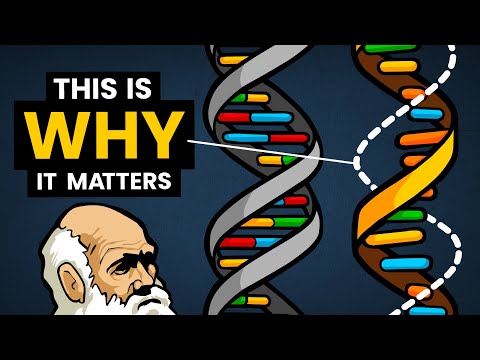
- A key difference is that RNA is typically single-stranded while DNA is double-stranded. This structural variation affects their stability and functionality.
- Cells create single-stranded RNA from individual genes rather than entire chains of DNA. Despite longer lengths of DNA, there are more RNA copies by weight due to their usage frequency.
Nucleotide Composition
- Both molecules consist of nucleotides made up of three parts: nitrogen base, sugar backbone (ribose), and phosphate linker.
- The sugar backbones differ; ribose in RNA has an oxygen group while deoxyribose in DNA lacks this group—this distinction leads to significant functional implications.
Reactivity and Stability
- The presence or absence of the oxygen group affects reactivity; OH groups make RNA more reactive but also less stable compared to the sturdier structure of deoxyribose in DNA.
- This increased reactivity allows easier manipulation within cells but makes RNA fragile; thus cells continuously synthesize new RNA from stable DNA templates.
RNA vs DNA: Key Differences and Evolution
Structural Differences Between RNA and DNA
- RNA contains four nucleotide bases: adenine (A), cytosine (C), guanine (G), and uracil (U). In contrast, DNA uses thymine (T) instead of uracil.
- The absence of uracil in DNA aids cells in detecting and repairing common forms of DNA damage, highlighting the protective role of DNA compared to RNA.
- RNA chains are typically short, single-stranded, fragile, and actively involved in cellular functions like protein synthesis. Conversely, DNA is longer, usually double-stranded, stable, and primarily serves as information storage.
- The atomic structure of DNA contributes to its stability; it is carefully guarded by cells that repair any damage found within it.
- Modern cells utilize both RNA and DNA for distinct functions due to their structural differences; this specialization reflects evolutionary adaptations.
Evolutionary Perspectives on RNA and DNA
- Scientists are investigating whether early life forms used RNA for both active cellular roles and information storage similar to some contemporary viruses.
- Questions remain about the evolutionary transition from an RNA-based system to the current RNA-DNA framework utilized by modern cells.
Funding and Research Initiatives
- This animation was supported by viewers through Patreon as well as by Tay Al Madama at the Center for Fundamental Inquiry at the University of Auckland.
- The center comprises a diverse group of academics focused on exploring significant questions regarding life's origins and evolution. Its Maori name symbolizes enlightenment or knowledge emerging from darkness.