how to analyze and iterate your ecom ad creatives (11x ROAS)
Complete Guide to Iterating and Reading Metrics on Facebook Ads
Introduction to the Process
- The speaker introduces a comprehensive guide aimed at effectively iterating and reading metrics for Facebook ads, highlighting a successful case study of scaling a brand to $50,000 in just 7 days.
- Emphasizes that the process is logical and repeatable, moving beyond simple strategies like running better ads or increasing content volume.
Pre-launch Phase
- Discusses the importance of research and ideation in creating effective ad briefs, which include testing various hooks (e.g., hook one through four).
- Describes isolating hooks during tests by removing primary text, headlines, and descriptions to focus solely on click-through rates.
Understanding Ad Performance
- Acknowledges that many things can go wrong post-launch; every ad has a limit on how much it can scale before breaking.
- Stresses that finding a winning ad isn't binary; instead, it's about assessing how well an ad performs relative to others.
Creative Testing Mindset
- Highlights the necessity of creative testing not for immediate profitability but for identifying which ads should not be run.
- Explains that 80% of efforts will involve iterations based on data collected from previous tests.
Iteration Strategy
- Outlines two potential outcomes after launching batches: either spending money effectively across all creatives or employing different strategies like CBO (Campaign Budget Optimization).
- Advocates for investing upfront in each ad's break-even cost per acquisition to gather meaningful data.
Key Metrics for Evaluation
- Introduces "cost per add-to-cart" as a crucial metric that predicts return on ad spend (ROAS), spend capacity, and even customer lifetime value (LTV).
- Advises against iterating poorly performing ads; instead, focus should be placed on concepts with existing performance metrics.
Conclusion of Insights
- Concludes with the notion that low-budget ads are unlikely to become profitable through iteration alone; resources should be allocated wisely towards promising concepts rather than trying to salvage underperforming ones.
Understanding Ad Performance and Iteration Strategies
Tracking Winning and Losing Variables
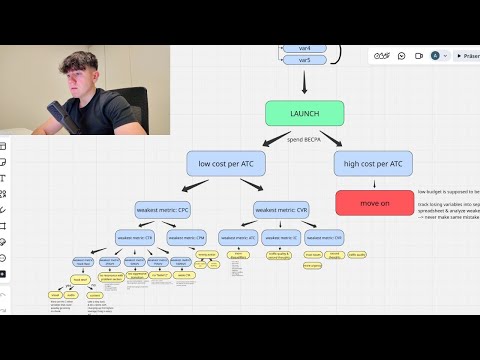
- The speaker emphasizes the importance of identifying specific factors that contribute to both successful and unsuccessful ads. They propose maintaining two separate spreadsheets: one for winning variables and another for losing variables. This allows for a structured approach to understanding ad performance.
Utilizing AI for Error Prevention
- A creative strategist can leverage tools like ChatGPT to analyze losing variables from previous campaigns. By inputting these variables into the system, they can identify past mistakes and avoid repeating them in future iterations, enhancing efficiency in the ideation process.
Focusing on Weakest Metrics
- The discussion highlights the necessity of analyzing the weakest metric of an ad with a low cost per add-to-cart (ATC). The two primary metrics to consider are Cost Per Click (CPC) and conversion rate; identifying which is weaker will guide further analysis.
Deep Dive into Metrics Analysis
- If CPC is identified as weak, it may stem from issues like click-through rate or CPM. Conversely, if conversion rate is weaker, further breakdown into specific rates such as ad-to-cart or checkout initiation is necessary to pinpoint problems accurately. Understanding these nuances helps refine strategies effectively.
Iterating on High Impact Areas
- The speaker stresses that focusing on improving the weakest metric will yield the most significant impact on overall ad performance. For instance, if a high conversion rate exists alongside a poor click-through rate, addressing the latter first could lead to substantial improvements in campaign effectiveness. This strategic focus maximizes testing impact by targeting areas with potential for growth.
Understanding Video Engagement Metrics
Importance of Smooth Transitions
- Effective video content should connect the hook with the product, ensuring a smooth transition to maintain viewer interest.
- A quick and aggressive transition can lead to viewers losing interest; emotional engagement is crucial for retaining attention.
Analyzing Weak Video Metrics
- If 50% video views are low, it indicates an overly aggressive shift from problem to solution, as viewers prefer a more gradual approach.
- Struggling with 75% video views suggests that belief in the ad's message is weak; it's essential to establish three key beliefs in ads: recognition of a problem, doubt about current solutions, and confidence in your brand.
Addressing Viewer Ego
- Many copywriters skip directly to promoting their brand without addressing viewer skepticism; understanding that potential customers may already feel they have effective solutions is vital.
- If viewers do not resonate with your ad, it may be because they believe they are already managing their problems effectively.
Call to Action and Targeting Issues
- Low 100% video views indicate a weak call-to-action (CTA), suggesting that improvements are needed to convert clicks into actions.
- High CPM rates imply targeting issues; refining audience demographics can enhance ad performance by reaching more relevant viewers.
Best Practices for Ad Quality
- Creative diversity is essential; using various concepts helps engage different audience segments and optimizes CPM rates.
- A low active cart rate signals the need for disqualifiers in ads—these help filter out less interested viewers while attracting higher-quality leads.
Enhancing Checkout Initiation
- If initiate checkout rates are low, consider traffic quality issues or second thoughts from potential buyers. Adding urgency can help mitigate these concerns.
- Trust issues often arise during conversion drops; addressing these through clear communication and urgency can improve overall conversion rates.
Conclusion on Consistency in Strategy
- Following these insights consistently will guide future advertising strategies and eliminate uncertainty about next steps.