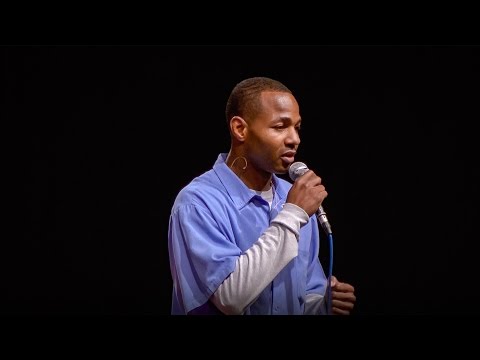
How I learned to read -- and trade stocks -- in prison | Curtis "Wall Street" Carroll
Life of Crime and Potential
The speaker shares a personal story about growing up in a challenging environment, engaging in criminal activities, and discovering his potential through an unexpected encounter.
Life of Crime
- At 14 years old, the speaker was involved in burglarizing an arcade game inside a bowling alley. He ran away when confronted by a security guard.
- The speaker's uncle encouraged him to continue committing crimes, even after getting caught once. They needed money for gas to get home.
- Growing up in Oakland, California, the speaker's environment was filled with family members addicted to crack cocaine and living in homeless shelters.
- Dinner often came from breadlines and soup kitchens. Financial struggles were prevalent in the community.
Discovering Potential
- The speaker learned from someone that "money rules the world" and realized that crime seemed like his only option for survival.
- After being arrested for robbery and murder at 17 years old, the speaker encountered an older man who introduced him to stocks as a way to keep money. This sparked hope for a different future.
- Despite being illiterate, the speaker decided to learn how to read while in prison at 20 years old. It was a challenging journey but brought him self-worth, knowledge, and discipline.
Empowering Transformation
The speaker describes his transformation through learning how to read and the impact it had on his life.
Learning to Read
- The speaker's journey of learning to read was difficult, facing ostracization from family and friends. However, he persevered and found excitement in reading anything he could find.
- Reading gave the speaker a sense of empowerment and allowed him to spell words correctly for the first time. It was a transformative experience.
Personal Growth
- Through reading, the speaker gained self-worth, knowledge, and discipline. He no longer felt trapped in a cycle of crime but saw new possibilities for his future.
- The speaker's newfound literacy opened doors to opportunities that were previously unimaginable, challenging his previous belief that crime was his only path.
Timestamps are provided for each section based on the available information in the transcript.
The Importance of Financial Responsibility
In this section, the speaker discusses their realization of the need to take responsibility for their own actions and the importance of financial management.
Taking Responsibility for Actions
- The speaker acknowledges that they grew up in a complex environment but chose to commit crimes and had to take responsibility for their actions.
- They emphasize the importance of owning up to one's choices and actions.
Teaching Financial Management in Prison
- The speaker developed a curriculum to teach incarcerated individuals how to manage money through prison employment.
- The goal was to provide transferrable tools that could be used upon reentering society.
Alarming Statistics on Financial Literacy
- MarketWatch reports that over 60 percent of the American population has less than $1,000 in savings.
- Sports Illustrated states that over 60 percent of NBA and NFL players go broke.
- 40 percent of marital problems stem from financial issues.
Society's Inability to Help Incarcerated Individuals
- The speaker questions how society can help incarcerated individuals reintegrate into society if they struggle with managing their own finances.
- They express concern about people living paycheck-to-paycheck despite working hard and acquiring material possessions.
Recognizing the Need for Change
In this section, the speaker reflects on their personal transformation and highlights the impact of financial illiteracy on minorities and lower-class communities.
A Personal Transformation
- The speaker expresses a newfound care for their community as they become aware of financial illiteracy as a widespread issue.
- They emphasize that financial illiteracy has long plagued minorities and lower-class individuals.
Financial Illiteracy as an Epidemic
- Financial illiteracy is described as a disease that hinders social status, access to justice, living conditions, transportation, and food.
- The speaker argues that it poses a greater danger to public safety than any other issue.
Money-Related Crimes
- Over 70 percent of incarcerated individuals have committed or been charged with money-related crimes such as robberies, fraud, and larceny.
Challenges Faced by Incarcerated Individuals
In this section, the speaker highlights the lack of financial education and preparation provided to incarcerated individuals upon their release.
Lack of Financial Education in Prison
- Typical incarcerated individuals enter the prison system without any financial education.
- They earn minimal wages and save no money during their time in prison.
Insufficient Preparation for Reentry
- Upon parole, incarcerated individuals are given a small amount of money and minimal guidance on how to reintegrate into society.
- Without meaningful preparation or a long-term financial plan, they face challenges in finding stable employment.
Empowering Incarcerated Individuals through Financial Literacy
In this section, the speaker introduces the Financial Empowerment Emotional Literacy (FEEL) program as a solution to empower incarcerated individuals with essential life skills.
The FEEL Program
- The FEEL program focuses on teaching incarcerated individuals how to separate emotional decisions from financial decisions.
- It covers four timeless rules of personal finance: saving properly, controlling cost of living, borrowing money effectively, and diversifying finances.
Anyone Can Be a Financial Professional
- The speaker challenges the notion that only professionals can manage money effectively.
- They assert that each individual knows their own financial needs better than anyone else.
Financial Literacy as a Lifestyle
- Financial literacy is described as not just a skill but a lifestyle.
- Achieving financial stability is seen as a byproduct of adopting proper financial habits.
The Impact of Financial Stability
In this section, the speaker emphasizes the importance of financial stability and its positive impact on individuals and society.
Becoming Taxpaying Citizens
- A financially sound incarcerated person can become a taxpaying citizen upon reentering society.
- Financial stability enables individuals to contribute positively to their communities.
Creating a Bridge for Change
- Financially stable individuals can influence their families, friends, and young people who may still associate crime with money.
- By promoting financial responsibility, they aim to bridge the gap between those influenced by criminal behavior and a more responsible lifestyle.
Overcoming Fear and Taking Responsibility
In this final section, the speaker encourages listeners to overcome fear and take responsibility for managing their finances effectively.
Addressing Fear and Anxiety
- The speaker urges listeners to let go of fear and anxiety surrounding financial matters.
- They emphasize the need to focus on taking care of personal responsibilities as life managers.
Crippling Effects of Financial Irresponsibility
- The speaker highlights how financial irresponsibility hinders society from addressing its obligations effectively.
- They stress the importance of adopting proper financial habits for individual well-being and societal progress.
Understanding the Cost of Emotional Reactions
In this section, the speaker discusses the financial impact of emotional reactions.
The Financial Impact of Emotional Reactions
- The speaker emphasizes the importance of understanding how much money it costs every time an individual gets emotional.
- The audience applauds in agreement with the speaker's statement.
This is a brief summary based on the provided transcript.
Turn any video into a summary like this
YouTube links, meetings, lectures. With transcripts, search, and chat.