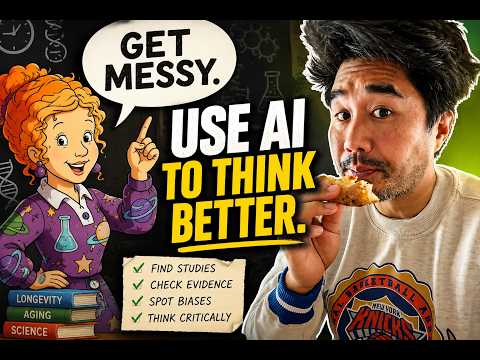
AI Tutorial: The Science of Intermittent Fasting & Aging #college #psyc365 #notebooklm
The Role of Intermittent Fasting in Aging
Overview of Intermittent Fasting
- Intermittent fasting is presented as a potential key to combat aging, with claims that it can promote self-healing.
- While fasting may show promise in laboratory settings for cancer treatment, caution is advised against its application without medical supervision due to risks of complications.
Complexity of the Science
- The relationship between intermittent fasting and longevity is complex, with messy scientific findings that resist simple conclusions.
- Human behavior and cognition are inherently irrational, complicating the understanding of how intermittent fasting impacts health.
Job Displacement and AI
Impact on Employment
- Jobs primarily performed on computers are at risk from AI advancements; those who can work remotely may face future job insecurity.
- Cognitive tasks done via computer are most susceptible to AI replacement, which has significant implications for high-value jobs historically seen as secure.
Evaluating Research on Fasting
Research Methodology
- A critical evaluation approach is necessary when examining research on intermittent fasting and aging; complexity should be embraced rather than avoided.
- Google Scholar serves as a valuable tool for finding relevant research articles, emphasizing the importance of citation impact in scientific inquiry.
Biases in Scientific Literature
Understanding Review Articles
- Review articles often dominate citations but may introduce bias by favoring certain perspectives on fasting's effects on aging.
- While review articles provide a good starting point for understanding complex topics like intermittent fasting, they must be approached critically.
Molecular Aspects of Fasting
Benefits vs. Risks
- Evidence suggests both benefits (e.g., improved biomarkers related to aging) and risks (e.g., loss of lean muscle mass), particularly in older adults engaging in fasting practices.
Navigating Scientific References
Utilizing Digital Tools
- Digital Object Identifiers (DOIs) facilitate access to original research articles, allowing deeper exploration into specific studies related to intermittent fasting.
Visualizing Scientific Data
Insightful Tools for Research
- Tools like Insightful help visualize scientific data and relationships between various studies, making it easier to grasp complex information quickly.
Organizing Research Findings
Using Notebook LM
- Notebook LM aids in organizing research findings effectively; summarizing multiple articles helps clarify the evidence surrounding intermittent fasting's effects.
Summarizing Key Insights
Creating Structured Tables
- Tables can summarize study details such as sample size and outcomes related to intermittent fasting efficiently.
- This structured approach enhances comprehension by distilling large amounts of data into accessible formats.
Pros and Cons Analysis
- A comprehensive analysis reveals mixed results regarding the effectiveness of intermittent fasting across different populations.
Challenges with Adherence
- Many individuals struggle with adherence to dietary restrictions associated with intermittent fasting due to side effects like fatigue or headaches.
Mixed Evidence from Studies
- Animal models often show positive outcomes from caloric restriction while human studies yield inconsistent results regarding long-term benefits.
Mind Mapping Evidence
- Mind mapping tools help organize pros, cons, and mixed evidence linked to both animal and human studies about intermittent fasting.
Critical Evaluation Skills
- Developing critical evaluation skills is essential when interpreting scientific literature about dietary practices like intermittent fasting.
Conclusion: Embracing Complexity
- The science surrounding intermittent fasting is nuanced; while there are potential benefits for some individuals, many factors influence its effectiveness based on individual circumstances.