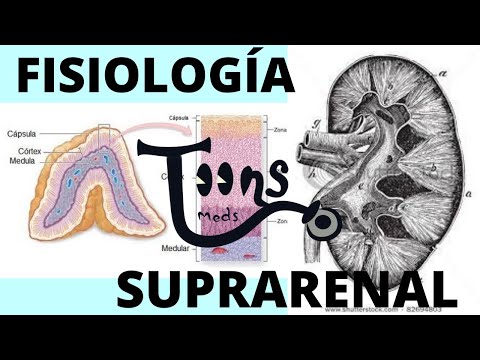
Fisiología: Glandula suprarrenal (Qué es, SIST. RENINA ANGIOTENSINA ALDOSTERONA, SECRECIÓN CORTISOL)
Overview of the Adrenal Glands
Structure and Function of the Adrenal Glands
- The adrenal glands are located atop each kidney; the right gland is pyramid-shaped, while the left is crescent-shaped.
- Each adrenal gland measures approximately 3 to 5 cm in height and 2 to 3 cm in width. They consist of two main portions: the outer cortex (80-90% of the gland) and the inner medulla.
Hormonal Production
- The adrenal cortex produces essential steroid hormones; complete loss can lead to death from dehydration or electrolyte imbalance without immediate hormone replacement.
- The adrenal medulla produces catecholamines, including norepinephrine, epinephrine, and small amounts of dopamine.
Zones of the Adrenal Cortex
Zona Glomerulosa
- The outermost layer beneath connective tissue capsule; cells are compactly arranged in spherical clusters. It secretes mineralocorticoids that regulate blood mineral levels.
Zona Fasciculata
- The middle layer characterized by straight columns of cells; it is wider than other zones and primarily secretes glucocorticoids like cortisol, which regulates glucose homeostasis.
Zona Reticularis
- The innermost layer with branched cord-like cell arrangements; it produces weak androgens, which have masculinizing effects.
Key Hormones Produced by Each Zone
- Mineralocorticoid aldosterone maintains sodium and potassium balance, affecting blood pressure and volume.
Regulation Mechanisms for Aldosterone Secretion
Renin-Angiotensin-Aldosterone System (RAAS)
- Factors activating RAAS include dehydration, sodium deficit, or hemorrhage leading to low blood volume and pressure detected by juxtaglomerular cells.
Angiotensinogen Conversion Process
- Low blood pressure stimulates renin secretion from juxtaglomerular cells. Renin converts angiotensinogen (produced in liver) into angiotensin I.
Role of Angiotensin II
- Angiotensin I is converted to angiotensin II in lungs via ACE enzyme. Increased angiotensin II stimulates aldosterone production from adrenal cortex.
Effects on Blood Volume and Pressure
- Aldosterone promotes sodium/water reabsorption in kidneys while increasing hydrogen/potassium secretion. This raises blood volume and normalizes blood pressure through vasoconstriction effects on arteries.
Glucocorticoids Overview
Functions & Major Hormones
Understanding Glucocorticoids and Their Effects
Mechanism of Action
- Negative feedback system: Low levels of glucocorticoids, particularly cortisol, stimulate neurosecretory cells in the hypothalamus to secrete corticotropin-releasing hormone (CRH).
- CRH increases the release of adrenocorticotropic hormone (ACTH) from the pituitary gland, which then travels to the adrenal cortex.
Physiological Effects of Glucocorticoids
- Protein degradation: Glucocorticoids promote protein breakdown, especially in smooth muscle, increasing blood amino acid levels for ATP production.
- Gluconeogenesis: Hepatic cells convert certain amino acids or lactate into glucose under glucocorticoid stimulation, providing energy for neurons and other cells.
Stress Response and Metabolic Regulation
- Lipolysis stimulation: Glucocorticoids enhance triglyceride breakdown in adipose tissue, releasing fatty acids into circulation.
- Increased vascular sensitivity: They make blood vessels more responsive to vasoconstricting hormones, raising blood pressure during severe hemorrhages.
Anti-inflammatory Properties
- Inhibition of white blood cells: Glucocorticoids suppress inflammation by inhibiting immune cell activity but can delay wound healing as a side effect.
Immune System Impact
- Immunosuppression at high doses: High glucocorticoid levels can depress the immune system; this is utilized in organ transplant patients to prevent rejection.
Role of Adrenal Androgens
- Weak androgen secretion: The adrenal cortex secretes weak androgens like dehydroepiandrosterone (DHEA), which have minimal effects but are important for libido in women.
Post-Menopausal Hormonal Changes
- Estrone production post-menopause: After ovarian estrogen secretion ceases, adrenal androgens convert to estrogens contributing to female hormonal balance.
Medullary Functionality
- Modified sympathetic ganglion role: The adrenal medulla acts as a modified sympathetic ganglion that releases hormones instead of neurotransmitters directly controlled by the autonomic nervous system.
Hormonal Secretion Dynamics