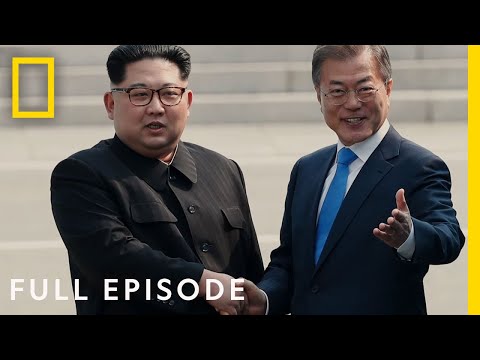
The Great Game (Full Episode) | Inside North Korea
The Journey of Kim Jong-Un: A Diplomatic Turning Point
The Departure from Pyongyang
- On March 26, 2018, a passenger train leaves Pyongyang, North Korea, consisting of 21 bulletproof cars painted olive drab.
- This train has been used by previous leaders Kim Il-Sung and Kim Jong-Il; speculation arises about who is aboard, with rumors suggesting it could be Kim Yo-Jong, Kim Jong-Un's sister.
Arrival in Beijing
- Upon reaching Beijing, it is confirmed that the passenger is Kim Jong-Un himself. This marks a significant diplomatic event aimed at peace on the Korean peninsula after decades of isolation.
- The upcoming meetings will involve complex negotiations as various parties seek to protect their interests while engaging with North Korea.
Understanding North Korean Negotiators
- Former negotiator Bill Richardson describes North Korean diplomats as tough and well-prepared due to their isolated upbringing and controlled media exposure.
- Diplomacy involves persuading the other side to make difficult choices; it's essential to communicate that future challenges won't be faced alone.
The Nature of Diplomacy
- Madeleine Albright emphasizes that diplomacy should be more prevalent with adversaries than friends; understanding each other's perspectives is crucial for problem-solving.
Historical Context of North Korea
- The Democratic People's Republic of Korea (DPRK), established post-WWII, reflects Soviet communism's spread and was divided arbitrarily at the 38th parallel in August 1945.
- Key figures like Dean Rusk recognized the lack of economic rationale behind this division but prioritized aligning South Korea with U.S. interests during the Cold War.
The Rise of Kim Il-Sung
- Kim Il-Sung emerged as a powerful figure in the north after WWII and initiated conflict by invading South Korea on June 25, 1950.
- Following three years of war, a cease-fire was reached; however, North Korea remains defined by its isolation and humanitarian issues.
Unique Characteristics of North Korea
- Analysts describe North Korea as an unprecedented blend of Confucianism, communism, and hereditary rule—unique in its governance style yet notorious for human rights violations.
- Comparisons are drawn between North Korean repression and Nazi Germany's historical context regarding human rights abuses.
Geopolitical Implications
- Political discussions must consider Northeast Asia's geography; surrounding nations like Russia, Japan, China, and South Korea have significant stakes influenced by North Korean actions.
- Terry asserts that North Korea manipulates international relations through provocations followed by negotiations—a cycle characterized by tension and temporary resolutions.
Propaganda Control in North Korea
- The regime maintains strict control over information through state-run media outlets like KCNA since 1946.
The Rise of Kim Jong-Un: Legitimacy and Power
The Social Control Mechanism in North Korea
- North Korea lacked extensive social control mechanisms, such as speakers in every village or television in homes, which limited the regime's ability to monitor citizens.
- Leaders like Kim Jong-Un are viewed not just as political figures but as god-like entities whose words dictate the actions of North Koreans.
Kim Jong-Un's Ascension and Initial Actions
- Upon taking power, Kim Jong-Un faced challenges in establishing legitimacy quickly compared to his father, who had 30 years to build his image.
- A significant moment was when he acknowledged a failed missile test, an unprecedented move that suggested a potential shift in leadership style.
- He created chaos within the Workers' Party by executing senior officials, including his uncle Jang Song-Thaek, indicating a ruthless approach to consolidating power.
Nuclear Ambitions and International Relations
- To secure the Kim dynasty's future, nuclear weapons became essential for demonstrating strength against perceived threats from the U.S. and allies.
- Kim Jong-Un aimed to establish legitimacy through military prowess rather than economic reforms due to the regime's dire economic situation.
Escalation of Tensions with Global Powers
- Between 2016 and mid-2017, North Korea conducted multiple nuclear tests and missile launches, claiming advancements in their nuclear capabilities.
- President Trump addressed the UN General Assembly with strong rhetoric against North Korea, labeling its regime as depraved and threatening destruction.
Impact of Rhetoric on Diplomacy
- Trump's aggressive language played into North Korean propaganda narratives that portrayed America as a threat aiming for annihilation.
- Analysts noted that while U.S. intimidation tactics were intended to pressure North Korea, they inadvertently pushed South Korea towards diplomacy with the North.
The Role of Sanctions and Military Options
- The United Nations Security Council imposed strict economic sanctions on North Korea amid escalating tensions between Pyongyang and Washington.
- A war of words ensued between Trump and Kim; both sides exchanged insults while continuing military provocations like ICBM tests.
Challenges of Diplomatic Solutions
The Tensions of the Korean Peninsula
Historical Context and Olympic Preparations
- The potential for conflict looms as South Korea prepares for the 2018 Olympic Games, with concerns about a war with North Korea influencing diplomatic considerations.
- Reflecting on past events, during South Korea's first Olympics in 1988, Kim Il-Sung aimed to create chaos to deter attendance at the games.
- A significant terror attack occurred when North Korea downed a civilian airliner, killing 115 people, leading to its designation as a state sponsor of terrorism by the U.S.
- Despite North Korea being banned from competition, the 1988 Olympics marked a pivotal moment for Seoul's political and cultural separation from the north.
Rising Tensions and Diplomatic Overtures
- As tensions escalate in early 2018, Kim Jong-Un’s speech is interpreted as an attempt to drive wedges between the U.S. and South Korea while presenting North Korea as a potential ally despite its nuclear capabilities.
- President Moon Jae-in invites North Korea to march together at the Olympics, highlighting complex regional dynamics beyond just missile issues.
- Kim Yo-Jong's presence at the Olympics captivates South Koreans; she is likened to Ivanka Trump due to her charm and relatability.
Diverging Responses from Delegations
- Vice President Pence leads an American delegation focused on addressing human rights abuses in North Korea while avoiding engagement with DPRK representatives during the ceremonies.
- The contrasting body language between Pence and other delegations highlights diplomatic tensions; Pence remains stoic while others celebrate unity among athletes.
Diplomatic Developments Post-Olympics
- During this visit, Kim Yo-Jong delivers an invitation from her brother for President Moon to meet directly, signaling potential thawing relations.
- Observers note that Trump's aggressive rhetoric may have influenced North Korean willingness to engage diplomatically; however, questions remain about future negotiations.
Building Momentum Towards Diplomacy
- Both Washington and Seoul agree on maintaining diplomatic momentum following initial talks; Moon sends a delegation to Pyongyang for discussions described by Kim Jong-Un as "open-hearted."
- Skepticism persists in Washington regarding normalization without denuclearization discussions; officials emphasize continued commitment towards achieving denuclearization on the peninsula.
Preparing for Unconventional Diplomacy
- President Moon advocates for parallel initiatives between U.S. talks and DPRK engagement; Kim Jong-Un expresses willingness to discuss denuclearization openly.
- The prospect of a meeting between Trump and Kim surprises many diplomats due to their unconventional styles; concerns arise over preparedness amid domestic challenges facing Trump’s administration.
Challenges Ahead in Negotiations
Negotiating with North Korea: Key Insights
The Dynamics of Leadership and Negotiation
- The negotiation process is heavily influenced by the leaders involved; if one leader expresses doubt, it can derail discussions. Effective leadership should address remaining issues decisively.
- Both Kim Jong-Un and Donald Trump are described as autocratic and unpredictable, making negotiations a significant gamble. Preparedness is crucial to avoid being outsmarted in discussions.
Kim Jong-Un's Diplomatic Moves
- In March 2018, Kim Jong-Un had not met any foreign leaders since taking power in 2011, marking a pivotal moment in his diplomatic engagement.
- Kim's visit to China was strategic; he aimed to negotiate sanctions relief while also presenting himself as a modern leader on the global stage.
Image Management and International Relations
- During his meeting with Xi Jinping, Kim showcased an image makeover by appearing friendly and engaging with Chinese officials, which helped normalize his leadership perception.
Preparations for High-Level Meetings
- As preparations for the Trump-Kim summit began, key figures like Mike Pompeo were involved in secret meetings with North Korean officials to lay groundwork for future discussions.
- North Korea announced a halt on nuclear tests just before the planned summit with South Korea’s Moon Jae-In, indicating a shift towards economic focus alongside denuclearization talks.
Historic Summit Between North and South Korea
- On April 27th, 2018, Kim became the first North Korean leader to step into South Korea during a historic summit that emphasized peace and denuclearization commitments.
- Observers noted significant changes in Kim's demeanor compared to his father; he appeared more charismatic and socially engaged during interactions at the summit.
Reactions from Global Leaders
- Following positive developments between North and South Korea, President Trump claimed credit for facilitating these talks during public appearances.
- There was initial skepticism about Trump's role in reconciliation efforts; however, South Korean leaders began attributing progress to him as they sought peace.
Tensions Over Credit for Peace Efforts
The Complex Dynamics of US-North Korea Relations
Kim Jong-Un's Strategic Positioning
- Washington is perceived as "ruining the mood" for peace talks, but it's noted that Kim Jong-Un has his own strategy, showcasing a bold and astute leadership style.
The Libya Model and Its Implications
- John Bolton advocates for a hardline approach based on the Libya model during an appearance on CBS' Face The Nation, suggesting North Korea must disarm before any concessions are made.
- North Koreans reference Libya to justify their nuclear arsenal, fearing they could meet a similar fate as Gaddafi after giving up weapons.
Diplomatic Efforts and Regional Tensions
- Secretary of State Mike Pompeo's visit to Pyongyang results in the release of three American detainees, seen as a goodwill gesture from Kim.
- Kim's surprise trip to Beijing indicates overlapping interests with China regarding potential deals with the US.
Concerns Among Allies
- Japan expresses dissatisfaction with how negotiations are unfolding, worried about US interests overshadowing their security concerns. South Korea attempts to mediate amidst rising tensions.
Impact of US Policy Changes
- President Trump withdraws from the Iran nuclear deal, raising questions about its implications for upcoming talks with North Korea.
- Experts suggest that Trump's stance on the Iran deal may need adjustment to facilitate progress in negotiations with North Korea.
Communication Breakdown and Rising Tensions
- Diplomacy is emphasized as requiring respect and relationship-building rather than relying solely on media statements or social media.
- North Korea rejects Bolton’s Libya model claim, leading to canceled inter-Korean talks and jeopardizing the Trump-Kim summit.
Shifting Strategies Ahead of the Summit
- In response to escalating tensions, Trump distances himself from Bolton’s comments about the Libya model while expressing optimism about a potential deal with Kim.
Security Assurances vs. Denuclearization Demands
- As June 12th approaches for the historic summit in Singapore, experts note that complete denuclearization in exchange for economic relief was always unrealistic; security assurances are paramount for North Korea.
Final Remarks on Nuclear Program Objectives
Trump Cancels North Korea Summit
Abrupt Cancellation and Initial Reactions
- President Trump cancels the summit with North Korea, citing "tremendous anger and open hostility" from the North. He views this as a significant setback for both North Korea and global diplomacy.
- Following Trump's cancellation, Chairman Kim and President Moon meet at the truce village to discuss maintaining dialogue, while backchannel meetings between U.S. and North Korean officials continue.
Preparations for Talks
- Trump tweets about assembling a strong team for upcoming talks with North Korea, emphasizing the extensive preparation required for such negotiations.
- Mike Pompeo meets with Vice Chairman Kim Yong-Choi in New York City to discuss denuclearization, highlighting how quickly events are unfolding compared to typical diplomatic timelines.
Diplomatic Tensions
- Trump expresses optimism about North Korea's potential via Twitter but acknowledges frustrations over past dishonesty from the regime. He emphasizes that diplomacy is essential for resolving ongoing issues.
- After discussions with Pompeo, Kim Yong-Choi visits the White House carrying a letter from Kim Jong-Un—the first visit by a high-ranking North Korean official since 2000.
The Road to Singapore
Building Relationships
- Trump indicates that travel arrangements are being made for the summit in Singapore on June 12th, suggesting that progress will be gradual rather than instantaneous.
- Despite concerns over insufficient preparation before the summit, Trump remains confident in his instincts regarding negotiations with North Korea.
Media Frenzy and Arrival in Singapore
- As media attention intensifies ahead of the summit, Kim arrives in Singapore treated like a statesman rather than an international pariah.
- Trump's arrival on Air Force One contrasts sharply with Kim's public reception; while Trump prepares privately, Kim enjoys public adoration during his city tour.
Historic Meeting Outcomes
The First Handshake
- On June 12th at 9:04 am, Trump and Kim meet one-on-one for 45 minutes—an encounter filled with uncertainty due to Trump's limited knowledge of key issues.
Agreement Analysis
- Post-lunch press conference reveals vague details of their agreement; despite its historic nature, critics note it lacks substance compared to previous agreements.
- Trump's decision to halt U.S.-led military exercises blindsides allies like South Korea and Japan. Analysts express concern over inadequate commitments made during this meeting.
Future Diplomacy Needs