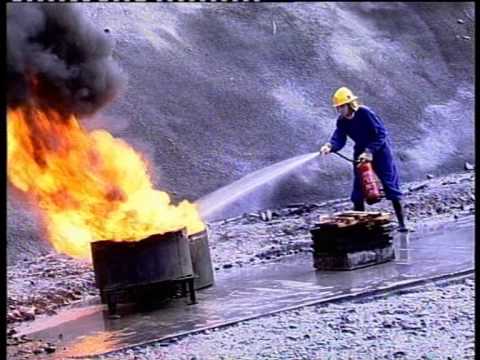
MC MUTUAL. PRL. Uso de extintores portátiles
Fire Extinguisher Training and Usage
Importance of Fire Extinguishers
- Most fires start as small flames that can be extinguished if addressed promptly using available resources.
- Knowing the location of fire extinguishers is crucial; they may not always be near the fire, necessitating quick movement to retrieve them.
- Familiarity with different types of extinguishers and their effectiveness on various fires is essential for effective intervention.
Preparation Before Action
- Reading labels on extinguishers in the workplace helps users understand their specific functions before an emergency arises.
- Prior practice with extinguishers enhances user skill; a familiar person can effectively use an extinguisher, while an inexperienced one may struggle under pressure.
Handling Fire Extinguishers
- During a fire, it’s important to act decisively and cover all burning surfaces to eliminate potential embers that could reignite.
- For solid fuel fires, select the appropriate extinguisher type based on the material involved.
Specific Techniques for Different Extinguishers
Chemical Powder Extinguishers
- Chemical powder can clump at the bottom; if discharge fails during testing, invert and tap the base to ensure proper function.
- Direct discharge should target the base of flames since chemical powder does not penetrate deep into combustion sources.
Water Extinguishers
- Water is effective against solid fuel fires but can damage electronic equipment; caution is needed due to its conductivity.
Carbon Dioxide (CO2) Extinguishers
- CO2 does not leave residues or conduct electricity but can cause cold burns upon contact. Always wear gloves when using these extinguishers.
Safety Precautions During Use
- When using CO2 extinguishers, maintain vertical position and avoid touching the nozzle during operation. Ensure a clear escape route behind you at all times.
Foam Extinguishing Agents
Application Techniques
Fire Extinguisher Operation and Safety Procedures
Importance of Coordination in Fire Extinguishing
- Maintaining a distance of approximately 2 meters from the fire is crucial to prevent the extinguisher's jet from splashing or dispersing materials upon impact with obstacles.
- Coordinated efforts between two individuals during extinguishing operations enhance effectiveness, emphasizing pre-planning before encountering a fire.
Post-Extinguishing Actions
- After addressing the fire, it is essential to ventilate the affected areas and assign personnel to monitor with extinguishers on hand to mitigate potential reignition risks.
- Recharging used extinguishers and returning them to their original locations ensures they are ready for future emergencies, highlighting compliance with safety regulations.
Maintenance and Familiarization with Extinguishers
- Regulations mandate that extinguishers be kept in optimal condition; thus, knowing their location and functionality is vital for effective emergency response.
- Reading instructions on each extinguisher and conducting a test discharge prior to engaging flames can significantly improve response times during an emergency.
Preparedness and Emergency Response
- Prior knowledge and practice in using extinguishers allow individuals to act swiftly and calmly when faced with fire situations, reducing unnecessary exposure to danger.