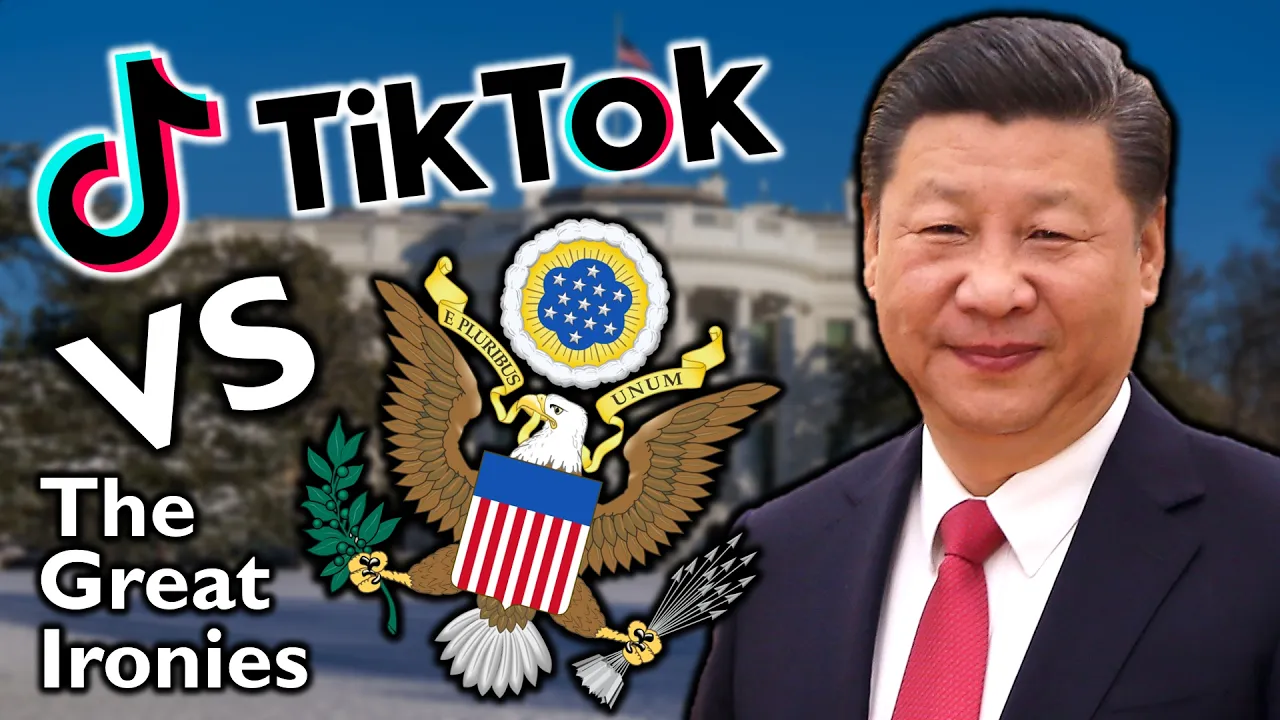
The Four Great Ironies of the United States' TikTok Ban*
The TikTok Ban Irony
The discussion delves into the irony surrounding the TikTok ban, highlighting the complexities of a Chinese app facing potential bans in both China and the United States due to political influence concerns.
U.S. Concerns Over Military Security
- The House passed a bill on March 13 requiring TikTok's Chinese ownership to divest, focusing on national security threats related to data tracking and influence operations.
- Historical context: In 2018, the U.S. military banned fitness trackers with geolocation due to potential risks of revealing secret military locations.
National Security Concerns and Bans
- India and Taiwan also banned TikTok over national security worries linked to tensions with China.
- ByteDance claims American data is stored in Virginia, but concerns persist about potential Chinese government access based on China's National Intelligence Law.
Influence Operations Concerns
This part explores how social media can impact political beliefs, especially concerning TikTok's potential role in influencing American politics.
Influence Operations Dynamics
- The irony unfolds as a Chinese-banned app expresses discontent over possible U.S. bans while being accused of influencing American politics.
Attempted Political Influence
- ByteDance attempted an influence campaign urging users to oppose divestment legislation, leading to overwhelmed Congressional phone lines but failing to alter the bill's outcome.
Legislative Progress and Bipartisan Support
The legislative journey of the bill aiming at forcing TikTok's Chinese ownership divestment unfolds, showcasing bipartisan support despite initial controversy.
Legislative Journey
Presidential Politics and TikTok Divestment
This section delves into the political landscape surrounding TikTok divestment, highlighting the stances of former President Trump and current President Biden, as well as the implications of potential divestment on TikTok's ownership.
Presidential Stances on TikTok Divestment
- Former President Trump initiated an executive order for TikTok divestment in 2020, facing legal challenges that were later revoked by President Biden.
- Trump's shift to being anti-ban post-meeting with a TikTok investor raised speculation about influencing factors, while Biden expressed readiness to sign a divestment bill if presented.
Implications of Divestment
- The irony emerges as the candidate without a TikTok opposes divestment, contrasting with the pro-divestment stance of the candidate who actively uses TikTok.
- Concerns arise over ByteDance's valuation and potential buyers due to restrictions on ownership by U.S. foreign adversaries, complicating the divestiture process.
Challenges and Ironies in Potential TikTok Divestment
This segment explores the complexities and ironies associated with potential TikTok divestment, considering financial implications, national security concerns, and geopolitical ramifications.
Valuation Dilemma and Antitrust Concerns
- ByteDance's valuation challenges are compounded by limited viable buyers like Google or Meta due to antitrust issues related to their existing platforms.
- The subjective nature of company valuations is highlighted alongside considerations of strategic refusal to sell or risking devaluation amid ban threats.
National Security and Algorithmic Concerns
- China's export control authority could impede sensitive technology sales like TikTok's algorithm transfer, raising questions about its categorization under national security interests.
- The paradoxical outcome of divesting potentially incentivizing data extraction by foreign entities underscores broader implications for privacy and economic repercussions.
Geopolitical Ramifications of Potential TikTok Divestment
This part delves into the geopolitical consequences stemming from possible TikTok divestiture decisions, emphasizing strategic considerations for both China and the United States.
Strategic Considerations in Data Extraction
- The dilemma between short-term gains through data extraction versus long-term economic benefits highlights conflicting interests between governments regarding data privacy and economic gains.