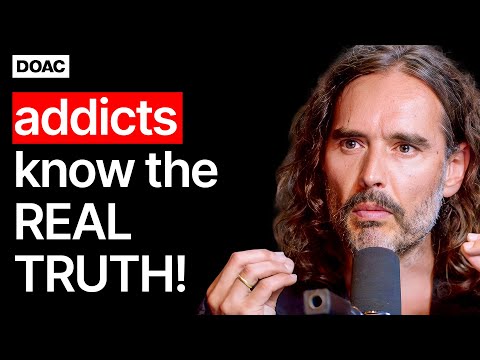
Russell Brand FINALLY Opens Up: Escaping A Lifetime Of Anxiety, Addiction & Finding Love! | E260
Introduction
In this section, Russell Brand is introduced as a famous comedian and performer. The focus is on his early years, struggles with drugs and self-harm, and the cultural influences that led him to seek fame.
Early Struggles and Loneliness
- Russell Brand's early years were marked by drug use, self-harm, and his mother's illnesses.
- He sought fame as a solution to feeling disconnected and lonely.
- However, he realized that using impermanent means to achieve a permanent solution would only lead to failure.
- The feelings of not being good enough or worthless actually became the ingredients for his success.
Russell Brand's Journey
This section highlights Russell Brand's personal journey from addiction and destructive behaviors to finding a new way of handling pain. It explores the concept of addiction in society and suggests that there may be a simple cure for all of us.
Addiction and Finding a Cure
- Russell Brand has struggled with addiction throughout his life, including self-harm, heroin addiction, narcissism, bulimia, and sex addiction.
- He believes that addiction is a common human experience as we all search for ways to feel less pain.
- Society is filled with addictive behaviors such as porn consumption, excessive screen time, sugar intake, substance abuse, etc.
- Russell proposes that there might be a simple cure for these addictions if we are willing to see it.
Transcendence and Self-awareness
This section focuses on how others perceive Russell Brand's transformation from selfishness and addiction to selflessness and self-awareness. It also touches upon the theme of disconnection in one's life.
Perception of Transformation
- A comment left on a YouTube video describes Russell Brand as a hero who has transcended selfishness and addiction.
- The commenter expresses deep admiration and love for Russell Brand's journey of self-awareness.
Disconnection and Childhood
In this section, the conversation shifts to the topic of disconnection in one's life. The interviewer shares his own experience of feeling disconnected due to being different from others, and asks about Russell Brand's childhood.
Disconnection and Childhood Influences
- The interviewer shares his personal experience of feeling disconnected when he moved from Africa to the UK as the only black kid in a predominantly white community.
- He attributes his pursuit of filling that void to shame and insecurity.
- The interviewer asks Russell Brand about his childhood experiences that shaped him into the person he is today.
Addiction, Recovery, and Cultural Influences
This section delves into Russell Brand's upbringing in a single-parent family, his attachment to material possessions, and the cultural influences that prioritize individualism over connection.
Upbringing and Attachment
- Russell Brand grew up in an ordinary background with low expectations in Essex, England.
- His mother's illness had a significant impact on his life.
- He developed an attachment to material possessions as a way to fill a sense of lack.
Cultural Influences
- Society promotes individualism and materialism rather than fostering connections between individuals.
- Even compassionate narratives still emphasize individualism as the central point.
Spiritual Appetite for Connection
This section explores the deep spiritual appetite within all humans for connection. It discusses how society lacks discourse around connection while emphasizing individualism and materialism.
Deep Spiritual Appetite
- There is a profound longing for connection within all individuals.
- However, society lacks a cultural discourse that prioritizes and nurtures this need.
- The prevailing focus on individualism and materialism hinders the fulfillment of our spiritual appetite.
Seeking Ease and Serenity
This section highlights Russell Brand's search for ease and serenity in life, which he recognizes as essential elements for feeling at peace.
Searching for Ease
- Russell Brand acknowledges that he didn't know what it meant to be a man, to be successful, or to have power.
- He now understands that even feeling at ease and serene requires certain knowledge or understanding.
Overall, this conversation with Russell Brand explores his personal journey from addiction and self-destructive behaviors to finding a new way of handling pain. It delves into the themes of disconnection, cultural influences, and the deep spiritual appetite within all humans for connection.
Addiction as a Lack of Connection
In this section, the speaker reflects on addiction as a lack of connection and an attempt to synthesize connection with self, others, and God. They discuss how worshiping the divine can prevent worshiping the mundane or seeking validation through external means.
Addiction as a Lack of Connection
- Addiction is partly driven by a lack of connection.
- It is an attempt to synthesize connection with self, others, and God.
- Worshiping the divine prevents worshiping the mundane or seeking validation through external means.
Seeking Success and Fame as Solutions
The speaker shares their initial solution to feeling weak, disconnected, and lonely was to become successful and famous. They discuss how society promotes the idea that being somebody is the solution to feelings of inadequacy.
Seeking Success and Fame
- The speaker's initial solution to feeling weak and disconnected was to become successful.
- Society promotes the idea that being somebody is the solution to feelings of inadequacy.
Universal Message of Not Feeling Good Enough
The speaker discusses how many successful individuals have experienced feelings of inferiority and not feeling good enough. They reflect on whether these individuals are driven or dragged by insecurities and shame.
Not Feeling Good Enough
- Many successful people have felt inferior and not good enough.
- There seems to be a universal message that success starts with a story of not feeling enough.
- It raises questions about whether these individuals are driven or dragged by insecurities and shame.
Unique Story of Self-Harm in Early Years
The speaker acknowledges that there is a unique story of self-harm in their early years due to their mother's illnesses. They mention a sense of brilliance within themselves despite these circumstances.
Unique Story of Self-Harm
- The speaker's early years were marked by their mother's illnesses and self-harm.
- They had a sense of brilliance within themselves despite these circumstances.
Belief in God and the Sense of Being Held
The speaker shares that their belief in God defines them now. They believe in an absolute loving God that holds everyone, without the need for special adornments or rituals. They discuss the importance of feeling held and supported.
Belief in God and Being Held
- The speaker believes in an absolute loving God.
- They don't believe in unique or superior access to God.
- Feeling held and supported is important, regardless of external factors.
This summary covers only a portion of the transcript provided.
New Section
The speaker reflects on the first time they felt a sense of purpose and competence while making people laugh during a school play. They discuss the importance of respecting individuality and embracing diversity while also recognizing a collective unity.
Reflecting on Personal Growth
- The speaker recalls feeling a sense of overwhelming adrenaline and competence when making people laugh during a school play.
- They describe this experience as a revelation of purpose.
- The speaker ponders the concept of being "silently brilliant" and expresses their desire to participate in others' personal growth.
- They emphasize the importance of respecting individuality and limitless diversity, while still acknowledging something unitive among us.
- Despite feeling unable to express their uniqueness earlier in life, the speaker now embraces their particularness and finds value in it.
New Section
The speaker discusses how culture often frames success in terms of monetization or mobilization, but they have found fulfillment through recovery and helping others.
Emotional Connection with Past Self
- The speaker is asked if they have any emotional sentiment towards their past self's circumstances.
- They explain that due to their involvement in recovery, mentoring, and service, they feel incorporated with their younger self.
- The speaker expresses love for their past self and considers them an asset when helping vulnerable individuals who struggle with thoughts of self-harm or suicide.
New Section
The speaker contemplates whether there could have been another path to reach where they are now. They reflect on the belief that led them astray before finding their true path.
Acceptance of the Journey
- The speaker acknowledges that there might have been another path, but they believe they had to pursue their ill-informed belief to realize its failure.
- They emphasize the idea that our consciousness creates our reality and that we have limitless alternatives and possibilities within us.
- The speaker accepts the path they have walked and believes it is part of the process of recovery and self-acceptance.
- They highlight the importance of appreciating and understanding the various chapters and episodes that have led them to where they are now.
New Section
The speaker discusses addiction, recovery, and spirituality as tools for dealing with life's challenges.
Spiritual Solution
- The speaker mentions addiction and recovery as providing access to an archetype that represents their past struggles.
- They describe how recovery offers a different set of tools, a spiritual solution, to handle challenges like impermanence, temporality, inequality, hypocrisy, and destruction.
- The speaker emphasizes that spirituality can be seen as a form of connection in dealing with these challenges.
This summary provides an overview of the main points discussed in the transcript. It is important to refer back to the original transcript for a more comprehensive understanding.
New Section
In this section, the speaker discusses the concept of spirituality and its importance in coping with life. The meaning of spirituality is explored, highlighting its connection to a sense of oneness and ethical principles.
Understanding Spirituality
- The speaker quotes a statement about needing spirituality to cope in this world.
- Spirituality is defined as something that is not observable or measurable.
- There is a natural tendency in humans towards spirituality, which includes a sense of oneness and glory.
- This spiritual connection implies a set of ethics, morals, and principles.
- Spirituality is described as a survival technique necessary for navigating through life.
New Section
In this section, the speaker emphasizes the importance of personal and communal spirituality. The consequences of not having spirituality are discussed, including the creation of personal preferences as gods.
Personal vs Communal Spirituality
- Without explicit personal and communal spirituality, individuals may create their own gods based on their preferences.
- The speaker reflects on his experiences in Shoreditch and how different environments can influence one's spiritual journey.
New Section
In this section, the speaker shares insights about simplicity and naturalness in spirituality. He acknowledges that spirituality does not have to be complicated or reliant on intellectualism.
Simplicity in Spirituality
- The speaker highlights that spirituality doesn't have to be complicated; even his family members are better at it naturally.
- Using preference as a god and materialism as a savior can lead to an unfulfilling life.
- The speaker acknowledges that many people, including himself, are using preference as their god.
New Section
In this section, the speaker addresses the idea of different paths in spirituality and emphasizes the importance of personal conduct. He cautions against mistaking impermanent means for a permanent solution.
Different Paths in Spirituality
- The speaker states that there is not just one path in spirituality; individuals have to find their own way.
- Personal spirituality is about self-improvement and conduct, without imposing judgments on others' paths.
- Mistaking impermanent means for a permanent solution leads to failure; understanding oneself and dealing with paradoxes is crucial.
The summary has been organized into meaningful sections based on the content of the transcript. Each section includes bullet points summarizing key points discussed by the speaker. Timestamps have been included where available to provide easy navigation to specific parts of the video.
The Dream and Gratitude
In this section, the speaker expresses gratitude for the support of their audience and emphasizes that they are just getting started. They encourage viewers to subscribe to their channel.
The Dream and Gratitude
- The speaker expresses that achieving their current success is a dream they never imagined.
- They feel like they are only at the beginning of their journey.
- They express gratitude to the audience for watching and ask them to hit the subscribe button.
- The speaker promises to do everything in their power to make the show better in the future.
Tuning into Your Inner Voice
In this section, the speaker discusses how people have become adept at ignoring their inner voice and instead focus on external expectations. They mention mentors and describe life as a journey of chapters.
Tuning into Your Inner Voice
- People have become skilled at tuning out their inner voice and focusing on external expectations.
- The speaker mentions a "God in your belly" or a signal in your gut that tries to communicate how you truly feel.
- Life is described as an amazing journey from chapter to chapter, with each chapter representing transcendence or growth.
- Many individuals struggle with listening to their own feelings due to familial or cultural conditioning.
Changing Your Path
In this section, the speaker addresses individuals who feel stuck in a path that doesn't align with their true desires. They discuss embarking on a journey of change by acknowledging problems, believing in change, and seeking mentorship.
Changing Your Path
- Individuals who feel trapped in a path that doesn't resonate with them need to embark on a journey of change.
- The first step is acknowledging the problem and recognizing that life has become unmanageable.
- Believing in the possibility of change is crucial for initiating the transformation process.
- Mentorship, even if it's in an abstract form, can provide guidance and inspiration for making changes.
- Importing new ideas and perspectives is necessary to break free from old patterns.
Surrendering and Seeking Help
In this section, the speaker discusses surrendering to a higher power or a greater force to facilitate personal growth. They emphasize the importance of accepting someone else's plan and seeking help.
Surrendering and Seeking Help
- Surrendering to a higher power or force is essential for personal growth.
- Acceptance of someone else's plan and assistance is crucial in the journey of change.
- Prayer, meditation, humility, and asking for something greater than individual wants are ways to seek divine help.
- Activated surrender involves recognizing that one is no longer in control but serving a higher purpose.
- The speaker acknowledges their distrust and dislike of authority but emphasizes the need for guidance.
Conclusion on Change
In this section, the speaker concludes by reflecting on the paradoxical nature of change. They discuss activating surrender and returning to an original condition while acknowledging their aversion to authority.
Conclusion on Change
- The speaker reflects on the contradiction of activated surrender and returning to an original condition.
- They express their deep distrust and dislike of authority but acknowledge the role of guidance in personal growth.
- A loving parental figure can be considered as a positive authority figure rather than a malign one.
- The speaker highlights their reflexive tendency to do the opposite when told what to do.
Timestamps have been associated with relevant sections based on provided information.
New Section
In this section, the speaker discusses the need for a new instruction manual for life and how to choose the right path when faced with temptations and uncertainties.
Choosing a New Instruction Manual
- The current instruction manual for life is not producing desired results.
- A new instruction manual is needed to navigate through challenges and seek meaning.
- It can be difficult to know which path to choose among various temptations and options.
Seeking Mentors and Surrendering
- Step one is acknowledging that something is wrong in the current situation.
- Step two involves seeking out mentors who can provide evidence of leaving the situation.
- Step three is surrendering and running life on a new instruction manual.
- The source of this new instruction manual can be mentors or other trusted individuals.
New Section
This section explores the crisis of authority in society and the difficulty in trusting others when embarking on a journey of self-discovery.
Crisis of Authority
- Many people have lost trust in government, media, judiciary, and other authorities.
- Finding someone trustworthy who speaks on behalf of universal principles is challenging.
Trust Issues
- The speaker personally struggles with trust due to past experiences.
- Trusting intuition and others can be difficult when starting a new journey.
- Skepticism and requiring evidence are common traits for the speaker.
New Section
This section delves into the challenges with authority faced by both speakers, their skepticism, and their need for evidence before accepting things.
Challenges with Authority
- Both speakers have experienced challenges with authority throughout their lives.
- They question central authority imposing decisions without clear consent achieved through democracy and community dialogue.
Skepticism and Need for Evidence
- The speakers express skepticism towards authority and the systems in place.
- They require evidence before accepting things and have a subjective approach.
New Section
This section discusses the deep-rooted mistrust of authority, broken systems, and the speaker's perspective on centralization of power.
Mistrust of Authority
- The speaker has been deeply schooled in mistrust of authority.
- They emphasize the importance of questioning authority and not blindly accepting what is told.
Broken Systems and Centralization
- The speaker believes that many systems, from agriculture onwards, are broken.
- Centralization of power leads to diminishing individual freedom and rights.
New Section
In this section, the speaker reflects on their skepticism towards authority and encourages others to question it as well.
Encouraging Questioning Authority
- The speaker is glad to have learned skepticism towards authority.
- They encourage questioning authority and not blindly accepting what is told.
New Section
In this section, the speaker discusses the concept of fire drills and how bureaucratic systems can hinder individual freedom. The influence of centralized authorities and unelected organizations is also explored.
Fire Drills and Bureaucratic Enmeshment
- The speaker mentions that fire drills can become a bureaucratic maze that restricts individual freedom.
- David Graver, a communist thinker, believed that bureaucracies limit personal liberty.
- The comparison is made between Soviet communism and current bureaucracies in terms of their impact on individual freedom.
- The speaker questions how current bureaucracies address issues like spying and data theft, suggesting that they simply continue to accumulate data without solving the problem.
Centralized Authority and Accumulation of Power
- The speaker highlights the observable tendencies of centralized authorities to accumulate power and dominate resources.
- Geopolitical dramas, ecological crises, and unelected acronym organizations are mentioned as examples of this tendency.
- Despite acknowledging the efforts of their parents in raising them, the speaker recognizes the need for individuals to take responsibility for their own spiritual development.
Wounding Children and Gratitude towards Institutions
- The speaker acknowledges that it is not anyone's fault or solely the system's fault if children end up wounded in some way.
- They express gratitude towards institutions such as mainstream media and governments for providing opportunities for change in society.
- The impact of fatherlessness on men's relationship with authority is discussed, highlighting feelings of burden and lack of safety in the world.
Fatherless Men and Individual Struggles
- Fatherless men often feel a sense of duty to look after their mothers or face challenges when lacking parental guidance altogether.
- Substance abuse may be used as a coping mechanism by some individuals dealing with these challenges.
- The absence of a father figure can have a significant impact on one's sense of identity and connection.
Human Societies and Communication
- The speaker reflects on the significance of anthropology and the original condition of human societies.
- While acknowledging the importance of individual rights and struggles, they emphasize the benefits of connected units that communicate to achieve common goals.
- Anthropological studies reveal the presence of initiation rites for both males and females, with a focus on male initiation.
Timestamps are provided in [HH:MM:SS] format.
New Section
This section discusses the initiation rituals and gender identity in a village, as well as the challenges faced by a young boy who had to take on adult responsibilities at an early age due to his mother's illness.
Initiation Rituals and Gender Identity
- In certain villages, boys are separated from their mothers at a certain age and undergo initiation rituals.
- The men in the village wear masks, while the women wear different attire.
- Other forms of identity, such as shamanism, incorporate both genders.
- Even in monotheistic faiths, priests may wear neutral or androgynous attire to distinguish themselves.
- The speaker went through an initiation ritual at an early age, being forced into adulthood prematurely.
- He had to take care of his mother from a young age due to his father leaving and his mother's battle with cancer.
New Section
This section explores the concept of faking adulthood and the importance of having reliable elders for guidance and acculturation.
Faking Adulthood
- Adulthood cannot be faked; it requires proper initiation and understanding of duty and responsibility.
- Many young men join groups like "Lost Boys" without proper guidance or elders.
- Without trustworthy elders who understand sacrifice and duty, early incumbency of adulthood due to domestic trials feels unreal.
New Section
This section emphasizes the need for moral authority, trustworthiness, and guidance from reliable elders in order to truly understand one's role as an adult.
Importance of Elders
- Without reliable elders who can provide guidance and support, individuals create their own communities based on their values.
- The speaker highlights the significance of having trustworthy elders who can assure younger individuals that they will be taken care of.
- Without such guidance, individuals may prioritize immediate consumption and worship false gods like pleasure, money, and fame.
- Pleasure should be a byproduct of doing the right thing, not the ultimate goal.
New Section
This section discusses the phenomenon of Andrew Tate and the search for purpose, meaning, and guidance among young men.
Andrew Tate Phenomenon
- The speaker agrees that many young men are in search of purpose, meaning, and guidance.
- Andrew Tate seems to have captured a significant number of young men due to his ability to provide some form of initiation or guidance.
- Understanding why this phenomenon occurs is complex and multifaceted.
New Section
This section highlights the challenge of distinguishing between symptoms and causes in cultural matters.
Distinguishing Symptoms from Causes
- One challenge in cultural matters is differentiating between symptoms and causes.
- It requires careful observation and analysis to understand the underlying factors contributing to certain phenomena.
The transcript provided does not contain enough content for additional sections.
New Section
In this section, the speaker discusses the importance of kindness and service, as well as the challenge of discerning genuine anger in a curated online space.
Importance of Kindness and Service
- The speaker emphasizes the significance of being kind and providing service to others.
- They highlight that living in a curated online space makes it difficult to determine what people are genuinely angry about.
- It is suggested that recognizing our commonalities and reaching out to those we disagree with can lead to consensus and understanding.
New Section
In this section, the speaker encourages focusing on understanding rather than getting caught up in distractions or phenomena. They explore why people pursue radical ideologies.
Seeking Understanding
- The speaker advises not getting caught up in distractions or phenomena but instead focusing on what we are trying to understand.
- They question why people pursue radical ideologies, whether they are radically left or right.
- One argument is that our evolution did not prepare us for living in large cultures with one ideology, emphasizing the need for diversity and respect.
New Section
This section delves into recognizing influential systems that may not have our best intentions in mind and how ongoing cultural conflagration benefits them. The importance of reaching out to those we disagree with is emphasized.
Recognizing Influential Systems
- It is acknowledged that many influential systems do not prioritize our best interests.
- Ongoing cultural conflagration benefits these systems.
- Reaching out to those we disagree with is seen as a way to achieve consensus based on good faith.
New Section
Here, the speaker highlights the need for recognizing our shared humanity and reaching out to others in love and good faith. They discuss the dangers of censorship and the importance of investigating organizations.
Recognizing Shared Humanity
- The speaker emphasizes that we have more in common with each other than what divides us.
- Reaching out to others, especially those we disagree with, is essential in a spirit of love and good faith.
- Censorship should be avoided, but toxic behavior should not be encouraged either.
- Investigating organizations, their funding, affiliations, agenda, and imperative is important to make informed decisions.
New Section
In this section, the speaker discusses the importance of achieving consensus based on good faith. They express optimism about recognizing our similarities over our differences.
Achieving Consensus
- The speaker acknowledges disagreements on various hot-button topics but emphasizes respecting others' rights and beliefs.
- It is believed that together we can achieve a consensus founded on good faith.
- Optimism is expressed about recognizing our similarities as greater than our differences.
New Section
This section explores the idea that we have more in common with those we fight against than those who claim to protect us. The importance of investigating organizations and their agendas is reiterated.
Commonality with Opponents
- The speaker suggests that we have more in common with those we fight against than those who claim to protect us.
- Investigating organizations' funded affiliations and agendas is crucial for making informed decisions.
New Section
Here, the speaker expresses optimism about recognizing our similarities over our differences. They discuss systemic changes needed for connection, community, kindness, and togetherness.
Systemic Changes for Connection
- Power should be brought as close as possible to the people affected by it through decentralization and localization.
- True democracy should be prioritized along with practicing values rather than just believing in them.
- Municipal facilities should be controlled by the community affected by them, fostering a sense of ownership and investment.
New Section
This section emphasizes the importance of practicing values and redistributing control to those affected. The speaker suggests re-distributing control of municipal facilities to the community.
Practicing Values
- It is suggested that people who believe in God should start acting like it, emphasizing the importance of practicing values.
- Control of municipal facilities, such as water companies, should be re-distributed to the community affected by them.
- The speaker highlights the dedication and compassion observed in hospitals and suggests empowering those working there for better outcomes.
New Section
In this section, the speaker discusses the benefits of having communities run their own municipal facilities. They emphasize empowerment and involvement at all levels.
Empowerment at All Levels
- Municipal facilities should be run by the community they serve, ensuring involvement and investment.
- The speaker acknowledges complexity in certain areas but emphasizes that involving communities can lead to better outcomes.
The Power of Decentralization
In this section, the speaker emphasizes the importance of recognizing where centralized authority is coalescing and addressing it. They highlight the need to empower individuals and promote diversity while taking responsibility for personal growth.
Empowering Individuals and Promoting Diversity
- The speaker mentions that if people listen to and live by the words "we the people," significant positive change can occur.
- When science, medicine, and technology are freed from materialistic objectives, their true potential can be realized.
- Recognizing our interconnectedness while embracing individual freedom is crucial.
- Taking responsibility for personal growth and seeking guidance from others who know their intended path is important.
Empowerment in Healthcare Settings
- The speaker refers to a study showing that empowering nurses with decision-making ownership in hospitals leads to higher satisfaction, fewer accidents, and better standards overall.
Taking Steps Towards Change
- The speaker encourages individuals to start making changes by acknowledging that monumental shifts have happened throughout history.
- They emphasize that even small actions contribute to progress, using the analogy of clearing litter from Mount Everest.
The Effortless Achievement of Realization
In this section, the speaker discusses how realizing our interconnectedness and challenging systems based on dominion can lead to profound change. They encourage self-care practices like meditation and highlight the power of consciousness.
Quantum Entanglement and Unity
- The speaker mentions quantum entanglement as an example of a unifying force that connects particles across vast distances.
- They emphasize that the most effortless achievement is realizing our interconnectedness and challenging systems of dominion.
Individual Change for Collective Transformation
- The speaker highlights that historical revolutions have been underpinned by principles of dominion, but individual change is essential.
- They encourage self-care practices like eating well, awakening, praying, and meditating to bring about personal transformation.
Consciousness and Personal Responsibility
- The speaker asserts that consciousness precedes matter and emphasizes the importance of recognizing one's unique access to consciousness.
- They stress that individuals are responsible for their beliefs and actions within their private domain of consciousness.
This summary provides an overview of the main points discussed in the transcript. It is important to refer to the original transcript for a complete understanding of the content.
Awakening to the Reality of Who You Are
The speaker emphasizes the importance of awakening to one's true self and introduces Airbnb as a sponsor of the podcast.
Airbnb and Discovering Potential
- Staying in Airbnb accommodations led the speaker to start hosting his own place.
- Hosting one's own place on Airbnb can help cover expenses or fund vacations.
- Encourages listeners to consider listing their spare room or entire place on Airbnb.
- Provides a link for listeners to find out how much their home is worth at Airbnb.co.uk/host.
How the Speaker Lives Day-to-Day
The speaker discusses his daily routine and practices that keep him grounded and conscious.
Living Mindfully
- Describes living like a monk, being conscious about what he eats, says, and does.
- Engages in extreme experiences like exposing himself to hot and cold temperatures regularly.
- Mentions learning from Michael Singer that it is not the moment bothering you but rather yourself bothering about the moment.
Incorporating Brazilian Jiu-Jitsu and Yoga
The speaker shares how he incorporates Brazilian Jiu-Jitsu (BJJ) and yoga into his life for physical fitness and mental grounding.
Embracing Physical Practices
- Practices Brazilian Jiu-Jitsu a few times a week, finding it playful, consensual, and assertive.
- Believes BJJ helps put him in his body rather than being overly cerebral.
- Expresses intellectual orientation but acknowledges the importance of getting in touch with one's body through activities like BJJ and yoga.
Importance of Physical Fitness for Parenthood
The speaker emphasizes the importance of staying fit and present for his children, drawing inspiration from our ancestral way of life.
Staying Fit for Parenthood
- Engages in various exercises like calisthenics and bodyweight training to stay fit.
- Highlights the need to be physically capable and present for his young children.
- Reflects on how humans lived before agriculture, emphasizing socializing, touching, grooming, and grazing together.
Trust and Bonding in Brazilian Jiu-Jitsu
The speaker discusses the trust and bonding that occurs during Brazilian Jiu-Jitsu training.
Trust Through Physical Connection
- Describes the trust developed through practicing Brazilian Jiu-Jitsu.
- Shares a personal experience of trusting a BJJ instructor who could have potentially harmed him.
- Appreciates the instant bonding and mentorship that can arise from such experiences.
The transcript ends abruptly after this point.
The Power of Vulnerability and Daily Practices
In this section, the speaker discusses the connection between vulnerability and awareness, emphasizing the importance of daily practices such as prayer, meditation, helping others, and seeking support.
Importance of Vulnerability and Daily Practices
- Vulnerability contributes to our awareness of sameness and differentness.
- Acknowledging our embodiment as creatures is crucial.
- Daily prayer and meditation help in maintaining a sense of connection.
- Helping others without seeking recognition is important.
- Checking in with peers about challenges faced is beneficial.
Managing Mental Health and Addiction
- Engaging in activities beyond self-obsession helps maintain mental well-being.
- Activities like hot-cold therapy, Brazilian Jiu-Jitsu (BJJ), yoga contribute to stability.
- Support groups provide a sense of community and understanding.
Overcoming Trauma and Personal Growth
- Can traumas be completely overcome or reduced to zero power?
- The wounds we carry can lead to personal growth if investigated.
- Vulnerability often leads to deeper connections with others.
- Comedy acknowledges that everyone is running their own game.
Embracing Wounding as a Gift
- Our vulnerabilities and fragilities are shared experiences.
- From wounds come opportunities for healing and salvation.
- Comedy highlights the impermanence of life's challenges.
Self-Acceptance and Trust
- Achieving trust requires recognizing one's value beyond external validation.
- We need self-trust rather than relying solely on cultural metrics.
Continuous Growth through Wounding
- No one is better or worse than anyone else; ongoing growth is essential for all.
- Wounds can be seen as gifts despite acknowledging the need for change in society.
Overcoming Wounding and Frustration with Personal Growth
In this section, the speaker discusses the frustration that arises when individuals struggle to overcome their wounds and seek external solutions. The importance of self-compassion and recognizing internal potential for growth is emphasized.
Challenging External Solutions
- Many seek external solutions to overcome personal wounds.
- Pills, exercises, retreats are often seen as quick fixes.
- Reacting in old ways and being triggered can lead to frustration.
Activating Internal Potential
- Recognize personal growth cannot be externally acquired.
- Activation of dormant potential requires surrender and initiation.
- Surrender should be active rather than passive.
Prayer and Offering
- Praying to a higher power beyond limited human understanding.
- Offering oneself completely for divine guidance and purpose.
Embracing Wounding as a Portal
- Wounds can serve as gateways to personal transformation.
- Becoming vessels for higher purposes through activated surrender.
Continuous Growth and Self-Acceptance
- Ongoing growth is essential for everyone, regardless of past wounds.
- Embracing wounding leads to gratitude for the lessons learned.
The transcript provided does not contain any further sections or timestamps.
The Importance of Balancing Business and Spiritual Life
In this section, the speaker discusses the balance between running a business and maintaining a spiritual life. They emphasize the need for good hygiene and housekeeping in business operations while also prioritizing spirituality as a survival technique.
Balancing Business and Spirituality
- Running a business is essential for functioning effectively, but it should be seen as more than just a business endeavor.
- The speaker acknowledges their role as a CEO but emphasizes that they prioritize spirituality as part of their job.
- They mention the importance of participating in organizational activities to facilitate their strengths and improve in areas where they lack expertise.
- The speaker dedicates time to other types of expeditions and adventures, considering them essential for personal growth.
- Spirituality is viewed as a means of maintaining mental well-being rather than an esoteric practice.
- It is emphasized that spirituality helps prevent going astray or causing harm to oneself or others.
Understanding the Mind's Volatility
In this section, the speaker reflects on the nature of their mind, describing its fluctuating states and how it affects their work. They discuss the importance of discerning physical forces from anthropomorphizing them.
Observations on the Mind
- The speaker describes their mind as sometimes fast-paced, volatile, and undulating.
- Extreme highs and lows are common experiences for them, along with rapid evaluation of information.
- There is a strong sense of craving and longing within their mind, which they relate to magnetism's desire for unity and connection.
- Discerning physical forces can be challenging since it is easy to anthropomorphize phenomena like gravity or magnetism.
Balancing Responsibilities and Spiritual Practices
In this section, the speaker discusses the various responsibilities they have, including being a parent and caring for animals. They emphasize the need to balance these duties with spiritual practices.
Juggling Responsibilities
- The speaker acknowledges their role as a father and caretaker of animals, which adds to their daily responsibilities.
- They mention the importance of simple pastoral duties alongside spiritual practices to maintain personal well-being.
- There is a recognition that important things in life are difficult to measure or weigh but still hold significance.
Harnessing Imagination for Change
In this section, the speaker highlights the power of imagination in bringing about profound change. They discuss how imagination shapes our culture and its role in manifesting ideas into reality.
The Power of Imagination
- Imagination is recognized as a device that brings the unmanifest into the manifest.
- Every aspect of our culture, from buildings to books, is influenced by imagination.
- Flawed aspects of culture also stem from imagination's influence.
- The speaker believes that significant change is possible because it can be imagined.
Avoiding Pitfalls in Content Creation
In this section, the speaker talks about avoiding pitfalls associated with content creation. They discuss staying away from metrics-driven competition and focusing on self-improvement instead.
Pitfalls in Content Creation
- The speaker tries to avoid getting caught up in algorithms, metrics, rankings, and trends associated with content creation.
- They draw parallels between content creation pitfalls and personal vices like substance abuse.
- Staying out of competitive environments helps maintain focus on personal growth and improvement.
Cultivating Patience and Surrendering Self-will
In this section, the speaker emphasizes the importance of patience and surrendering self-will. They discuss the challenges of practicing patience and the benefits of letting go.
Cultivating Patience
- The speaker recognizes impatience as a mental concept and strives to work on being patient.
- Surrendering self-will is seen as more productive than relying solely on personal desires.
- Practicing patience is challenging but essential for personal growth and achieving desired outcomes.
The transcript provided does not include specific timestamps for each bullet point. I have associated the bullet points with their respective timestamps based on the given transcript.
The Whispers on the Wind
In this section, the speaker reflects on the importance of staying connected to a higher power and cultivating a strong spiritual connection. They emphasize the need to stay in a state of grace and gratitude, despite distractions and challenges.
Staying Connected to God
- Cultivate a strong connection to God in order to avoid giving it up for worldly desires or distractions.
- Recognize that there is much noise and distraction in the world that can hinder our connection to the divine.
- The speaker defines God as a loving unity and absolute respect for individual identity, not limited to any specific religious deity.
- The concept of God can be found in various books and teachings, depending on personal beliefs.
Perennialism and Universal Values
- Perennialism refers to the idea that certain mythic tropes, ideologies, principles, and values are common across different cultures and religions.
- Aldous Huxley's book "Perennialism" explores this concept by examining Eastern mysticism, Sufism, Gnostic Christianity, and other aspects of spirituality.
- Joseph Campbell and Carl Jung also identified recurring archetypes and universal values in different cultures.
Overcoming the Self
- Huxley suggests that one of the main challenges is overcoming our ego-driven self.
- Various traditions teach that letting go of attachments, desires, memories, stories, projects, values, virtues can help us connect with something greater than ourselves.
- There are universal archetypal virtues that transcend cultural boundaries.
Discovering the Divine Within
- The speaker emphasizes that there is an ever-present divine force within each individual waiting to be discovered collectively and individually.
- Our culture often distracts us from this inner connection through primal urges for competition, acquisition, consumption.
- It is important to forgive ourselves for being distracted but also to move forward in understanding and finding our true purpose.
Love as the Core of Religion
- Religion should not be a source of hatred or division but rather a path towards love and unity.
- The speaker encourages focusing on the aspect of love that is present in all religious teachings.
- When people hear the word "God," they should not think of a man in the sky, but rather a higher power that loves and guides them.
Religion, Darkness, and Love
In this section, the speaker discusses how religion should promote love for all beings. They address misconceptions about religion and emphasize the importance of moving away from distractions to find inner connection.
Misconceptions About God and Hell
- People often associate God with a figure in the sky, which can limit their understanding.
- The concept of hell is often misunderstood as punishment after death, but it can also refer to being unhappy or unfulfilled in life due to not following spiritual principles.
Cultural Distractions from Inner Connection
- Our culture tends to distract us from connecting with our inner selves and higher powers.
- Primal urges for competition, acquisition, consumption contribute to this distraction.
- It is important to recognize these distractions and forgive ourselves for being caught up in them.
Religion's Purpose
- Religion should not make us hate others but instead inspire love for everyone.
- Focusing on universal values of love can help overcome manipulation by external forces.
- The speaker suggests that helping others find their own inner connection is a meaningful job.
Finding Love Within Spirituality
- Love plays an essential role in spirituality and religion across different traditions.
- By embracing love as a core principle, individuals can deepen their spiritual journey and connect with something greater than themselves.
The Concept of Chivalry and Love
In this section, the speaker discusses the concept of chivalry and its connection to love. They explain that chivalry is a late medieval notion where individuals focus their attention on someone they love, similar to how knights would attach the colors of their beloved to their lance during jousting.
- Chivalry is a form of love and one aspect of it is the romantic love that people attribute to a symbolic feminine figure.
- Romantic love, along with other forms of love like obsession and attachment, ultimately serves as an inappropriate substitute for true love towards God.
- Love is about recognizing the shared purpose and unity that underlies apparent separation.
- The unity in all living beings can be traced back to our origins as single cells and even further back to cosmic factors like the Big Bang.
- Love feels good because it is a felt remembrance of this unity, although it can also be painful when not reciprocated or rejected.
The Rewards and Purpose of Love
This section explores why love feels good and its deeper purpose. The speaker emphasizes that love goes beyond mere sensation; it is a duty and the deepest truth of humanity. Loving one another acknowledges our interconnectedness.
- Love rewards us by speaking to us, rewarding us with a sense of truth and beauty.
- It is argued that there was once a great unity in infinite intelligence, but fragmentation occurred to see which beings would awaken and recognize our shared origin.
- Coming home to love means recognizing this deep unity within ourselves and others.
- The speaker expresses curiosity about fatherhood and seeks lessons from others who have experienced it.
Lessons from Fatherhood
The speaker reflects on the lessons learned from fatherhood and the importance of understanding one's place in the world. They emphasize the paradoxical nature of simultaneous insignificance and omniscience.
- Fatherhood teaches that there are more important things in the world than oneself.
- Love is real, and ordinary things like procreating life into being are miraculous gifts.
- Children belong to the world, not just to their parents, and it is a parent's role to stand back and marvel at what unfolds within them.
- Becoming a father requires learning from other fathers and embracing all the lessons that come with it.
- The speaker acknowledges that there will be a future where they won't be present to guide their children.
Understanding Your Place in the World
This section delves into understanding one's place in the world and embracing unity amidst polarity. The speaker encourages acknowledging polarity without hating or separating oneself from others based on differences.
- Acknowledge both relative insignificance and simultaneous omniscience.
- Don't let differences like political beliefs or personal preferences create divisions; instead, recognize absolute unity.
- Ramdas' teacher advised him to tell the truth and love everyone, which is not an easy task but teaches valuable lessons about unity.
- Fatherhood reinforces these lessons by showing that all experiences are opportunities for growth.
Embracing Life's Lessons
In this final section, the speaker reflects on accepting life's lessons through becoming a father. They discuss how witnessing a child's growth can evoke various emotions.
- Witnessing a child's growth evokes mixed emotions of horror, beauty, dreadfulness, and wonderment.
- As a parent, one must accept their limited presence in their child's future journey.
- Becoming a father teaches valuable lessons about life and the importance of embracing all experiences.
- All lessons are present in fatherhood, preparing one for a future they won't be a part of.
The transcript provided does not include any language other than English.
The Beauty of the Future
In this section, Russell discusses his perspective on the future and the lessons he tries to impart to his children.
Lessons for the Future
- Russell reflects on the lessons about the future that he tries to give his children.
- He acknowledges that his children are already more powerful than him in many ways.
- Russell believes that everyone has their own path and will be alright in the future.
- He emphasizes the importance of becoming who you truly are and trusting that it will lead to a beautiful life.
Staying Present and Finding God
- Russell encourages staying present and avoiding unconsciousness.
- He believes that God can be found in the present moment, emphasizing unity, inclusivity, love, and duty among all people.
- Russell shares how he interacts with his children in a more casual manner rather than adopting a strict authoritative approach.
Appreciating Russell's Communication Style
In this section, Joe praises Russell's unique communication style and its impact on conveying important messages through humor.
Brilliant Communication Style
- Joe admires Russell's ability to communicate ideas in a brilliant and poetic manner.
- He acknowledges that Russell intentionally uses complex language instead of simpler words to convey his message effectively.
- Joe compares Russell's communication style to other great comedians who use different forms of comedy but still address important subjects.
"Brandemic" Show Recommendation
In this section, Joe recommends watching Russell's show called "Brandemic" which combines comedy with important messages.
"Brandemic" Show Recommendation
- Joe highly recommends watching "Brandemic," which is available for two weeks from June 25th.
- He describes it as a confrontation of the last couple of years mixed with comedy and an underlying important message.
- Joe praises Russell's skill in using comedy to inject important messages through humor.
Community Event Mention
In this section, Joe mentions an upcoming community event.
Community Event
- Joe briefly mentions a community event taking place from July 14th onwards.
Love It Festival
The speaker expresses excitement about the Love It Festival and shares their initial disbelief that it was an in-person event. They mention the dates of the festival and its purpose of supporting charities related to addiction and mental health.
Love It Festival Details
- The speaker saw a poster for the Love It Festival and initially thought it couldn't be real due to the lineup of people attending.
- They were surprised to find out that the festival was both online and in-person, taking place from July 14th to July 17th.
- The festival aims to support various charities related to addiction and mental health.
River Separating England and Wales
The speaker discusses a river that separates England and Wales, sharing their personal experience at a campsite near this river during the pandemic. They also mention their support for charities helping those with addiction and mental health issues.
Campsite Experience
- The speaker visited a campsite near a river separating England and Wales during the pandemic.
- They had a great time there, even organizing a small festival last year.
- This year, they are planning a bigger festival with proceeds going towards charities supporting addiction and mental health.
Community Building at Love It Festival
The speaker highlights how Love It Festival embodies community building by bringing people back to what it means to be human. They express their personal connection with this concept as they wrote about it in their book "The Journey Back To Human."
Embracing Humanity
- The speaker finds it compelling that Love It Festival focuses on living authentically as humans.
- They wrote about this concept in their book called "The Journey Back To Human."
- Seeing an event like Love It Festival that promotes community and human connection is inspiring to them.
Charities Supported by Love It Festival
The speaker discusses the charitable aspect of Love It Festival, mentioning the Stay Free Foundation and a charity in Plymouth called Trevi Women. They highlight the importance of supporting women with addiction issues and complex needs who already have children.
Charitable Causes
- The proceeds from Love It Festival support various charities, including the Stay Free Foundation.
- One specific charity mentioned is Trevi Women in Plymouth, which provides treatment for women with addiction issues and complex needs who already have children.
- The speaker acknowledges the fantastic work done by Trevi Women in their hometown of Plymouth.
Last Conversation Question
The speaker talks about a closing tradition on the podcast where the last guest leaves a question for the next guest. They express hesitation about answering a question that implies it would be their last conversation with someone.
Last Conversation Scenario
- The podcast has a tradition where each guest leaves a question for the next guest.
- The current question asks whom they would choose to have a 60-second conversation with if it were their last conversation ever.
- The speaker finds this question challenging as they don't want to give up on anyone they love, even if it's just for 60 seconds.
Interpreting the Last Conversation Question
The speaker further discusses their interpretation of the last conversation scenario, clarifying that it doesn't necessarily mean never seeing someone again. They express amusement at how intense and dramatic the question seems.
Clarifying Interpretation
- The speaker realizes that their initial interpretation of never seeing someone again after a 60-second conversation may not be accurate.
- They believe the question is more about a hypothetical scenario where it's their last day on Earth and they receive a phone call for a 60-second conversation.
- The speaker finds the question intense and amusing, wondering who came up with such an evil question.
Last Conversation Choice
The speaker decides to answer the last conversation question by choosing their grandmother (Nan) as the person they would have a 60-second conversation with.
Choosing Nan
- The speaker chooses their Nan for the 60-second conversation, expressing love and gratitude towards her.
- They recall how lovely and unselfconscious their Nan was, emphasizing the strong bond they shared.
- The speaker wants to let their Nan know that they are okay in this hypothetical scenario.
Closing Remarks
The podcast host thanks the guest for being on the show and expresses appreciation for their time. The guest also shares positive feedback about their experience on the podcast.
Gratitude and Appreciation
- The podcast host thanks Russell for being a guest on the show and acknowledges his presence despite having other options.
- Russell expresses his gratitude for being invited to be part of the podcast and describes it as a lovely intense experience.
- He appreciates the scenery, environment, and colorful conversations during his time on the podcast.
Convenience and Health Benefits of Ready-to-Drink Range
In this section, the speaker discusses the convenience and health benefits of the ready-to-drink range.
Why Choose Ready-to-Drink?
- The speaker emphasizes the convenience of the ready-to-drink range.
- They mention not wanting to spend a lot of time whisking or mixing ingredients together.
- Limited time during the day sometimes leads to making unhealthy food choices.
- The ready-to-drink option provides a quick and nutritionally complete alternative.
Personal Experience with Ready-to-Drink
- The speaker discovered Hewell through a team member wearing a Hewell t-shirt.
- They purchased the ready-to-drink bottles and found it to be a game changer.
- Having the bottles readily available at their desk helps them make healthier choices.
- Tesco has increased its listings for Hewell, making it more accessible in stores.
Timestamps are provided for each bullet point.
Turn any video into a summary like this
YouTube links, meetings, lectures — with transcripts, search, and chat.