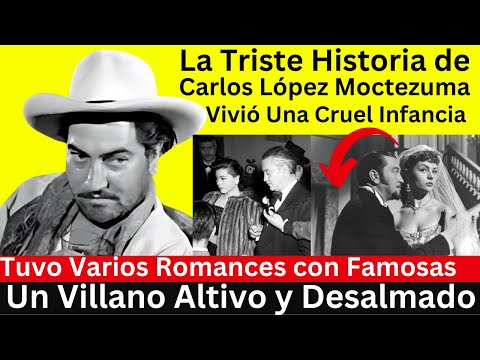
La Triste Historia de Carlos López Moctezuma
Carlos López Moctezuma: A Journey Through His Life
Introduction to Carlos López Moctezuma
- The video introduces Carlos López Moctezuma, highlighting his significance in cinema as a beloved villain and an important figure in horror films.
- Viewers are encouraged to subscribe for updates on their favorite artists, emphasizing the channel's focus on entertainment news.
Early Life and Background
- Carlos was born on November 19, 1909, in Mexico City, just after the start of the Mexican Revolution (1910).
- He was the son of a prominent railway executive during Porfirio Díaz's presidency when railroads were crucial to Mexico’s economy.
- His father worked at Ferrocarriles Nacionales de México, which was highly regarded at that time.
Family and Upbringing
- José López Moctezuma met María Pineda; they married and had several children including Carlos.
- Carlos was the only child born in Mexico City; his family moved there shortly before his birth.
- The era lacked birth control measures, leading to large families; this influenced Carlos's upbringing.
Education and Career Beginnings
- Despite financial struggles due to the revolution affecting his father's job, education remained a priority for his family.
- After political changes led by Francisco I. Madero restored stability, José regained employment and continued supporting his children's education.
Transition into Acting
- Carlos attended a religious Marist school before pursuing administration studies based on his father's suggestion.
- He lived near what is now the Wax Museum in Mexico City and developed an interest in theater while working at Ferrocarriles Nacionales de México.
Pursuing Theater and Acting Studies
- While working as a messenger and later in administration at the railway company, he frequented theaters which sparked his passion for acting.
- Despite initial resistance from his father regarding pursuing acting professionally, he decided to follow this path during the 1930s.
Education in Performing Arts
- Using earnings from his job at Ferrocarriles Nacionales de México, he financed his studies at Bellas Artes' theater school while balancing work commitments.
Carlos López Moctezuma: The Iconic Villain of Mexican Cinema
Early Life and Career Beginnings
- Carlos López Moctezuma was recognized for his strong personality and clear eyes, making him ideal for villainous roles in cinema. He studied under Virginia Fábregas and Fernando Soler.
- His most memorable characters were those of a proud, ambitious villain who thrived on the suffering of others, although he also portrayed good-natured characters. However, it was his villainous roles that solidified his legacy in film.
- After studying at Bellas Artes, he joined a theater company named Orientación for four years, where he honed his acting skills alongside notable figures like Julio Bracho and Isabela Corona.
- During this time, he developed a close friendship with fellow actor Josefina Escobedo, which eventually blossomed into romance leading to their marriage.
Personal Life and Marriage
- Carlos married Josefina Escobedo after two and a half years of dating; they remained together until death. They had two children: María Josefina (deceased) and Carlos López Escobedo (a copyright lawyer).
- Despite being both actors, they rarely worked together professionally. This separation may have contributed to the strength of their marriage as they maintained individual careers.
- Their relationship was characterized by discretion; there were no public scandals or infidelities associated with them—contrasting with many other celebrity couples.
Rise to Fame
- A pivotal moment in Carlos's career came when he landed a small but significant role in "El látigo," which opened doors to numerous opportunities thereafter.
- He gained recognition as a talented villain through various films including "Los Cadetes," where he made an impression despite initially having minor roles.
- Critically acclaimed by Emilio García Riera as a "luxury villain," Carlos participated in early Mexican television and teleteatro programs while occasionally appearing in radionovelas.
Notable Roles and Legacy
- His first major starring role was in "Los millones de Chaflán," which led to rapid ascension within the industry as one of Mexico's most beloved villains due to his exceptional acting skills.
- In 1941, he starred in "Cuando los hijos se van" portraying a wicked son that evoked deep emotional responses from audiences through his performance.
- By 1942, Carlos had become an established face known for playing malevolent characters such as the antagonist in "El peñón de las ánimas."
Characterization and Impact
- His portrayal of villains often depicted traits like arrogance and ignorance; these performances resonated deeply with audiences during that era.
- Notably featured in films like "Maclovia" and "Río Escondido," he became synonymous with the archetype of the ruthless cacique or gangster character prevalent in Mexican cinema.
- Despite being cast as fearsome villains, audiences found him endearing; people would sometimes avoid him on the street out of fear due to his intense screen presence.
Carlos Moctezuma: The Complex Legacy of a Villain
Impact of Rejection on Carlos Moctezuma
- Carlos Moctezuma, known for his sociable nature, faced emotional challenges when he experienced rejection from others, affecting his daily life and interactions.
Career Highlights and Challenges
- Despite his talent, Moctezuma's performances sometimes overshadowed leading actors like Jorge Negrete in films such as "Caniva," causing tension among cast members.
- His exceptional work led to international opportunities; he worked in countries like Argentina and Spain, becoming a sought-after actor for villainous roles.
Recognition and Awards
- In 1948, he competed for the Ariel de Plata award with "Caniva," which elevated his career despite not winning initially.
- He eventually won three Ariel awards for significant roles, including one as Regino Sandoval in "Río Escondido."
Typecasting and Versatility
- Although primarily known for playing villains, Moctezuma also portrayed good characters in films like "Padre Nuestro" and "Campeón Sin Corona."
- His versatility is evident in various genres; he played both heroic figures and complex antagonists throughout his career.
Personal Life and Values
- Outside of acting, Moctezuma was described as a warm family man who instilled strong values in his children while balancing work commitments.
Carlos López Moctezuma: A Legacy in Mexican Cinema
Early Collection of Photographs
- Carlos López Moctezuma began collecting photographs from various scenes, requesting copies for a good price, leading to an extensive personal collection now housed at the National Autonomous University of Mexico (UNAM).
- At UNAM, there are 41 albums containing professional photographs, journalistic notes from his era, drawings, film critiques, and personal notes that have been preserved and digitized.
Personal Life and Health Struggles
- Known for his warm demeanor and respect among peers, López Moctezuma faced significant health challenges due to a demanding work schedule that led to a gastric ulcer and pulmonary emphysema.
- His family decided to leave Mexico City for Aguascalientes seeking a better climate; however, his health had deteriorated significantly by then.
Final Years and Passing
- On July 4th, 1980, Carlos López Moctezuma passed away from an acute myocardial infarction linked to his existing health issues. He was remembered as a kind person despite often portraying villains on screen.
- Many colleagues attended his funeral in Mexico City’s Panteón Jardín where he was laid to rest alongside other famous personalities.
Career Highlights
- His last cinematic role was in "Como México no hay dos," featuring Vicente Fernández. This marked the end of a prolific career spanning over 200 films and numerous theater productions.
- He received another Ariel de Plata posthumously for this final performance. Notable theatrical works included "Luz de Gas" and "Don Juan Tenorio."
Recognition as an Actor
- Over four decades of acting included more than 150 plays and radio programs focused on horror—a genre he enjoyed immensely.
- The Mexican Academy awarded him three Ariel prizes for his portrayals of villains. Despite being recognized as the face of evil onscreen, he was described as genuinely kind-hearted off-screen.
Lasting Impact
- His epitaph reads “the most beloved villain in the world,” reflecting the contrast between his on-screen persona and real-life character.