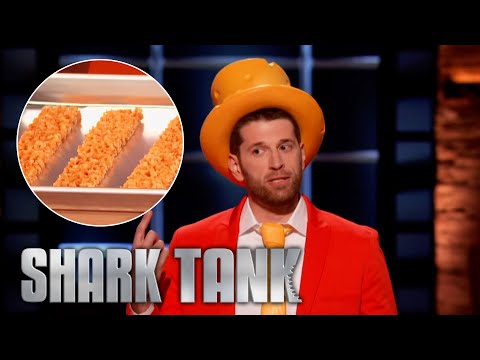
The Sharks Offer Entrepreneur Cheesy Deals for Just The Cheese | Shark Tank US | Shark Tank Global
Introduction to David Sharfman and His Cheese Business
Background and Early Experience
- David Sharfman introduces himself as a cheese maker from Madison, Wisconsin, sharing his family's history in the cheese industry since 1991.
- He recounts his early experiences working at his parents' cheese company, starting with factory jobs at age 16 to learn the business without special treatment.
Entrepreneurial Journey
- After graduating from business school, he worked as a consultant in New York City but ultimately desired to return to small business.
- David expresses the importance of securing investment for his product, "Just the Cheese," emphasizing the potential job losses if it fails.
Product Overview: Just the Cheese
Unique Selling Proposition
- David humorously addresses the high investment request by highlighting that their business revolves around delicious cheese.
- He explains how they create their snack bars using only Wisconsin milk and fresh cheese without fillers or additives.
Product Features
- The snack bars are marketed as a healthy grab-and-go option with low calories (75 per bar), high protein (8 grams), and being sugar-free and gluten-free.
- He mentions their sales success on Amazon, selling between 400 to 700 boxes daily.
Market Positioning and Competition
Competitive Landscape
- Acknowledging competition, David notes that while others may replicate their product conceptually, there is significant expertise involved in cheesemaking.
- He identifies two major competitors who have private equity backing but emphasizes that "Just the Cheese" offers a unique flavor profile compared to cheaper alternatives.
Sales Performance
- In its first year of operation, "Just the Cheese" achieved $3.5 million in sales; current year-to-date figures show $3.7 million with four months remaining.
Business Growth Strategy
Expansion Plans
- Currently distributed in 700 stores plus an additional 1,300 through a prominent convenience store chain (7-Eleven).
Financial Insights
- David discusses self-funding efforts totaling approximately $1 million invested into growing the company without external investors.
Financial Viability and Offers
Cost Structure
- The wholesale price is set at $0.95 with retail pricing around $1.27-$1.99; margins range from 17% to 20%.
Investment Offer Discussion
- An investor expresses interest by offering $500,000 for a royalty deal of $0.20 per bar sold, indicating potential challenges regarding profit margins moving forward.
Shark Tank Negotiations: The Cheese Snack Company
Initial Offer and Marketing Potential
- The entrepreneur expresses willingness to negotiate, offering $500,000 for a $0.20 royalty per bar, emphasizing the potential for significant marketing leverage.
- He believes that integrating the product into his portfolio could enhance its market presence, aligning interests with the investors.
Feedback on Product Viability
- One investor acknowledges the rapid sales growth of the company but personally dislikes the taste, leading to their decision to withdraw from negotiations.
- Another investor recognizes the brand's strength but doubts market space due to increasing competition among cheese producers.
Investment Concerns and Valuation
- An investor shares concerns about competitive advertising and questions whether any brand will dominate in this space; thus, they opt out of investing.
- They analyze potential returns based on a hypothetical sale valuation of $50 million, concluding that the risk does not justify investment at this stage.
Continuing Negotiations with Mr. Wonderful
- Despite four sharks opting out, one remains interested in providing half a million dollars for a 20-cent royalty per bar without equity involvement.
- The entrepreneur is asked about flexibility regarding royalty fees and deal terms; he insists on not negotiating against himself while trying to find common ground.
Counteroffers and Final Decisions
- A counteroffer is made by another shark at $0.15 per bar; however, discussions reveal differing views on cash flow stress related to short-term royalties.
- After several rounds of negotiation where offers are adjusted downwards or rejected outright, an investor proposes $500,000 for 15% equity without royalties.
Conclusion of Negotiations
- The entrepreneur declines an initial offer due to perceived value constraints but continues discussions with other sharks who adjust their proposals.
- Ultimately, after weighing all options presented by various investors and considering future scalability potential, he decides against accepting any offers.