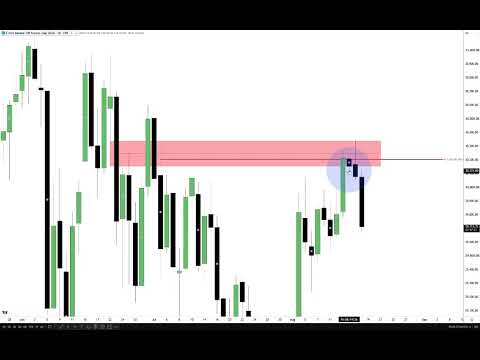
ICT Obsidian Teaching

ICT Obsidian Teaching

Overview of Trading Concepts and Daily Chart Analysis

Introduction to PD Arrays

  • The speaker introduces the concept of using Obsidian model for trading analysis, emphasizing the importance of focusing on one Premium Daily Array (PDA) at a time.
  • The analogy of gold mining is used to explain the process of finding profitable trades, highlighting that traders often need to dig deeper for significant opportunities.

Understanding Market Behavior

  • The discussion includes how price action can indicate bullish or bearish trends based on candlestick formations and their positions relative to key levels.
  • A clear distinction is made between bearishness and bullishness in terms of where candle bodies close within a PDA, with specific rules outlined for each scenario.

Analyzing Price Action

  • The speaker stresses that not all gaps in price action represent supply and demand zones, urging listeners to consider inefficiencies instead.
  • Observations from previous market behavior are shared as evidence for predicting future movements, reinforcing the need for careful analysis before making assumptions about market direction.

Daily Chart Insights

  • Emphasis is placed on taking one PDA at a time rather than relying solely on personal desires or emotions when interpreting price action.
  • The speaker notes that PDAs do not expire like traditional supply and demand zones; they remain relevant until proven otherwise by market behavior.

Key Levels and Projections

  • Specific price levels are discussed as critical points for determining potential market movement, including references to wicks and gaps in candlestick patterns.
  • Institutional order flow is highlighted as being visually represented through candlesticks, which cannot hide true market intentions.

Recent Market Activity Analysis

  • A detailed examination of recent closing prices reveals early warning signs indicating potential bearish sentiment in the market.
  • The opening price dynamics are analyzed concerning previous highs and lows, suggesting caution regarding bullish expectations based on past performance.

Pre-Market Session Dynamics

  • Observations from pre-market sessions are linked to expected trading behaviors during regular hours, particularly around key timeframes such as 7:00 AM to 9:00 AM Eastern Time.
  • Discussion includes how initial trading ranges can set up expectations for subsequent movements throughout the day.

Building Trading Positions

  • Strategies for entering short positions are elaborated upon, with emphasis placed on identifying optimal entry points based on prior price actions.
  • The importance of understanding liquidity pools is reiterated as essential knowledge for anticipating future price movements effectively.

Conclusion: Learning from Experience

  • Encouragement is given to traders to trust their own analyses over external opinions while remaining open-minded about learning new strategies.
  • Final thoughts emphasize that successful trading requires continuous observation and adaptation based on evolving market conditions.

Trading Insights and Market Analysis

Entry Strategy and Market Dynamics

  • The speaker discusses entering a trade at relative equal lows, indicating a strategic approach to market entry based on observed price levels.
  • A new week opening gap was identified, leading to a partial exit as the price hit the upper quadrant of the trading range.
  • The speaker mentions updating followers on Twitter about lowering stop losses and planning to take partial profits during the trade.
  • A limit order was placed just above 13750, which was publicly called out prior to execution, demonstrating transparency in trading decisions.

Intraday Trading Techniques

  • The discussion shifts to intraday trading using a market maker sell model, emphasizing smart money reversals for low-risk short entries.
  • Importance is placed on analyzing higher time frames (daily charts) before making decisions based on smaller time frames (like one minute), ensuring that trades are supported by broader market trends.

Concept of Obsidian in Price Action

  • The term "Obsidian" is introduced, referring to two opposing wicks within a narrative; this concept helps traders understand price action dynamics between these levels.
  • The speaker promises further details about how these concepts can influence trading strategies in future discussions.

Turn any video into a summary like this

YouTube links, meetings, lectures. With transcripts, search, and chat.

Video description

Government Required Risk Disclaimer and Disclosure Statement CFTC RULE 4.41 – HYPOTHETICAL OR SIMULATED PERFORMANCE RESULTS HAVE CERTAIN LIMITATIONS. UNLIKE AN ACTUAL PERFORMANCE RECORD, SIMULATED RESULTS DO NOT REPRESENT ACTUAL TRADING. ALSO, SINCE THE TRADES HAVE NOT BEEN EXECUTED, THE RESULTS MAY HAVE UNDER-OR-OVER COMPENSATED FOR THE IMPACT, IF ANY, OF CERTAIN MARKET FACTORS, SUCH AS LACK OF LIQUIDITY. SIMULATED TRADING PROGRAMS IN GENERAL ARE ALSO SUBJECT TO THE FACT THAT THEY ARE DESIGNED WITH THE BENEFIT OF HINDSIGHT. NO REPRESENTATION IS BEING MADE THAT ANY ACCOUNT WILL OR IS LIKELY TO ACHIEVE PROFIT OR LOSSES SIMILAR TO THOSE SHOWN Trading performance displayed herein is hypothetical. Hypothetical performance results have many inherent limitations, some of which are described below. No representation is being made that any account will or is likely to achieve profits or losses similar to those shown. In fact, there are frequently sharp differences between hypothetical performance results and the actual results subsequently achieved by any particular trading program. One of the limitations of hypothetical performance trading results is that they are generally prepared with the benefit of hindsight. In addition, hypothetical trading does not involve financial risk, and no hypothetical trading record can completely account for the impact of financial risk in actual trading. For example, the ability to withstand losses or to adhere to a particular trading program in spite of trading losses are material points which can also adversely affect actual trading results. There are numerous other factors related to the markets in general or to the implementation of any specific trading program which cannot be fully accounted for in the preparation of hypothetical performance results and all of which can adversely affect actual trading results. U.S. Government Required Disclaimer – Commodity Futures Trading Commission Futures and Options trading has large potential rewards, but also large potential risk. You must be aware of the risks and be willing to accept them in order to invest in the futures and options markets. Don’t trade with money you can’t afford to lose. This is neither a solicitation nor an offer to Buy/Sell futures or options. No representation is being made that any account will or is likely to achieve profits or losses similar to those discussed on this web site. The past performance of any trading system or methodology is not necessarily indicative of future results. Trade at your own risk. The information provided here is of the nature of a general comment only and neither purports nor intends to be, specific trading advice. It has been prepared without regard to any particular person’s investment objectives, financial situation and particular needs. Information should not be considered as an offer or enticement to buy, sell or trade. You should seek appropriate advice from your broker, or licensed investment advisor, before taking any action. Past performance does not guarantee future results. Simulated performance results contain inherent limitations. Unlike actual performance records the results may under or over compensate for such factors such as lack of liquidity. No representation is being made that any account will or is likely to achieve profits or losses to those shown. The risk of loss in trading can be substantial. You should therefore carefully consider whether such trading is suitable for you in light of your financial condition. If you purchase or sell Equities, Futures, Currencies or Options you may sustain a total loss of the initial margin funds and any additional funds that you deposit with your broker to establish or maintain your position. If the market moves against your position, you may be called upon by your broker to deposit a substantial amount of additional margin funds, on short notice in order to maintain your position. If you do not provide the required funds within the prescribed time, your position may be liquidated at a loss, and you may be liable for any resulting deficit in your account. Under certain market conditions, you may find it difficult or impossible to liquidate a position. This can occur, for example, when the market makes a “limit move.” The placement of contingent orders by you, such as a “stop-loss” or “stop-limit” order, will not necessarily limit your losses to the intended amounts, since market conditions may make it impossible to execute such orders.