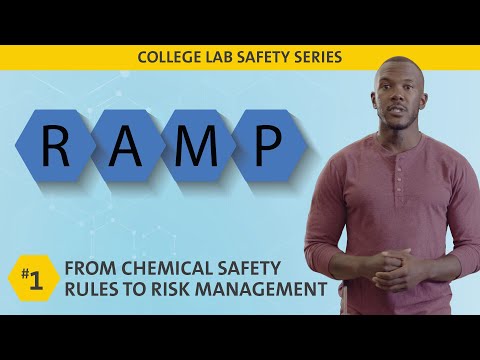
From Chemical Safety Rules to Risk Management | ACS College Safety Video #1
Understanding Lab Safety: The RAMP Approach
Introduction to Lab Safety
- Personal protective equipment (PPE) is crucial in chemistry labs, selected based on a risk assessment of chemicals and simulated conditions.
- This video series aims to expand upon high school lab safety rules, establishing basic principles applicable in various situations.
The RAMP Framework for Risk Management
- RAMP stands for Recognize hazards, Assess the risk, Minimize the risk, and Prepare for emergencies. This acronym helps remember essential steps in managing risks in the lab.
Step 1: Recognizing Hazards
- A hazard is anything that can cause harm; common sources include chemicals, equipment, and procedures.
- Sulfuric acid exemplifies a dual-use chemical—useful yet hazardous due to its potential to cause chemical burns.
Step 2: Assessing Risk
- Risk combines the severity of a hazard with the likelihood of exposure; it can be calculated as Risk = Severity × Likelihood.
- For instance, while nitric acid is highly hazardous, controlled exposure minimizes risk. Conversely, large spills increase danger significantly.
Step 3: Minimizing Risk
- Familiar lab rules stem from minimizing risks associated with hazards—like using chemical hoods or wearing eye protection.
- Questions to consider include whether less hazardous chemicals can be used or if reactions can be conducted at lower temperatures or concentrations.
Step 4: Preparing for Emergencies
- Preparation involves knowing how to respond to incidents like fires or spills; proactive thinking about potential mishaps is essential for safety.
Cultivating a Culture of Safety
- A positive safety culture requires individual responsibility—valuing safety and promoting safe practices among peers.
- Everyone working with chemicals must possess appropriate knowledge and attitudes towards safety in laboratory settings.
Conclusion: Beyond Rules - Understanding Hazards and Risks
- Effective lab safety goes beyond following rules; it involves understanding hazards and assessing their risks critically.