Coagulation Cascade Explained
Haemostasis: The Body's Response to Vascular Injury
Overview of Haemostasis
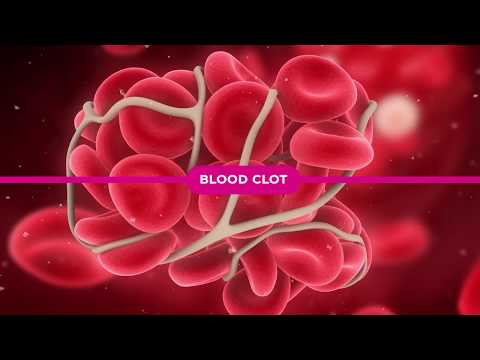
- Haemostasis is the physiological process that limits blood loss following vascular injury, involving activated platelets, red blood cells, and fibrin.
- The formation of blood clots is mediated by approximately 30 proteins known as clotting factors.
Initiation of Platelet Activation
- Vascular injury exposes collagen and von Willebrand factor from the vessel wall, leading to platelet adhesion and partial activation.
- Activated platelets change shape and release signaling molecules that recruit additional platelets to the injury site.
- Tissue factor plays a crucial role in initiating the coagulation cascade upon contact with Factor 7a and Factor 10a in the bloodstream.
Coagulation Cascade and Thrombin Production
- The interaction between tissue factor and clotting factors results in a small amount of thrombin production, which fully activates platelets.
- One molecule of Factor Xa can generate up to 1000 molecules of thrombin through a cascade effect on the platelet surface.
Formation of Fibrin Clot
- Thrombin converts fibrinogen into insoluble fibrin strands at the site of injury while activating Factor XIII for crosslinking fibers.
- The resulting fibrin mesh stabilizes the clot by trapping more platelets and red blood cells, promoting further growth.
Breakdown of Clot (Fibrinolysis)
- As vessel integrity is restored, endothelial cells secrete tissue plasminogen activator, which activates plasmin to degrade fibrin.