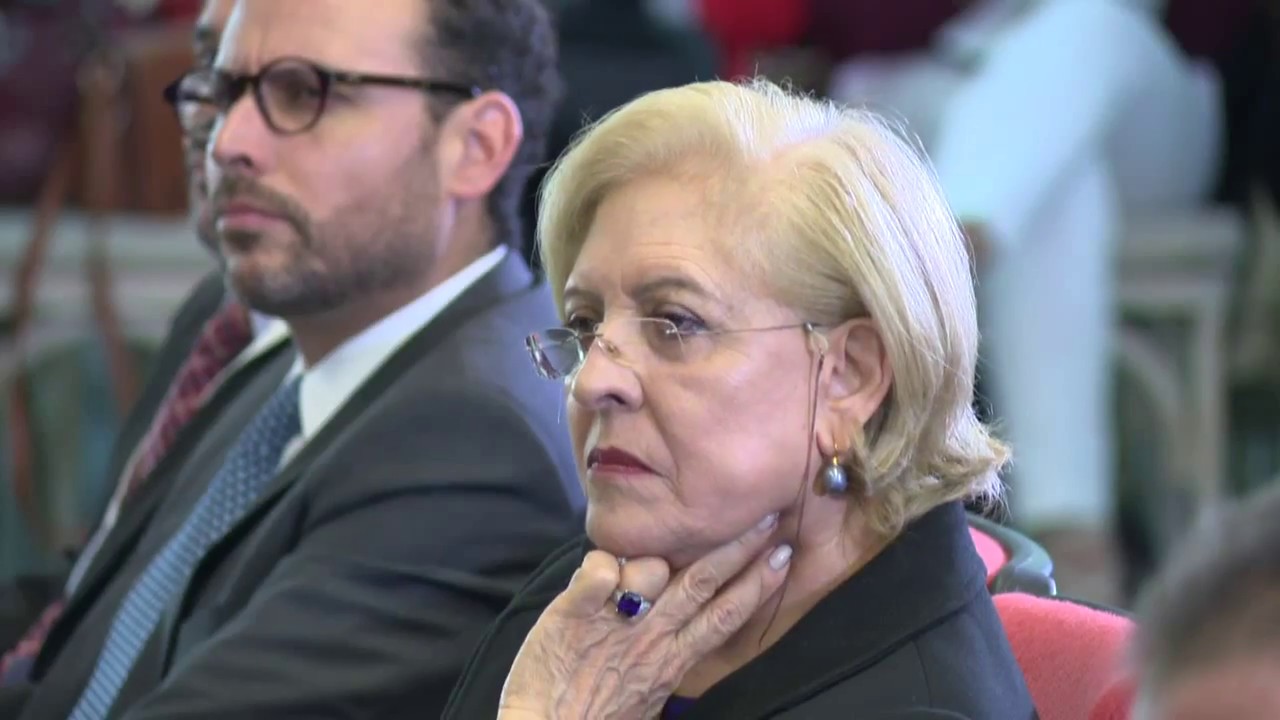
Inauguración Cumbre Nacional de Gobierno Abierto
Welcome to the National Institute of Transparency
Introduction and Safety Information
- The event begins with a welcome message from the National Institute of Transparency, Access to Information, and Protection of Personal Data.
- Attendees are informed about emergency exits: one on the left leading to an emergency staircase and another in the lobby.
- Signage is provided for evacuation routes, ensuring safety during emergencies.
- A Civil Protection brigade is present, along with medical services for any potential incidents.
Presentation of Distinguished Guests
- The distinguished presidium is introduced, including Dr. Francisco Javier Acuña Llamas, President Commissioner of the institute.
- Other notable attendees include Joel Sala Suárez (Coordinator), Tomás Severino Ortega (Director General), and José Orlando Espinoza Rodríguez (National Coordinator).
- Additional guests include Catina Argueta from UNDP Mexico and Alonso Serdán Verástegui from the Open Government Partnership.
Opening Remarks by Joel Sala Suárez
- Joel Sala Suárez expresses his honor in welcoming various stakeholders involved in open government initiatives.
- He acknowledges local civil society actors who have been instrumental in promoting open government practices across different states.
- The presence of over 17 local institutes and 27 commissioners highlights collaborative efforts among authorities and media representatives at this national summit.
Reflection on Open Government Initiatives
- The summit serves as a moment for reflection after three years of promoting local open government exercises.
- Emphasis is placed on federalism within the national transparency system, which has led to public policy instruments like open government models and proactive transparency policies.
Tools for Implementation
- Various public policy tools aim to provide practical resources for state institutions and civil society to realize transparency goals effectively.
- A bank of best practices was created initially based on international standards but will now incorporate local insights through ongoing discussions.
Importance of Measuring Outcomes
- A manual for participants regarding open government practices is made available as part of ongoing evaluation efforts.
- There’s a need to assess whether recent initiatives meet public expectations or require adjustments due to changing political contexts both domestically and internationally.
Closing Thoughts on Youth Engagement
- Open government should bridge gaps between authority decisions and everyday issues faced by citizens, especially young voters participating politically for the first time.
Empowering Society Through Open Government
The Role of Open Government in Democracy
- Emphasizes the importance of empowering society to voice their concerns, urging authorities to listen humbly to public issues and collaboratively find solutions.
- Advocates for institutionalizing conflict and debate within open government frameworks, promoting constructive criticism as a means to address public problems that threaten democracy.
- References Pericles' ancient principles of open governance, highlighting the need for trust and integrity in democratic processes.
- Stresses the necessity of maintaining core values inherent in open government while revitalizing democracy through collaborative efforts.
Collaboration as a Fundamental Principle
- Acknowledges that achievements in open government are rooted in collaboration among various stakeholders, countering linear communication trends that prioritize individual personalities over collective action.
- Expresses gratitude towards INAI members for their unanimous decisions despite controversies, showcasing unity in governance practices related to open government.
Recognition of Key Contributors
- Thanks María Patricia Cursa for her continuous support within the commission, which has strengthened proposed instruments for enhancing open governance.
- Highlights the role of civil society organizations and local authorities in fostering participation and building a more equitable Mexico free from corruption.
International Support and Initiatives
- Acknowledges international allies who contribute significantly to initiatives like "Follow the Money," emphasizing global cooperation in promoting transparency.
- Recognizes the Secretary of Access to Information's team for their professionalism and diligence, contributing to significant advancements in Mexico's open government narrative.
Achievements and Future Directions
- Introduces a video summarizing milestones since the General Law on Transparency was enacted, marking the beginning of local initiatives aimed at collaborative problem-solving between citizens and authorities.
- Reports participation from 26 states, over 120 civil organizations, and numerous local guarantor bodies working together on action plans addressing diverse public policy issues such as education, health, security, etc.
Open Government Initiatives in Veracruz
Context of Corruption in Veracruz
- The speaker discusses their active role in open government exercises in Veracruz, highlighting ongoing corruption issues from the previous administration that remain unresolved.
- They urge civil society to continue advocating for transparency and participation, emphasizing that open government should be a tool utilized by all governmental entities to deliver results to the population.
Responsibilities of Public Servants
- Public servants are reminded of their dual responsibility: ensuring public access to information while promoting open government initiatives.
- A case is mentioned where a representative dismissed citizen involvement in governance, indicating a generational issue regarding public engagement.
Empowering New Generations
- The speaker stresses the importance of empowering new generations to embrace and promote open government as a vital tool for civic engagement.
- They reiterate that citizens grant sovereignty to their leaders, urging civil society not to lose momentum in pushing for accountability and transparency.
Achievements Despite Challenges
- Despite past administrative challenges, tangible results have been achieved through open government efforts, including a platform addressing missing persons cases.
- Recognition is given to key figures who contributed significantly to these initiatives, underscoring collaborative efforts within the state.
Future Directions for Open Government
- The need for continuous evaluation and enhancement of open government practices is emphasized; it should empower citizens rather than merely serve as a bureaucratic tool.
- The speaker concludes with gratitude towards those involved in advancing these initiatives and highlights the importance of recognizing citizen power in resolving community issues.
The Role of International Alliances
Introduction by Alonso Serdán Verástegui
- Alonso Serdán Verástegui expresses his excitement about participating in discussions on open government as part of an international alliance focused on reform.
Optimism Amidst Global Challenges
- He emphasizes optimism within the organization despite global setbacks faced by democracy and civil liberties over recent years.
Decline of Trust in Governance
- Citing reports from Freedom House, he notes 2017 was particularly challenging for democracy worldwide due to attacks on civil society and freedom of expression.
Call for Action Against Authoritarianism
- Verástegui calls upon participants from various countries involved with the alliance to stand firm against authoritarian forces threatening democratic values.
Open Government Initiatives and Challenges
Importance of Action Plans
- The year marks a significant increase in action plans, with 76 countries and local governments developing specific commitments for the next two years.
- These plans aim to enhance transparency, participation, and democracy through collaboration between governments and civil society.
Strengthening the Alliance
- New standards for participation and co-creation were launched over a year ago, introducing mechanisms for creating action plans.
- Minimum requirements for participation in the alliance have been raised, alongside controls to manage country entry into the alliance.
Global Open Government Week
- An upcoming global open government week starting May 7 will feature various events aimed at promoting open governance.
- This initiative will culminate in a global summit in Tbilisi, Georgia, scheduled for mid-July.
Key Themes of Action Plans
- Five key themes are identified to guide the development of these action plans: empowering citizens with useful information and establishing feedback mechanisms on public services.
- Emphasis is placed on fostering public policy participation from traditionally excluded groups, such as indigenous populations in Costa Rica.
Addressing Corruption
- Combating corruption is highlighted as a central theme across international forums in 2018; it is crucial that new action plans incorporate anti-corruption measures.
Challenges Ahead: Elections and Governance
Political Context
- The current year presents challenges due to elections or governmental changes occurring in 67 countries including Paraguay, Brazil, Colombia, Costa Rica, and Mexico.
Role of Civil Society
- Civil society has a critical role during this transitional period to ensure three main objectives: prevent regressions in transparency and accountability; maintain continuity of open government initiatives; encourage political candidates to commit to an agenda of openness regardless of their political affiliation.
Call for Commitment
- A strong call is made for new leaders emerging from electoral processes to push ambitious reforms aimed at enhancing government transparency and accountability.
The Essence of Open Government
Definition and Elements
- Open government is defined as a modern tool that fosters better interaction between states and citizens by ensuring transparency through public data access.
Core Components
Open Government and Public Participation
The Concept of Open Government
- Open government promotes horizontal interaction between the government and society, allowing for joint identification of public issues, prioritization, and resolution strategies.
- It signifies a cultural shift in public administration towards participatory democracy, facilitated by good administrative practices and robust legal frameworks.
Mechanisms for Engagement
- Key mechanisms include transparency, accountability, citizen empowerment, deliberation, and dialogue; leveraging technology is essential for informed citizen pressure on governmental decisions.
- A strong element of open government is the promotion of open data—information in reusable formats that maximizes societal relevance and strategic positioning of public demands.
Institutional Framework
- The National Transparency System aims to enhance institutional quality through effective transparency practices and the right to access information at a national level.
- The Transparency Law mandates collaboration between INAI (National Institute for Transparency) and civil society to create mechanisms promoting governmental openness.
Implementation Strategies
- Regulatory bodies are tasked with developing electronic platforms to ensure compliance with accessibility needs regarding public information dissemination.
- Technical guidelines from the National Transparency System establish formats for publishing information to ensure its accuracy, reliability, timeliness, and consistency.
Conclusion on Governance Improvement
- Mexico has a constitutional mandate supporting democratic attributes alongside organizational capabilities aimed at enhancing governmental effectiveness in addressing societal challenges.
- This framework seeks to improve legitimacy and sustainability in governmental interventions concerning major social issues.
The Role of Civil Society in Sustainable Development
Introduction by Katyn Argueta
- Katyn Argueta acknowledges the invitation from UNDP Mexico to discuss significant events organized by INAI focused on transparency and civic participation.
Agenda 2030 Overview
- In September 2015, 193 world leaders adopted "Transforming Our World: The 2030 Agenda for Sustainable Development," which includes 17 universal goals aimed at achieving sustainability by 2030.
Ambitious Goals of SDGs
- The Sustainable Development Goals (SDGs), building upon Millennium Development Goals (MDGs), aim not only at poverty alleviation but also address structural causes behind inequalities.
Participatory Approach
Promoting Sustainable Development through Local Governance
The Role of Local Initiatives in Global Development
- Emphasizes that development is essential for sustainability, particularly in localizing the global development agenda from Peru.
- Celebrates the co-creation initiative led by INAI, which fosters collaboration between local governments and civil society to implement Sustainable Development Goals (SDGs), specifically Goal 16 on promoting just, peaceful, and inclusive societies.
Importance of Open Government Principles
- Highlights the integration of open government principles—transparency, participation, and accountability—into the 2030 Agenda for Sustainable Development.
- Calls for citizen engagement in public policy spaces to ensure people are at the center of governance efforts.
Reflections from Civil Society Organizations
- Introduces a message from Tomás Severino representing civil society organizations within the Open Government Partnership in Mexico.
- Acknowledges ten organizations working since 2011 towards enhancing open government initiatives and expresses support for current events aimed at recognizing civil society's role.
Challenges and Opportunities in Open Government
- Discusses reflections on challenges faced by civil society regarding open government processes and emphasizes learning from experiences across different states.
- Notes a recent gathering where over 130 participants discussed advancements, challenges, and strategies to improve democratic practices through open governance.
Addressing Concerns about Participation and Effectiveness
- Identifies widespread willingness among citizens to engage but also highlights confusion about what constitutes effective open government practices.
- Points out varying levels of activity among oversight bodies related to open governance principles, indicating a need for stronger local support from INAI.
Future Directions for Inclusive Governance
- Discusses complexities within municipal governments' capacities to implement open governance effectively as a significant future challenge.
- Raises questions about incorporating marginalized groups into governance frameworks while addressing corruption through social accountability mechanisms.
Reflection on Past Experiences with Open Government Initiatives
- Reflecting on nearly a year since leaving the tripartite technical secretariat due to illegal digital surveillance issues; stresses ongoing commitment to open government despite past challenges.
Open Government: Insights from the National Summit
The Role of Information in Open Government
- Optimism within the global alliance suggests that better information and civil society engagement reduce opportunities for government simulation, highlighting a key theme discussed over three days at the event.
- Mexico is noted as a unique case where oversight bodies are actively involved in open government processes, which not only deserves recognition but also brings significant responsibility.
Local Open Government Initiatives
- There is a perception that local open government exercises in Mexican states require a more active role from INAI (National Institute of Transparency), especially where oversight bodies may lack effectiveness.
- The hope is expressed for progress on various agenda items, emphasizing collective reflection and collaboration during the summit.
Acknowledgment of Contributions
- Dr. Francisco Javier Acuña Llamas, President Commissioner of INAI, is introduced to deliver an inaugural message for the first national summit focused on local governance.
- Recognition is given to previous speakers who highlighted critical points regarding the evolution of open government concepts throughout their discussions.
Collaborative Efforts and Challenges
- Dr. Acuña reflects on his colleagues' contributions since their arrival at INAI, acknowledging Joel Sala Suárez's leadership in shaping the agenda with diverse perspectives.
- The importance of perseverance in developing an effective agenda for open government is emphasized, despite differing views among members.
Historical Context and Future Directions
- The current moment presents both challenges and opportunities for democratic configuration in Mexico amidst skepticism about governmental efficacy.
Government Open: A Path to Democratic Consolidation?
Expanding the Concept of Open Government
- The aim is to broaden the understanding of open government beyond a mere slogan, incorporating various state pillars such as parliament and judiciary.
- Emphasis on including autonomous bodies as essential components of the state, recognizing their role in governance.
Reflection on Democratic Transition
- Acknowledgment of 40 years of democratic transition from 1977 to 2017, highlighting its significance in current discussions.
- The presence of international experts at the event is seen as an opportunity for validation and support for open government initiatives.
Contradictions in Governance
- Despite having advanced institutions and norms, Mexico faces severe issues like poverty, inequality, violence, and corruption. This presents a stark contradiction between progress and ongoing challenges.
- The speaker suggests that these contradictions necessitate deep reflection on the effectiveness of existing governance structures.
Open Government as a Democratic Motivator
- Proposes that open government could serve as a key motivator for democracy amidst global challenges faced today. This assertion underscores its potential importance in contemporary governance debates.
Recognition of Key Figures and Institutions
- Acknowledges various commissioners from different states who are present at the event, emphasizing solidarity among local and national transparency systems.
- Highlights contributions from specific individuals involved in promoting transparency within their respective regions, reinforcing community engagement in governance efforts.
Inauguration of National Summit on Open Government
Opening Remarks and Introduction to the National Open Government Summit
Welcome and Event Details
- The event begins with applause, indicating a warm welcome to attendees.
- Álvaro Ramírez Alujas is set to deliver the opening message shortly; participants are encouraged to stay in their seats.
- Attendees can engage in discussions using hashtags like #co-creaciónlocal and #cumbregobiernoabierto, and follow the live stream on the official summit website.
Background of Open Government Initiative
- The initiative for open government began in 2015 following the enactment of the General Law on Transparency and Access to Public Information.
- Its primary goal is to foster collaborative actions between citizens and authorities for addressing local public issues through a national transparency system.
Achievements of Open Government Initiative
- As a result of strategic partnerships, 16 local technical secretariats have been established, launching 10 action plans with over 60 public policy commitments across various sectors including budget accountability, environmental issues, vulnerable groups, social oversight, education, public safety, urban development, and health.
Future Vision for Open Government
- The aim is for open government to remain a platform for managing public policies collaboratively while promoting dialogue between society and government focused on citizen needs.
- Participants are invited to actively engage in this dialogue as open government is a collective effort.
Conclusion of Opening Session