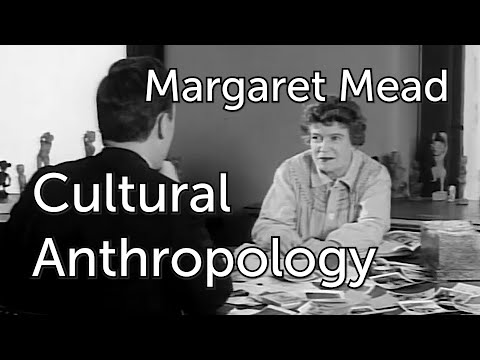
Margaret Mead interview on Cultural Anthropology (1959)
Understanding Anthropology and the Concept of the "Happy Savage"
The Evolution of Self-Reflection in Humanity
- Only recently have humans begun to objectively study themselves through anthropology, as noted by Margaret Mead, a prominent anthropologist at the American Museum of Natural History.
Stereotypes and Misconceptions about Primitive Peoples
- Mead discusses common stereotypes, such as the "happy savage," which depict primitive peoples as carefree individuals living idyllic lives on tropical islands.
- She reflects on her own experiences in Samoa during the 1920s, where she initially embraced this stereotype but later recognized its inaccuracies.
The Reality of Primitive Life
- Contrary to popular belief, many so-called "savages" live in harsh environments due to being pushed out of more habitable areas by civilization.
- These environments often include malaria-infested swamps or sparse arctic regions that make survival challenging and foster distrust among people.
Cultural Variability and Emotional Tone
- Mead highlights that happiness varies significantly among different groups; for instance, Samoans generally exhibit greater happiness compared to some New Guinean tribes.
- Small group dynamics can lead to significant cultural shifts based on leadership changes or population losses, affecting societal ethos.
Learning from Diverse Societies
- Mead emphasizes that studying diverse societies allows anthropologists to challenge ethnocentric views and broaden understanding of human potential.
Cultural Boundness and Ethnocentrism
The Challenge of Ethnocentric Views
- Americans often view their society as superior due to historical migration patterns; this perspective limits understanding of other cultures' values and practices.
The Role of Anthropology in Broadening Perspectives
- Anthropology serves as a tool for Americans (and others with similar mindsets) to recognize their culture's recent development and unique characteristics compared to global diversity.
Misconceptions About Social Norms
- Mead discusses how applying Western marriage norms (like monogamy) can lead to misunderstandings when evaluating societies with different sexual relationship structures.
The Evolution of Marriage and Gender Dynamics
The Historical Perspective on Marriage
- The idea that savages behave differently stems from a belief in superiority, particularly regarding monogamy. This notion was prevalent in the 19th century, where evolution placed humans at the top of a hierarchy.
- Monogamy is often mythologized as the fundamental form of human pair relations; however, polygamy has historically been limited and primarily associated with wealth or status.
- While kings may have numerous wives, most societies predominantly practiced monogamy. Variations exist, such as forms of monogamy that restrict remarriage for widows.
Sexual Morality and Gender Roles
- Societal sexual morality tends to impose stricter rules on women than men, creating discomfort for women which society equates with moral superiority.
- Current trends reflect a shift towards "brittle" or serial monogamy due to divorce allowances; individuals may be monogamous at any moment but not necessarily married to the same partner.
Gender Conflict and Social Constructs
- The perceived conflict between genders is largely influenced by societal narratives rather than inherent antagonism. Media representations often exaggerate these tensions.
- Cultural perceptions vary significantly; outsiders may view American women's freedoms as alarming compared to their own cultural norms regarding gender roles.
Shifting Responsibilities and Expectations
- Societal structures can either minimize or exacerbate gender conflicts based on how individuals are raised—submissive girls versus dominant boys create different dynamics.
- Men express concerns over increased responsibilities alongside changing gender roles, reflecting historical anxieties about shifts in power dynamics.
Concerns About Future Generations
- Discussions around children's roles in society echo past worries about youth's lack of commitment or conscience during significant historical events like World War II.
- Contemporary concerns focus on whether young people can maintain individual responsibility amidst mass media influences and societal complexities.
This structured summary captures key insights from the transcript while providing timestamps for easy reference.
Understanding Nationhood and Responsibility
The Role of Education in College Admissions
- Students are evaluating their chances for admission to various colleges, from prestigious institutions like Harvard to local community colleges. This broad perspective may diminish their sense of personal responsibility due to the vastness of the educational system.
Patriotism and War
- There is a belief that war has historically been used to foster patriotism and individual responsibility towards one's country, a notion supported by past events where nations faced danger.
Historical Context of National Identity
- Throughout history, narratives around national heroes—like William Tell or George Washington—have played a crucial role in instilling a sense of responsibility among citizens during times of conflict.
Changing Nature of Warfare
- The current global landscape presents challenges as traditional warfare becomes obsolete; major conflicts now threaten all nations equally, complicating the development of national identity and responsibility.
Transition from Nationalism to Nationhood
- The speaker introduces "nationhood" as a concept that emphasizes belonging to a collective rather than competing against other nations. This shift is essential for understanding modern responsibilities on a global scale.
Cultural Changes and Future Challenges
Anthropological Insights on Societal Change
- Anthropologists recognize significant social, cultural, and political transformations occurring globally, particularly among primitive societies adapting rapidly while developed countries face their own drastic changes.
Anticipating Future Transformations
- Developed nations may undergo profound changes in the next 25 years that could surpass those experienced by less developed regions. This transformation will require inventing new societal models rather than following existing ones.
Impact of Technology on Society
- Advancements such as automation and solar energy will alter the relationship between energy consumption and individual labor, leading to unprecedented societal shifts that future generations will experience firsthand.
Reflections on Civilization's Future
Historical Perspective on Human Progress
- An anthropologist reflecting centuries into the future might view this era as pivotal for humanity's survival, emphasizing how one generation's actions could determine civilization's fate.
Struggles with Ideologies
- Current global tensions arise from conflicting ideologies and an obsession with technological advancements. These distractions can obscure critical issues regarding human survival amidst increasing population growth.
Medical Advances vs. Quality of Life
- As medical knowledge expands, there are concerns about whether this leads to an increase in population without corresponding quality improvements. The historical commitment to valuing individual lives has driven medical progress significantly.
The Value of Individual Lives in Society
The Cost of Saving Lives
- The speaker argues that the societal cost of saving individuals who may be handicapped is minimal compared to the value placed on each individual life.
- An increase in the proportion of surviving handicapped individuals, such as those who are feeble-minded or poorly functioning, is anticipated but deemed a small price to pay for a more inclusive society.
Expanding Definitions of Humanity
- There is an expectation that by saving individuals with various disabilities (e.g., blindness, deafness, allergies), society may also preserve unique talents and genius that have historically been lost.
- The need to broaden our understanding of who qualifies as human is emphasized, advocating for a society where all individuals can coexist regardless of their disabilities.
Individuality and Meaning in Life
- The speaker reflects on how American perspectives often view life as singular, contrasting with other cultures that believe in multiple incarnations.
- Traditional religious views have often prioritized life after death over earthly existence, leading to a lack of focus on current life experiences.
Societal Impact on Individual Meaning
- Each generation must grapple with how societal values shape the meaning attributed to individual lives based on historical context and future outlook.
- With an increasing global population, the challenge lies in ensuring that individuals find meaning despite feeling diminished by being part of a larger group.
Technology's Role in Individual Expression
- Modern technology amplifies individual actions; artists today can reach audiences far beyond what was possible before due to mass media.
- This new resonance system allows for greater expression and connection among individuals, potentially ennobling rather than dwarfing them.
Future Prospects for Human Sciences
- Advances in anthropology and psychology are paving the way for deeper understanding of human behavior akin to natural sciences.
- The next 25 years are seen as crucial not only for humanity's survival but also for shaping future generations through insights gained from human sciences.