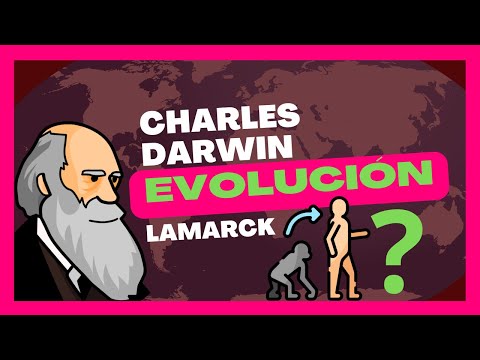
Teorías de la evolución | Fijismo, Lamarck, Darwin (Explicación 2025)
New Section
The section discusses the historical context of the 19th century, focusing on the peaceful events like the French Revolution and Independence Wars. It transitions to Darwin's theory of evolution.
Evolutionary Theories in the Early 19th Century
- Jean Baptiste Lamarck proposed an early evolutionary theory in 1809, suggesting continuous development of life from previous species through transformation or evolution.
- Lamarck believed in a force driving organisms towards perfection, influenced by environmental demands leading to changes in behavior and physical traits.
- Lamarck used giraffes' neck length as an example, suggesting that stretching due to environmental needs led to longer necks over generations (inheritance of acquired characteristics).
- However, Lamarck's idea that acquired traits could be inherited was later proven incorrect.
Darwin's Observations and Influences
This part delves into Charles Darwin's observations during his voyage on the Beagle and the influences shaping his theory of evolution.
Charles Darwin's Observations
- In 1831, Darwin embarked on a five-year journey exploring South American territories and was intrigued by the diversity of species.
- Notably, his visit to the Galápagos Islands revealed similar yet distinct organisms compared to those on mainland South America.
- Darwin noted unique finch species on different Galápagos islands with notable variations in beak sizes and shapes.
Influences on Darwin's Theory
- Darwin was influenced by artificial selection practices seen in dog breeding and farming, which inspired his concept of natural selection.
- Geological evidence supporting an ancient Earth contradicted contemporary beliefs and supported Darwin's need for vast time spans for species evolution.
Evolutionary Adaptations in Mice
The discussion explores how different traits in mice contribute to their survival and reproduction, leading to evolutionary adaptations over generations.
Traits Influencing Survival and Reproduction
- Mice with long legs have a higher chance of survival as they can escape predators more effectively.
- Sand-colored mice possess better camouflage abilities, aiding in evading predators compared to dark-colored mice that stand out.
- Mice with fragile teeth struggle to feed adequately, impacting their survival rates.
- Surviving mice have more opportunities to reproduce, passing on advantageous traits for better adaptation to the environment.
Natural Selection and Evolution
Natural selection drives the evolution of species by favoring individuals with beneficial traits for survival and reproduction.
Mechanisms of Natural Selection
- Natural selection favors mice best adapted to their environment, allowing them more chances to reproduce.
- Over generations, favorable traits become predominant while unfavorable ones diminish due to reduced reproductive success.
- Geographic isolation can lead groups of mice to develop distinct characteristics over time, potentially resulting in the emergence of new species through divergent evolution.
Darwin's Theory and Modern Synthesis
Darwin's theory of natural selection laid the foundation for modern evolutionary biology, emphasizing the inheritance of advantageous traits over generations.
Evolutionary Concepts
- Darwin proposed that all living beings evolved from a common ancestor through divergent evolution.
- Characteristics aiding evolution are inherited through genes, as highlighted by Mendel's principles combined with Darwin's theory.