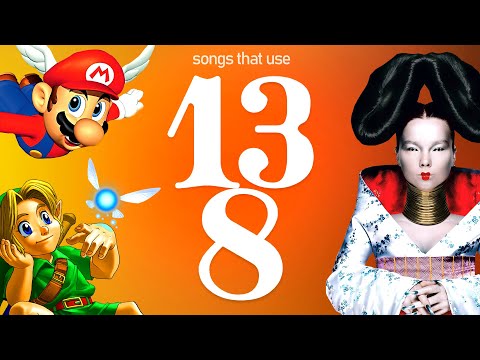
Songs that use 13/8 time
Understanding Odd Time Signatures in Music
Introduction to 138 Time Signature
- The video begins by explaining that a song in a 138 time signature has 13 eighth notes per bar, exemplified by the Weapons Factory theme from Super Mario RPG which is structured into groups of seven and six.
- Another example provided is Zelda: Ocarina of Time, showcasing how odd time signatures are utilized in various Nintendo games.
Examples of Songs in 138 Time
- Armenian jazz pianist T. Grand Haman's song "To Negate" is noted as being in 138 time, along with two tracks from Po Jam on the same album. One track features an extra eighth note at the end, creating a shuffle feel.
- The song "Stars" by Bobby McFerrin featuring Chist Yoyo Mar also uses a similar uneven grouping of beats within its 138 structure.
Comparison Between Different Time Signatures
- The majority of Tool's "Schism" operates in 6/4 but transitions to 138 for its B section, illustrating how songs can shift between meters effectively.
- Bi's track "Yoga" is discussed as being in 134 time, where the beats are grouped differently compared to those in 138 time, highlighting variations even within odd signatures.
Characteristics of Odd Time Signatures
- Odd time signatures like 5/8 or 7/4 create an unbalanced sound because they do not divide evenly into groups of two or three; examples include both 5/8 and other complex groupings like those found in Schism and Golden Brown by The Stranglers.
- A key distinction between songs in different odd signatures (e.g., 138 vs. 134) lies not just in their notation but also how they feel rhythmically—songs perceived as having fewer clear beats may feel more chaotic than those with grounded structures like those based on quarter notes.
Practical Applications and Tools for Music Theory
- Hooktheory offers resources for learning music theory through analysis and interactive textbooks that utilize popular songs to explain concepts effectively, making it easier for musicians to apply these ideas practically while composing music using tools like Hookpad.
Extended Discussion on Other Time Signatures
- The video touches upon the use of a less common meter such as 13/16, illustrated through Brad Fiedel’s theme from The Terminator, which was created with an unintentional loop leading to this unique signature being used throughout the piece. This showcases creativity stemming from technical imperfections during recording sessions.
Conclusion on Notation Practices
- It concludes with insights about why larger numbers (like those seen in some odd signatures) are less common; often it's more practical for performers to conceptualize rhythms using smaller divisions rather than sticking strictly to one large meter throughout a piece, enhancing playability and understanding among musicians. Examples include Genesis' "Turn It On Again."