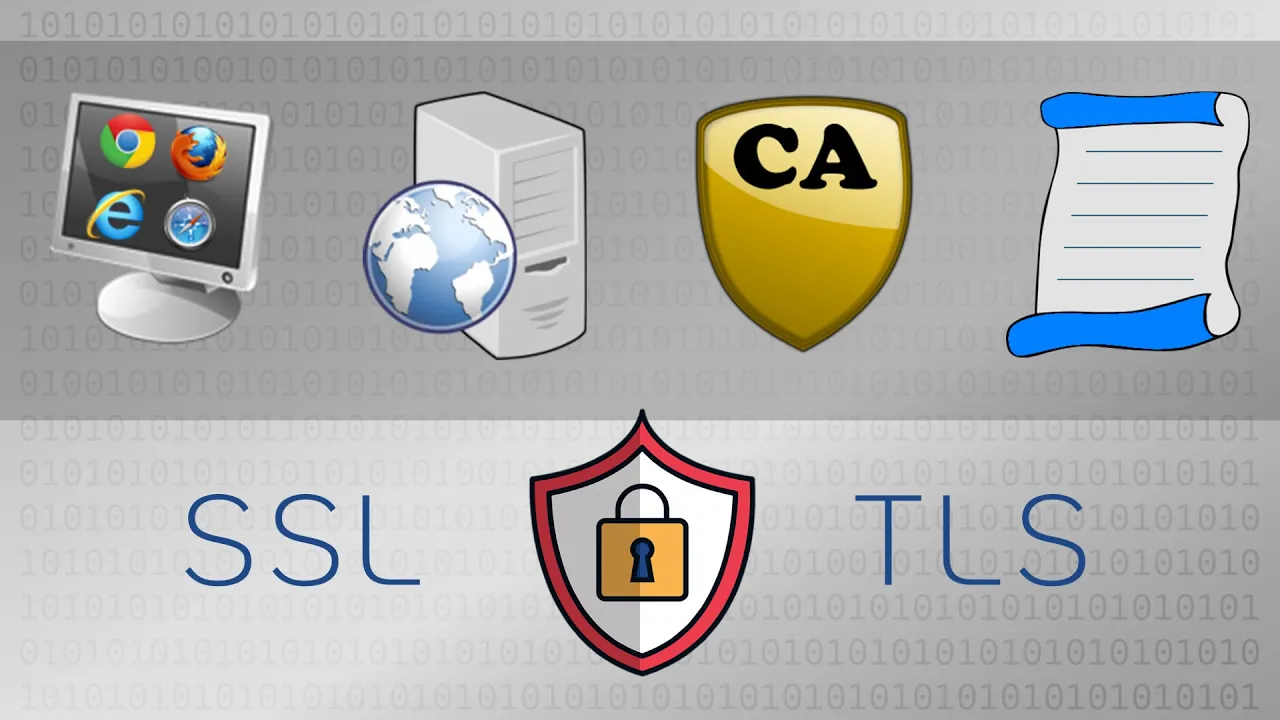
Key Players of SSL & TLS: Client, Server, Certificate Authority (CA) - Practical TLS
SSL and TLS Ecosystem Overview
This section introduces the roles within the SSL and TLS ecosystem, focusing on the client, server, and certificate authority.
Client and Server Roles
- The client initiates the TLS handshake, typically represented by web browsers like Chrome or Firefox.
- The server receives the TLS handshake; it can be a web server software such as Apache or Nginx.
- In the Internet of Things era, devices like phones, smart toasters, speakers, refrigerators, lights, and cameras can act as SSL clients for secure connections.
Authentication in SSL/TLS
- The server is always authenticated through a certificate provided to validate its identity (e.g., bank.com).
- While the server is authenticated, the client is rarely authenticated with a certificate at the SSL layer.
- Mutual SSL authentication involves both client and server providing certificates to authenticate each other.
Certificate Authority Role
This part delves into the role of Certificate Authorities (CAs) in issuing certificates for servers.
Certificate Authority Functionality
- A Certificate Authority (CA) issues certificates to servers and acts as a trusted entity by both clients and servers. It provides a trust anchor for secure connections.