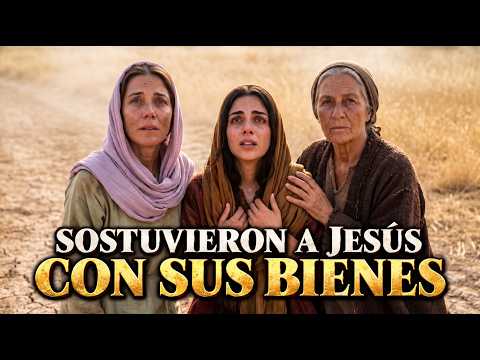
Las MUJERES Que SOSTUVIERON a JESÚS: De Los Caminos de GALILEA a La TUMBA Vacía
The Journey of Three Women to the Tomb
Introduction to the Scene
- Three women walk to a tomb, carrying spices they purchased themselves, highlighting their commitment and sacrifice.
- The speaker invites viewers to observe the journey through Galilee, emphasizing the significance of these women's contributions.
Key Names and Their Importance
- The evangelist Luke mentions specific names: Mary Magdalene, Joanna, and Mary (mother of James), indicating their importance in the narrative.
- These names reappear later in Luke's text, suggesting a deeper connection between past events and their current actions at the tomb.
Transition from Past to Present
- A significant time lapse occurs between two lists of names; this includes ministry experiences, trials, and transformations over three years.
- Many men who were once part of Jesus' circle are absent when it becomes costly to remain; however, these women persist.
Juana: A Woman with a Notable Background
Juana's Identity
- Juana is introduced with precision that indicates her high status as Chuza’s wife, Herod's steward.
- Herod Antipas is identified as a key figure who beheaded John the Baptist; his curiosity about Jesus adds tension to Juana's story.
Implications of Juana’s Role
- Juana’s financial support for Jesus’ ministry comes from her husband’s administration under Herod Antipas.
- This relationship raises questions about her motivations for supporting Jesus despite potential risks associated with her husband's position.
The Financial Dynamics Behind Jesus' Ministry
Women's Contributions
- The text suggests that within Herod's household, resources were used by women like Juana to support Jesus’ mission without explicit approval from their husbands.
- This detail emphasizes women's agency in contributing financially while navigating societal constraints.
Continuous Support Over Time
- The use of imperfect tense indicates that these women consistently supported Jesus over time rather than making one-time donations.
Daily Life on the Road with Jesus
Logistics of Travel
- A typical day involved resolving practical needs such as food and shelter for a group traveling through Galilee.
Invisible Labor
- Much of this work was unrecognized yet essential; it highlights how crucial logistical support was for sustaining Jesus' ministry.
Women as Integral Members of the Group
Inclusion in Ministry
- Luke describes how women traveled alongside men in active roles rather than merely as passive supporters or followers.
Recognition Through Naming
- Specific mention of named women signifies their importance within early Christian communities compared to unnamed male counterparts.
Standing Firm During Crisis
Presence at Crucifixion
- At critical moments like crucifixion, women remained present while male disciples fled; this underscores their loyalty and courage throughout adversity.
Salomé: Another Significant Figure
Salomé's Role
Salomé is mentioned alongside other key figures during pivotal moments but lacks extensive background information compared to others.
Contrasting Ambitions Within Families
Request for Power
- Salomé may have been involved in asking for positions of power for her sons among disciples which reflects human ambition even amidst spiritual journeys.
Continuity Amidst Change
- Despite earlier ambitions shown by Salomé regarding power dynamics within families, she remains steadfastly present during critical events without any reprimand or correction noted.
The Nature of Service Among Women
Definition Beyond Domestic Roles
- Serving included financial contributions beyond traditional domestic tasks; this broadens understanding of women's roles in early Christianity.
Unique Contribution Highlighted by Luke
- Only Luke records details about women's financial support which emphasizes their unique contributions not captured by other gospels.
300 denarios: The Cost of Sacrifice
The Significance of 300 Denarios
- The mention of 300 denarios represents a substantial sum, equivalent to nearly a year's wages, highlighting the extravagance of the act described in the text.
- This act is criticized by Judas, who claims it could have been used for the poor; however, his true motive is revealed as he is portrayed as a thief managing the group's funds.
Jesus' Response and Its Implications
- Jesus defends the action by stating that the perfume was preserved for his burial, indicating its significance beyond mere monetary value.
- The narrative foreshadows future events where women will attempt to anoint Jesus' body but will find him resurrected instead.
The Role of Women in Jesus' Ministry
Acknowledging Unnamed Contributions
- The text emphasizes that many women supported Jesus financially and spiritually, yet their names are often unrecorded, suggesting a broader community of support.
- This absence highlights how women's contributions were significant yet overlooked in historical accounts.
Observations at Crucifixion
- As Jesus faces crucifixion, various women are noted to be present. Their proximity contrasts with the absence of male disciples who fled.
- Different Gospel accounts provide varying lists of women present during these pivotal moments, indicating diverse perspectives rather than contradictions.
Faith Amidst Doubts
Women's Faithfulness vs. Male Disbelief
- Despite their unwavering presence and support throughout Jesus’ ministry, when they bring news of his resurrection to male disciples, they are met with skepticism.
- The term "leros," meaning madness or nonsense, describes how their message was received—reflecting societal views on women's voices being dismissed.
Symbolism in Actions
- Women prepare spices for anointing after observing where Jesus was laid; this detail underscores their commitment despite knowing they faced obstacles (the stone).
The Empty Tomb: A Turning Point
Arrival at the Tomb
- Upon arrival at the tomb, women discover it empty—a moment that signifies hope and fulfillment of prophecy rather than despair.
Message from Angels
- They encounter angels who remind them of Jesus’ words about resurrection; this serves as a pivotal moment linking past teachings with present reality.
Legacy Beyond Recognition
Unrecorded Endings
- Many women mentioned fade from biblical narratives post-resurrection; their lack of recorded endings reflects how history often overlooks unsung heroes.
Juana's Journey
- Juana’s transformation from palace life to becoming a witness illustrates profound personal change and dedication amidst societal expectations.
Conclusion: Impact on Modern Faith Communities
Lessons for Today
- The actions and faithfulness of these women serve as reminders within contemporary faith communities about unseen contributions and steadfastness without expectation for recognition.
Turn any video into a summary like this
YouTube links, meetings, lectures — with transcripts, search, and chat.