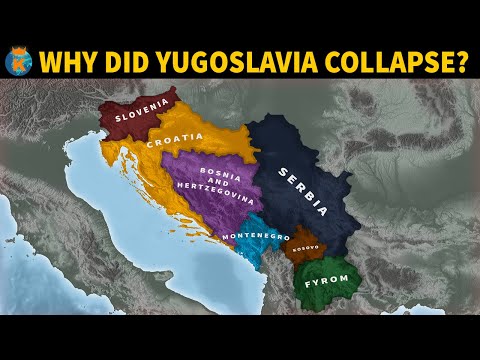
Why did Yugoslavia Collapse?
Yugoslavia: A Complex History of Division and Conflict
The Formation and Early Years of Yugoslavia
- Yugoslavia was a federation composed of six republics, marked by ethnic and religious divisions that foreshadowed its eventual collapse.
- The Kingdom of Yugoslavia transitioned into the Democratic Federal Yugoslavia post-World War II, later becoming the Socialist Federal Republic of Yugoslavia. This included Croatia, Serbia, Macedonia, Montenegro, Bosnia and Herzegovina, and Slovenia.
- Nationalism was a persistent issue from the beginning; however, President Josip Broz Tito temporarily fostered unity among diverse ethnic groups during his leadership.
Economic Challenges and Ethnic Tensions
- After Tito's death in 1980, economic troubles emerged due to debt from the 1973 oil crisis and trade barriers with Western nations. This exacerbated existing ethnic divisions within the federation.
- Disparities between economically productive regions (like Slovenia and Croatia) versus less developed areas (like southern regions) intensified tensions among different ethnic groups.
Rise of Nationalism Under Milosevic
- In the late 1980s, protests erupted as Serbs in Kosovo reacted against the Albanian majority; instead of unifying actions from Serbian leader Slobodan Milosevic, he fueled nationalist sentiments by reducing autonomy for Kosovo and Vojvodina.
- Milosevic's supporters ousted local governments in autonomous provinces during protests known as "Rallies of Truth," leading to increased conflict between Serbs and Albanians as well as other ethnic groups like Croats and Slovenes.
Escalation of Ethnic Conflicts
- As tensions escalated over Kosovo’s aspirations to become a seventh republic within Yugoslavia, police forces were deployed to manage what Serbs perceived as an attack on their identity. Protests continued despite attempts at reconciliation by leaders like Raif Dizdarec who advocated for unity.
- The political landscape shifted dramatically with the introduction of multi-party systems across all six republics following communism's decline; this change further deepened nationalistic identities within each region amidst rising ethnic tensions.
Yugoslavia's Disintegration: Ethnic Tensions and Wars
The Rise of Separatism in Croatia
- The Croatian government aimed to protect its people from Milosevic and the Serbian threat, leading to backlash from ethnic Serbs who formed the SAO Krajina, demanding reunification with Serbia.
Escalation of Conflict
- In response to a revolt in Khin by ethnic Serbs seeking federal military support, Croatian helicopters were deployed but ordered back by the Yugoslav Air Force under threat of being shot down.
Outbreak of the Yugoslav Wars
- Following rising tensions, the Yugoslav Wars erupted in 1991, marking a significant turning point as Yugoslavia began to dissolve amidst ethnic conflicts and failed union efforts.
Independence Declarations
- Slovenia and Croatia declared independence in June 1991 despite opposition; Macedonia followed suit in September. The Brijuni Agreement temporarily delayed these declarations.
Formation of New Entities
- On January 9, 1992, the Republic of Serbian People was established within Bosnia and Herzegovina, which declared independence on March 3rd. This led to a siege on Sarajevo during the ongoing wars.
Final Dissolution of Yugoslavia
- By early 2003, only Serbia and Montenegro remained from what was once six republics. The federation transformed into a State Union that ultimately failed by June 2006 due to unresolved ethnic disputes.
Ongoing Ethnic Conflicts
- Despite Kosovo's declaration for independence recognized by many countries like the U.S., Serbia contests this status. Ethnic divisions continue to hinder unity among Balkan nations post-Yugoslavia dissolution.