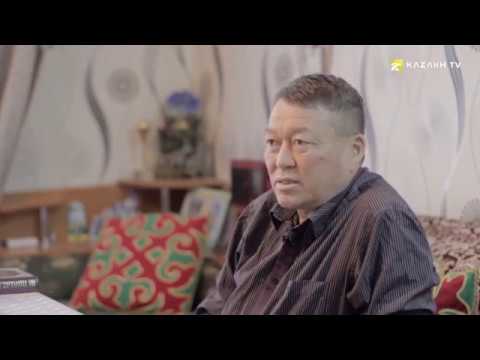
The myth of the age-old enmity of the Kazakhs and the Dzhungars
Introduction
The introduction provides a brief overview of the importance of trails, tracks, and highways throughout history.
- Trails, tracks, and highways have played a significant role in human evolution.
- Empires and civilizations have disappeared over time, but the treasures of nature remain.
- Modern motorways are new, but if a trail is left behind, it will surely be found even thousands of years later.
The Myth of Centuries-old Hostility between Kazakhs and Jungars
This section explores the myth surrounding the hostility between Kazakhs and Jungars.
- The Kazakhs and Jungars were not always irreconcilable enemies.
- Their relations included both wars as well as periods of peace.
- Historically, nomads considered themselves a single ethnic entity competing with settled societies.
- Wars between nomadic groups were often caused by economic interests colliding with each other.
Causes of Wars Between Nomadic Groups
This section discusses the main causes of wars between nomadic groups.
- The Great Silk Way was the economic backbone for many empires in Central Asia.
- After significant geographical discoveries by Europeans and emergence of maritime trading channels, the role of this major transcontinental commercial route decreased.
- This led to numerous conflicts among nomadic nations due to economic instability.
- Some conflicts were quite absurd; for example, an embassy from one group came with peaceful intentions but ended up fighting with another group over a girl.
Myths about Enmity Between Kazakhs and Jungars
This section debunks myths about enmity between Kazakhs and Jungars.
- The myth about actual genocide against Cossacks is not confirmed by historical sources.
- The myth was launched and developed during the time of the rule of the Russian Empire to show that they saved Kazakhs.
- Although there were wars between Kazakhs and Jungars, it was never aimed at complete mutual destruction.
Who Were the Oirats?
This section explores who the Oirats were.
- The first mention of the Oirats corresponds to the dramatic time of Jenghis Khan's emergence on a historical arena.
- Prior to Jenghis Khan, nomads in Mongolia were divided into two large groups: steppe and forest nomads.
- The Oirats voluntarily came under Jenghis Khan's rule in 1207 and actively participated in his campaigns.
Conclusion
This section concludes by discussing what will be covered in future episodes.
- The Treasures of the Nation project aims to shed light on who the Jungars actually were, where and how they live today, their take on events from three hundred years ago, and what they think about Cossacks.
- For the first time in history, this expedition will follow tracks of one of the nomadic peoples -the Oirats.
The Altai Republic and the Origins of Turk and Mongol Ethnicity
This section discusses the Altai Republic, a sacred place for every Turk and Mongol as it is considered the place of their ethnic origins. It also talks about the road to Mangonia that goes through this region.
The Road to Mangonia Goes Through the Altai Republic
- The Altai Republic is a sacred place for every Turk and Mongol as it is considered the place of their ethnic origins.
- The road to Mangonia goes through this region.
- Previously, the Altai people called themselves the Oil Rights, and until 1948, the republic was called the Oil Rant.
Ancient Carpet Found in Altai Republic
- The most ancient carpet in the world was found in this region.
- Very few people know about this fact.
Multinational State: The Western Mongolian State
This section discusses how multinational state was Western Mongolian state because its population consisted mostly of Turkic people.
Disintegration of Oirat Union
- Between 1635 and 1757/1759, there was disintegration of Oirat Union which led to decline of Oirat Khanate itself.
- We shouldn't be seeing some intertribal collisions as nation-to-nation conflicts since Kazakh Ginga seeds and Junior AG were relatives.
Advanced Metallurgy in Altai Republic
- The Altai Republic was a land of advanced metallurgy during ancient times.
- Many states south of our time received their metal utensils, weapons, and so on from this region.
- Blacksmithing is a tradition in the Altai Republic.
The Decline of the Mongol Empire
This section discusses how the Mongol Empire broke up and separated into four parts. It also talks about how the Oirat Khanate was able to ensure overall development and prosperity of the newly created Jungle State.
Breakup of Mongol Empire
- In 1362, the Mongols were driven out of China, which led to multiple conflicts among nomadic tribes.
- The Oirat Khanate began dominating and David took the throne as supreme Khan of Mongolia for some time.
- However, guns and pistols won over bows and arrows leading to decline of magic people.
Rebellion Against Manderins
- When rebellion headed by our Masana started, Megarian Bob.com got so angry that he ordered to Redick.
- In mid 18th century, mandarins succeeded in subduing Jungaya.
Introduction
The video introduces the topic of the expedition to Mongolia and discusses the impact of Genghis Khan on the region.
The Impact of Genghis Khan
- Every eight out of ten people were killed during Genghis Khan's conquest.
- The nomadic population disappeared almost completely after his conquest.
- The audience in Mongolia still maintains ancient nomadic traditions and boasts a high population of horses per capita.
Ethnic Kazakhs in Mongolia
This section discusses the history and current state of ethnic Kazakhs living in Mongolia.
History of Ethnic Kazakhs in Mongolia
- About 150,000 Kazakhs currently live in Mongolia, with 120,000 living in Bayan-Olgii province.
- Cossacks moved to Mongolia about 150 years ago due to a revolt in Xinjiang. Mongols gave them land to settle on.
Traveling through Mongolia
This section describes the challenges faced while traveling through Mongolia.
Difficulties Faced While Traveling Through Mongolia
- Roads in Mongolia are difficult to navigate due to an entangled network of roads and paths.
- Expedition got lost and had to spend a night in an open field before continuing their journey.
- Distance is measured by hours instead of kilometers due to difficult terrain.
The Land of the Oirats
This section discusses the history and current state of the Oirat people in Mongolia.
History of the Oirat People
- The Oirat people once had powerful nomadic empires, including the Turkic Khaganate and Diamond State.
- Ulaanbaatar is one of the most important intellectual sports centers in Mongolia, with athletes from there being traditional champions in national competitions.
The Heroes of the Oil Right People
This section talks about the heroes of the oil right people and their contributions to the state of for oil rods.
Seven Rob Dunn
- Seven Rob Dunn was one of the greatest bar tears during his rule.
- He established and developed cities, invented many new weapons like special guns and unique ammunition.
- At the age of 75 years before his death, he put his son Gul'dan Turin on the throne who governed the country for about 20 years and strengthened Jun Boreas economy even more.
Arm Asana
- Arm Asana made a union with a man durian khan and brought two hundred thousand army under yellow banners to contest him having overthrown devon see he himself became the Khan however later he opposed them in durians and fought them bravely.
- Saran wrap done garden turin and arm asana were considered as last heroes of Iran Mongols.
Close Ties with Cossacks
This section talks about close ties between Cossacks and Iran Mongols.
Ancient Unity
- The Aqsa calls speech contains no negativity towards the Cossacks. On the contrary, he emphasizes ancient unity between Kazakhs and Iran Mongols.
- It turns out that often Cossacks fought together shoulder to shoulder with June guards when part a amaz Anna was elected by Khan.
Kazakh Khan Abberline
- Aman Shana and Abil had close relations. He was a farsighted and brave cons who highly appreciated true friendship.
Oil Rod Mongols Today
This section talks about the present-day situation of oil rod mongols.
Single Nation
- We should speak about Iran Mongols as a single nation.
- Historical and cultural revival of the oil rock mongols includes expeditions publishing of books and filmmaking.
Distant Relatives
- Our ancestors used to call them Nagas she meaning our distant relatives every second bride literally was a Comley girl.
- The kalmyk women were generally considered very good wives back then if you want a handsome son taken as bet woman as your ones if you want a warrior son take a karmic woman.
The History of Kazakhstan and the Kazakh People
In this section, the speaker talks about how the ruins of Buddhist monasteries and cemeteries in Kazakhstan are a testament to its rich history. He also mentions that the history of Cheng area, Asian garyun, and oil rod people is closely linked to the history of Kazakhstan and its people.
The Importance of Historical Understanding
- The speaker emphasizes that understanding the history of Kazakhstan is crucial for understanding the Kazakh people.
- False histories can be misleading, but there is always at least one trail leading to the truth.
Nomadic Culture in Kazakhstan
In this section, the speaker discusses nomadic culture in Kazakhstan and how it has shaped its people's way of life.
Nomadic Lifestyle
- The speaker explains that nomads have a deep connection with nature and rely on their animals for survival.
- Nomads are known for their hospitality towards guests.
- The yurt is an important part of nomadic culture as it serves as a home for families.
Traditional Kazakh Cuisine
In this section, the speaker talks about traditional Kazakh cuisine and how it reflects its nomadic heritage.
Traditional Foods
- Horse meat is a staple food in Kazakh cuisine.
- Milk products such as kumis (fermented mare's milk), shubat (fermented camel's milk), and ayran (yogurt drink) are also popular.
- Beshbarmak, a dish made with boiled meat and noodles, is considered the national dish of Kazakhstan.
Kazakh Music and Dance
In this section, the speaker discusses traditional Kazakh music and dance.
Traditional Music
- The dombra is a traditional stringed instrument that is commonly used in Kazakh music.
- Traditional Kazakh music often features songs about nature and love.
- The kuy is a type of instrumental music that tells a story through its melody.
Traditional Dance
- The speaker explains that traditional Kazakh dance involves intricate footwork and movements.
- The zhigitovka is a type of dance that showcases the skill of male dancers.
Turn any video into a summary like this
YouTube links, meetings, lectures. With transcripts, search, and chat.