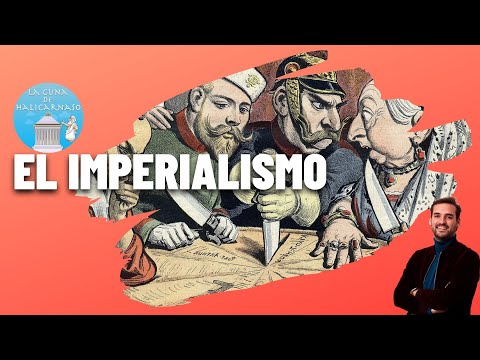
EL IMPERIALISMO (1886-1914) | Cuando Europa conquistó el mundo
Meeting at the Congress of Berlin
In this section, a time traveler interrupts the Congress of Berlin to prevent the unjust division of African territories among European powers.
Otto von Bismarck's Arrival
- A time traveler confesses to being from the future and warns about the impending cruel and unjust distribution of Africa.
- Emphasizes that such actions will lead to catastrophic consequences for Africans for centuries.
Imperialism and its Causes
This part delves into imperialism as a historical phenomenon emerging in the late 19th century due to industrial revolution impacts.
Historical Context of Imperialism
- Imperialism stems from the industrial revolution, driving European powers and the US to seek new territories for resources and markets.
- The 19th century witnesses Europe's second industrial revolution, with Britain, Germany, and the US as key players.
Political Dynamics in Europe
- Germany under Otto von Bismarck becomes pivotal in shaping global relations during imperialism.
- Tensions between Germany, France, Balkans, Greece highlight European political complexities driving imperialistic ambitions.
Causes of Imperialism
Explores economic, political, and demographic factors propelling nations towards imperialism in search of resources and prestige.
Economic Drivers
- Industrialized nations seek raw materials, cheap labor, and new markets due to industrialization push.
- Nations like England aim for economic gains while France seeks lost prestige post-Napoleon era through imperialism.
Political Motivations
- Emerging powers like the US strive for international recognition via colonies; France aims at regaining lost glory.
Imperialism in the Late 19th Century
The late 19th century saw major powers like England, France, and others dominating various regions globally through imperialism.
Major Powers and Colonies
- England emerged as the most significant global power by the late 19th century, evident from its extensive colonial holdings across America, Africa, Asia, and Oceania.
- France held substantial control over Northwest Africa, influencing many African countries to adopt French as a language due to its imperialist activities.
- Various European powers like Italy in Libya, Belgium in Congo, Portugal in Angola and Mozambique, and Spain with territories such as Equatorial Guinea had significant colonial presence.
Global Territories Division
- Russia dominated Northern Asia while the Netherlands controlled Indonesia. Germany and the US had territories in the Pacific region.
- Imperialism had a limited impact on America due to earlier Spanish colonies gaining independence. Some remnants of Spanish control included Cuba and Puerto Rico.
The Berlin Conference and Its Ramifications
The Berlin Conference of 1885 organized by Otto von Bismarck marked a pivotal moment where European powers divided Africa without considering African perspectives.
Berlin Conference Impact
- Otto von Bismarck orchestrated the crucial Berlin Conference of 1885 that led to the partitioning of Africa among European powers.
- The conference resulted in arbitrary borders drawn without regard for African nationalities or opinions, causing long-term conflicts among previously friendly or hostile African communities.
Consequences of Imperialism
- European exploitation under imperialism led to severe consequences such as Leopold II's brutal rule over Congo for rubber production at the expense of Congolese lives.
Consequences of Imperialism
Imperialism brought economic dependency on colonizers for colonies while creating political turmoil through artificial borders.
Economic & Political Impacts
- Colonized nations faced economic dependence on their colonizers leading to enrichment of metropolitan powers at their expense.
- Artificial borders established during imperialism caused numerous conflicts aiming to maintain metropolitan control. This led to authoritarian regimes fostering exploitation and genocide within colonies.
Turn any video into a summary like this
YouTube links, meetings, lectures. With transcripts, search, and chat.