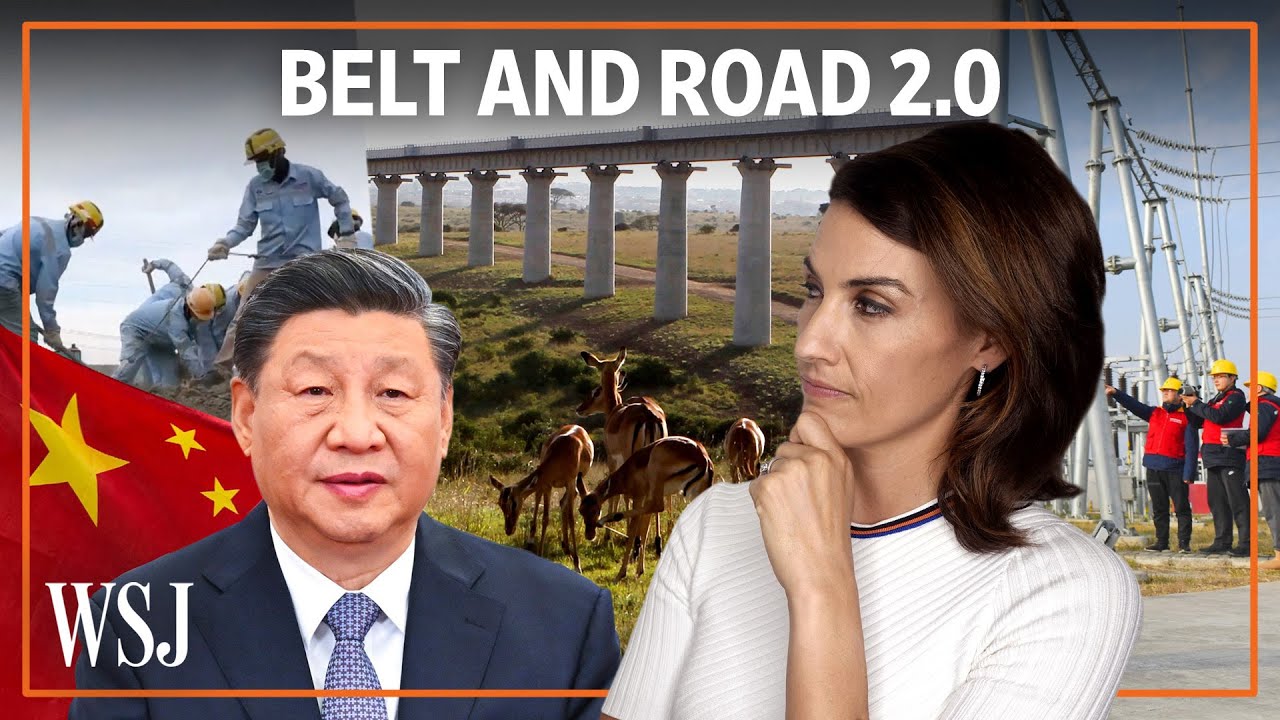
How China Plans to Salvage Its Faltering Belt and Road Initiative
China's Belt and Road Initiative: What Went Wrong and How It Could Change
This video discusses the problems that China's Belt and Road Initiative (BRI) has faced, including stalled projects and failed loans. The Chinese government is now looking to retool BRI in five ways to make it more successful.
Problems with BRI
- Projects have stalled, loans have gone sour, and some countries are struggling to pay back their debts.
- Some infrastructure projects built with Chinese money are underutilized or empty.
- Kenya owes China a lot of money for a railway project that has struggled to turn a profit.
- Western leaders have criticized China's lending practices as "debt trap diplomacy."
Retooling BRI
- Chinese officials are pivoting to "Belt and Road 2.0" by being more selective in who they lend money to.
- They will focus on smaller, more nimble projects like hydropower plants and digital infrastructure like 5G networks.
- They will invest more in public-private partnerships instead of lending directly to central governments.
- They may need to start giving more aid instead of loans if they want BRI to be sustainable.
- However, renegotiating debt and accepting losses may be necessary for China to move forward with these changes.
Overall, this video provides an overview of the challenges facing China's Belt and Road Initiative and how the Chinese government plans to address them.
China's Belt and Road Initiative
In this section, the speaker discusses the potential consequences of China's Belt and Road Initiative (BRI) and how it could fuel anti-China sentiment abroad. The US and G7 Nations announced a Better World Partnership last year aimed at countering China by addressing infrastructure needs in the developing world in a transparent and values-driven way.
Potential Consequences of BRI
- Refusal to take a haircut and accept losses could fuel anti-China sentiment abroad.
- Jeopardize important political relationships.
- Competition on the global stage with other countries providing for the needs of countries around the world.
Better World Partnership
- The US and G7 Nations announced a Better World Partnership last year aimed at countering China by addressing infrastructure needs in the developing world in a transparent and values-driven way.
Future of BRI
- Lingling says that Belton Road isn't going anywhere anytime soon.
- Chinese leaders including Xi Jinping himself still see it as playing an important role.