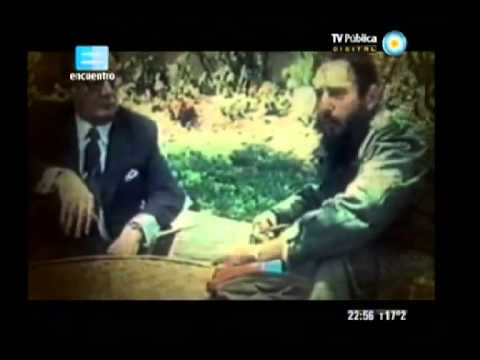
Histórico diálogo entre Fidel Castro y Salvador Allende (Completo)
Chile's Political Landscape: A Dialogue Between Allende and Castro
Introduction to the Historical Context
- The discussion opens with a reflection on the harsh memories associated with the Chilean coup of September 11, 1973, contrasting typical images of tanks and General Augusto Pinochet with more relaxed moments featuring Salvador Allende.
- The narrative highlights Fidel Castro's visit to Chile shortly after Allende assumed office on September 4, 1970, emphasizing the strong influence of the Cuban Revolution in Latin America at that time.
Allende's Unique Approach to Socialism
- Salvador Allende pursued a "peaceful transition to socialism," diverging from armed revolutionary movements prevalent in other Latin American countries.
- On July 11, 1971, prior to Castro’s visit, Allende nationalized copper as part of his radical program aimed at structural transformations in Chile.
The Nature of Their Dialogue
- The dialogue between Allende and Castro is characterized as relaxed and candid, addressing current events in both Chile and Cuba.
Perspectives on Political Processes
- There is an acknowledgment that many around the world were eager to witness this significant meeting between two prominent leaders from Latin America.
- The conversation touches upon how political processes must adapt to local realities; Allende emphasizes that Chile’s path reflects its unique history and traditions.
Class Struggle and Worker Participation
- Allende discusses how Chilean society has developed a consciousness about achieving economic independence outside capitalist frameworks. He notes that institutional structures have functioned effectively within a bourgeois context.
- Both leaders agree on the importance of worker participation in revolutionary processes. Castro reflects on how guerrilla warfare served as a catalyst for mass mobilization during Cuba's revolution.
Revolutionary Movements and Class Struggles
The Role of the Working Class in Revolutionary Movements
- A genuine revolutionary movement gained total support from the working class, leading to a nationwide paralysis through a radio call from the Rebel Army during a critical moment in the war.
- The decisive factor in crushing Batista's regime was the inability to execute any maneuvers against the organized working class, which became pivotal in seizing power.
- The development of a small army evolved into powerful armed forces, with all workers being considered soldiers, emphasizing that every soldier is also a worker contributing to production.
- The working class emerged as the protagonist within this process, highlighting their essential role in both military and productive capacities.
Historical Context of Chilean Labor Movements
- Chile's unique characteristics allowed for significant organization among the working class, with anti-imperialist sentiments rooted deeply within its labor movements.
- Luis Recabarren played a crucial role as an organizer and leader of Chilean labor struggles, often facing violent repression but ultimately achieving unification under a central workers' organization by 1939.
- The Communist Party of Chile is noted as one of Latin America's oldest and most powerful parties, alongside the Socialist Party which has maintained dialogue despite some international disagreements.
Unity Among Leftist Parties for Structural Change
- Since 1951, collaboration between socialist and communist parties aimed at creating broad movements for structural changes in Chilean society has been established.
- This unity among various political factions—including smaller bourgeois sectors—has been vital for driving change within Chile’s socio-political landscape.
Media Influence on Political Dynamics
- Fidel Castro and Salvador Allende are depicted discussing media roles; media significantly influenced Allende's downfall while raising concerns about potential violent interruptions to peaceful transitions toward socialism.
Historical Motivations Behind Popular Struggles
- Throughout history, peoples have fought for freedom; these struggles often stem from oppression by imperialism or internal societal conflicts.
Social and Economic Conditions in Chile
Overview of the Socioeconomic Landscape
- A significant portion of the population consists of landless peasants and an exploited working class, facing dire poverty, lack of medical assistance, and inadequate education systems.
- Unemployment rates were alarmingly high, with estimates suggesting around half a million people unemployed in a population of 6.5 million.
- The economic growth did not keep pace with population growth, leading to temporary unemployment affecting up to 500,000 individuals.
Political Obstacles to Revolution
- The political landscape is marked by challenges within a bourgeois democracy that complicates revolutionary efforts.
- Key obstacles include an experienced oligarchy supported by imperialist interests and institutional frameworks that limit governmental power.
- Legislative hurdles arise when attempting to nationalize industries or acquire shares from monopolies due to parliamentary resistance.
Media Influence and Public Perception
- The media landscape is characterized by misinformation and manipulation, where powerful journalists distort government initiatives for foreign interests.
- This distortion contributes to public misunderstanding and opposition against popular government actions.
Challenges Faced by the Unidad Popular
Achievements Amidst Resistance
- Despite significant achievements like nationalizing key resources (copper, iron), there remains substantial resistance from oligarchic sectors affected by these changes.
- Historical shifts in structure have been met with fierce opposition from traditional parties that exploit public fears and ignorance.
Social Dynamics and Class Struggles
- The ongoing struggle involves addressing the needs of uneducated populations who are often swayed by demagoguery from opposing factions.
- There is recognition that these groups may resort to classic resistance methods which can be classified as fascist tactics aimed at undermining revolutionary progress.
The Nature of Violence in Revolutionary Context
Understanding Violence in Revolution
Contrarrevolución y Obstáculos en el Proceso Revolucionario
Contexto de la Contrarrevolución
- La contrarrevolución se sostiene mediante la violencia, tanto en su defensa como en su implementación. Se mencionan los obstáculos que enfrenta el proceso revolucionario chileno.
- Comparación con Cuba: La lucha cubana comenzó bajo un régimen tiránico y sangriento, sin las circunstancias políticas similares a las de Chile.
Desarrollo del Gobierno Revolucionario
- Tras la victoria revolucionaria, se establece un gobierno donde el consejo de ministros tiene facultades legislativas y ejecutivas, facilitando la formulación de leyes.
- A pesar de la resistencia interna, el principal obstáculo fue externo: los intereses imperialistas que organizaron una oposición formidable.
Intereses Imperialistas y Reformas Agrarias
- El imperialismo representó una oposición fundamental al proceso cubano, utilizando factores internos como terratenientes para resistir.
- En Cuba, el imperialismo controlaba recursos clave como tierras agrícolas y minerales; esto llevó a conflictos directos con las reformas agrarias implementadas.
Desafíos Internos y Éxodo Profesional
- Los obstáculos también son subjetivos; falta de tiempo para desarrollar una nueva generación de técnicos e ingenieros debido a niveles altos de ignorancia técnica.
- El éxodo profesional fue significativo: Cuba perdió 3000 médicos durante la crisis pero ha logrado aumentar su número actual a 8000 gracias a programas educativos.
Impacto del Imperialismo en Chile
- A diferencia de Cuba, Chile no experimentó un éxodo masivo similar; sin embargo, sí enfrentó un drenaje sistemático del talento técnico hacia otros países.
- Este drenaje afecta gravemente a los países en vías de desarrollo al llevarse no solo cerebros sino también técnicos calificados necesarios para el progreso.
Reflexiones sobre Fidel Castro y la Revolución Cubana
- La presencia de Fidel Castro es vista como vital para revitalizar procesos revolucionarios en América Latina; su éxito genera preocupación entre sectores adversos.
Discussion on Imperialism and Revolution
The Role of Imperialism in Chile's Political Landscape
- The speaker discusses how certain attitudes and tactics have emerged during a critical dialogue period, suggesting attempts to divert attention from significant issues.
- There is a strong assertion that imperialism has been behind various challenges faced by the country, highlighting interference from high-ranking U.S. officials in domestic affairs.
- The speaker emphasizes the inevitability of counter-revolutionary movements but insists that the organized response from the people will be disciplined and united.
- A declaration is made about the irreversibility of the Chilean process, asserting that any attempt to overthrow the government would lead to chaos and violence.
- It is noted that while imperialism cannot intervene directly, it seeks to encourage reactionary groups and fascist elements within society.
Commitment to Social Change
- The speaker expresses personal dedication to socialism, stating their role is not for personal glory but for fulfilling promises made to the people of Chile.
- A firm stance against political violence is taken; if fascists unleash violence, they will face a resolute response from the populace.
- The commitment to defend Chile’s aspirations for dignity and independence is reiterated, emphasizing collective struggle over individual ambition.
- Recognition of leaders willing to sacrifice themselves inspires confidence among citizens ready to fight for necessary changes.
- Assurance is given that this movement transcends individual leadership; workers are actively participating in governance.
Insights on Revolutionary Processes
- Discussion shifts towards understanding why revolutionary processes like Cuba's have survived despite external pressures from imperialism.
- Factors contributing to Cuba's resilience include changing global power dynamics at the time of its revolution in 1959 which initially favored imperial interests but shifted thereafter.
- An analysis reveals that initial attempts by imperial forces were underestimated as they failed to recognize the strength of grassroots support for revolutionary governance.
- Specific laws aimed at restructuring society (e.g., agrarian reform law), which conflicted with U.S. interests led to economic blockades intended to destabilize Cuba’s progress.
- Despite these challenges, popular support energized by international solidarity played a crucial role in sustaining Cuba through difficult times.
Conclusion: Resilience Against External Threats
Invasion and Unity: The Strength of the Cuban Revolution
The Aftermath of Invasion
- The invasion was completely crushed, leading to plans for further aggressive measures against Cuba. These factors contributed to the October Crisis.
- Political, military, and economic weapons have been used against Cuba; however, a united populace has emerged without divisive elements.
Commitment to Fight
- Both men and women in Cuba are prepared to fight until their last breath, which is recognized by imperialist forces that respect this resolve.
- A quote from Antonio Maceo emphasizes that any attempt to seize Cuba will result in bloodshed for the aggressors.
Military Readiness
- From a military perspective, Cuba can achieve a force correlation on land comparable to some of the best U.S. infantry divisions.
- Solidarity from socialist countries strengthens Cuba's position against potential genocidal actions.
Cuba and Chile: Revolutionary Leadership in Latin America
Significance of Leadership Meetings
- President Allende and Commander Castro's meetings draw global attention as they represent revolutionary governance amidst exploitation in Latin America.
Economic Disparities
- There exists a significant gap between economically dependent nations in Latin America and industrial capitalist countries; this disparity must be addressed.
Social Inequality Statistics
- Over 20 million people live without basic economic knowledge; 140 million are semi-literate or illiterate; there is a severe housing shortage with 19 million homes needed.
The Ineffectiveness of Capitalism
Crisis of Capitalism
- The capitalist regime has proven ineffective, leading to widespread human exploitation and crisis across Latin America.
Emergence of Revolutionary Will
- As global conditions deteriorate politically and morally, the revolutionary spirit within Latin American populations is awakening.
A Vision for Future Revolutions
Historical Context of Struggles
- Those who fought in Vietnam did so not just for their homeland but also for oppressed peoples worldwide. Similarly, sacrifices made during the Cuban revolution laid groundwork for current struggles.
Anticipation of Change
- There is an expectation that one day Latin America will find its voice as a continent previously subdued by imperialism.
The Inevitable Birth of Revolution
Metaphor of Birth
- The speaker uses childbirth as a metaphor for revolution—inevitable whether through institutional means or grassroots efforts.
Awakening Potential
Debates on Socialism in 1970s Latin America
The Context of the Debate
- The dialogue reflects the debates of the 1970s in Latin America, particularly regarding whether socialism could be achieved through peaceful means.
- Key figures in this discussion include Salvador Allende and Fidel Castro, with Allende advocating for a radical program that included nationalization of key industries.
Fidel Castro's Visit to Chile
- During his visit to Chile, Fidel Castro engaged with various sectors including miners and students, highlighting significant historical sites like Chuquicamata.
- A humorous exchange occurred where miners challenged Castro’s pronunciation of "Chuquicamata," showcasing a lighter moment during serious discussions.
Political Climate Before the Coup
- In July 1973, months before the coup, Castro wrote a significant letter to Allende praising his commitment to continue the revolutionary process without civil conflict.
- This letter came after an attempted coup known as "El tanquetazo," indicating rising tensions within Chile.
Recommended Literature for Further Understanding
- Two recommended books provide deeper insights:
- "Salvador Allende: La conspiración contra Chile" which includes speeches by Allende outlining his vision.
- "¿Qué hacía yo el 11 de septiembre de 1973?" featuring recollections from various political figures about the events surrounding the coup.
Reflections on Historical Interactions
- The documentary presents a unique perspective on interactions between Allende and Castro, contrasting typical portrayals of Pinochet's regime with more personal moments shared between leaders.