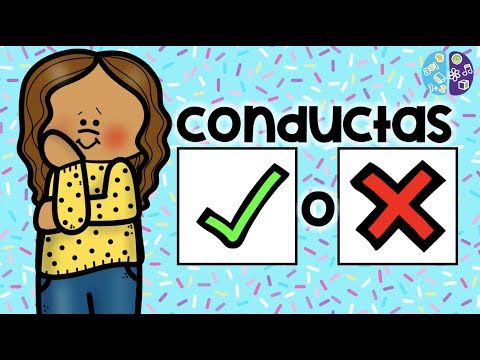
Conductas positivas o negativas para niños - Minders
Recognizing Positive and Negative Behaviors in Students
Introduction to the Activity
- The session aims to help teacher Sandy identify whether her students' behaviors are positive or negative.
- Viewers are encouraged to subscribe and activate notifications for future videos.
Observing Student Behaviors
- The activity involves observing student conduct and categorizing it as either negative (indicated by a cross) or positive (indicated by a checkmark).
Examples of Student Conduct
- Luisa studies for her exam, demonstrating positive behavior.
- Mariana copies from her neighbor, indicating negative behavior.
- Danielle has a messy desk and struggles to find what she needs, which is also negative.
- Angela helps a classmate reach the nurse, showcasing positive behavior.
More Behavioral Observations
- Jaime and Cookies make faces at the teacher during reading time, reflecting negative conduct.
- Students like Jimena, Francisco, and Erika listen attentively when the teacher explains topics, showing positive engagement.
Additional Examples of Behavior
- Leonardo disregards personal space and fails to listen quietly when required. This is categorized as negative behavior.
- Carlos takes responsibility for keeping track of the classroom key without losing it, indicating positive responsibility.
Further Insights into Student Actions
- When upset, both Renata and Andrés exhibit aggressive behaviors (kicking objects and hitting classmates respectively), marking them as negative actions.
- In contrast, students like José and Gael work collaboratively in teams, representing positive teamwork skills.
Notable Positive Behaviors
- Students such as Valeria, who pays attention during virtual classes while remaining seated, demonstrate good learning habits.
- However, some students like Nayeli engage in disruptive behaviors such as pinching classmates during class time which is considered negative conduct.
Summary of Various Behaviors
- Positive examples include:
- Mariana keeps her workspace clean.
- Alfonso organizes his materials after use.
- Ingrid assists the teacher with cleaning tasks post-class.
Negative examples include:
- Damian tears up his papers when he makes mistakes.
- Melanie disrespects others' drawings by defacing them.
- Santiago throws tantrums when things don't go his way or causes disruptions during games by throwing items on the floor.( t =356 s )
Final Observations
- Some students show kindness; for instance:
- Claudia comforts peers feeling sad or anxious.
- Mauricio expresses love towards his mother through hugs.
Conversely:
- Juan bullies classmates online while Pedro and Tadeo respect turn-taking during playtime.( t =530 s )
Conclusion
The video concludes with gratitude for participation in identifying various student behaviors that can be classified positively or negatively based on their actions throughout different scenarios presented.( t =614 s )