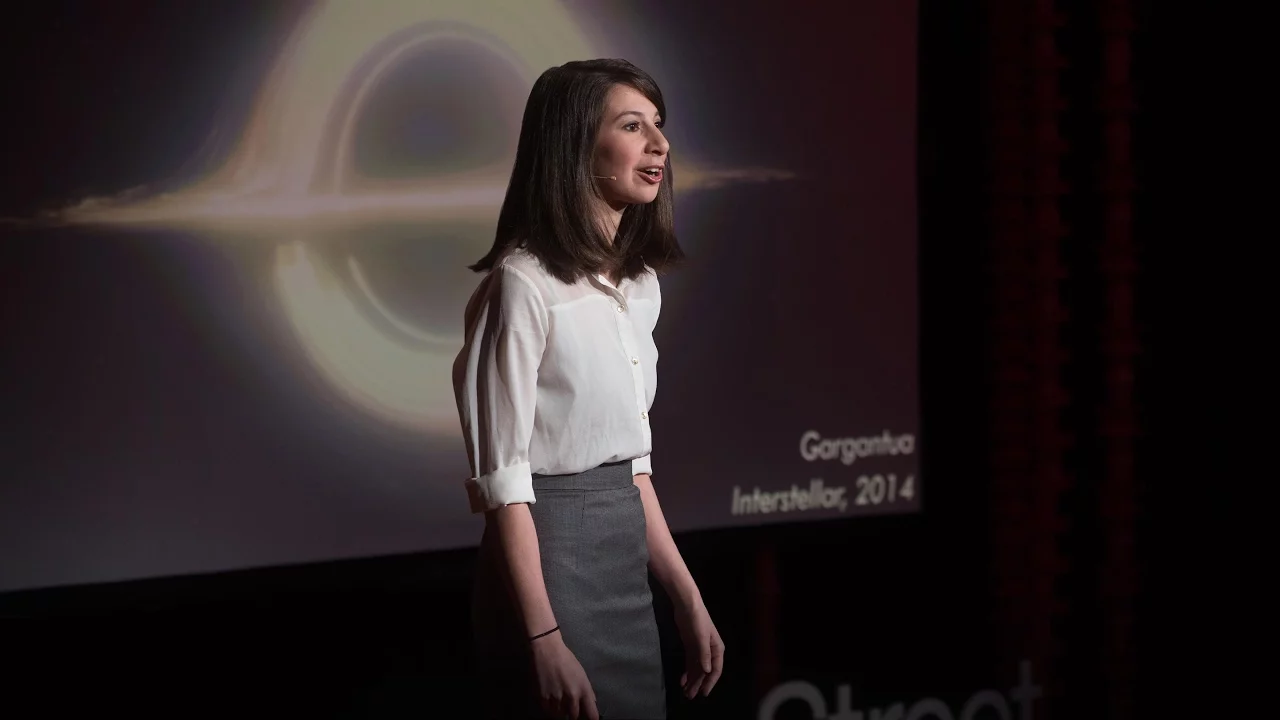
How to take a picture of a black hole | Katie Bouman
Interstellar Black Hole Exploration
In this section, the speaker introduces the concept of exploring a black hole, focusing on the challenges and advancements in capturing an image of a supermassive black hole.
Theoretical Predictions and Challenges
- Albert Einstein's theory of general relativity predicted black holes, but direct observation remains elusive.
- Efforts are underway to capture the first image of a black hole through an international collaboration using advanced technology.
Understanding Black Holes
- Astronomers infer the presence of a supermassive black hole at the center of our galaxy by observing stars' orbits.
- The event horizon of a black hole creates a distinctive ring due to gravitational lensing, offering insights into its properties.
Technological Limitations and Solutions
- Diffraction limits telescope resolution, necessitating larger telescopes for detailed imaging.
- Building an Earth-sized telescope is impractical; hence, a network of telescopes collaborates to create a computational telescope for imaging.
Collaborative Imaging Process
- The Event Horizon Telescope combines data from multiple telescopes globally to create high-resolution images.
Describing the Imaging Algorithms for Black Hole Reconstruction
In this section, the speaker explains the imaging algorithms used to reconstruct black hole images based on limited telescope data.
Developing Imaging Algorithms
- The speaker's role involves designing algorithms that find the most reasonable image consistent with telescope measurements.
- Imaging algorithms use sparse telescope data to create reconstructions resembling objects in our universe.
Choosing Likely Images
- Ranking images based on likelihood helps select the most probable black hole image.
- Determining likely black hole images poses challenges due to lack of prior observations.
Imparting Image Features into Algorithmic Reconstructions
This part discusses how different types of images influence algorithmic reconstructions and the importance of avoiding biases in image assumptions.
Imposing Image Features
- Using various sets of puzzle pieces from different types of images affects reconstruction outcomes.
- Differentiating between black hole simulation puzzle pieces and everyday image puzzle pieces impacts final image bias.
Testing Reconstruction Scenarios
- Employing everyday image-derived puzzle pieces for diverse source images aids algorithm validation.
Imaging Ideas for Black Hole Photography
In this section, the speaker discusses the concept of creating an image of a black hole by piecing together familiar pictures and emphasizes the importance of innovative imaging ideas in capturing the first images of a black hole.
Creating Images Through Familiar Pictures
- The speaker suggests that an image of a black hole, never seen before, can be constructed by assembling everyday pictures like those of people, buildings, trees, cats, and dogs.
- These imaging ideas could lead to capturing the very first pictures of a black hole and potentially validating crucial scientific theories relied upon by scientists daily.
Interdisciplinary Collaboration in Astrophysics
This part highlights the significance of teamwork and interdisciplinary collaboration in astrophysics research endeavors.
Teamwork and Achievements
- The speaker acknowledges the essential role played by an exceptional team of researchers in enabling groundbreaking projects like capturing images of a black hole.
Turn any video into a summary like this
YouTube links, meetings, lectures. With transcripts, search, and chat.