¿Qué es y cómo hacer una “CADENA DE VALOR“? Temp 12 - Ep 187
What is a Value Chain?
Introduction to the Value Chain
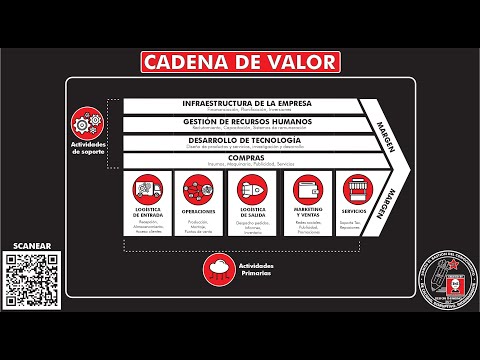
- The value chain is a management and analysis tool designed by Michael Porter, allowing for an internal analysis of a company through its main value-generating activities.
- It serves as a theoretical model that describes how organizational activities generate value for the final product, helping to identify activities that enhance product or service quality and create competitive advantages.
Importance of Understanding the Value Chain
- Any project involving production structured with design thinking or agile methodologies must clearly define its value chain, which should complement its value proposition. If unclear about the value proposition, viewers are encouraged to refer to earlier content on this topic.
Structure of the Value Chain Matrix
- The matrix consists of three parts: support activities, primary activities, and margins. Support activities enable primary activities to function effectively.
Support Activities
- Infrastructure: This includes financing, planning, and investment aspects of the business; it’s crucial to specify sources of funding (e.g., bank loans or personal loans).
- Human Resource Management: Focuses on recruitment and training processes; continuous training is vital in large companies for maintaining competitiveness. Compensation structures also need clarity (e.g., fixed salaries plus commissions).
- Technology Development: Encompasses not just software creation but also product/service development and process improvements based on market trends and benchmarking practices. Continuous improvement is essential regardless of industry type.
- Procurement: Involves purchasing inputs like materials or services necessary for operations; understanding procurement helps streamline support for primary activities effectively.
Primary Activities Overview
- Primary activities include logistics (inbound/outbound), operations, marketing/sales, and service delivery.
Logistics
- Inbound Logistics: Covers receiving orders and managing inventory efficiently; having clear processes here is critical even for small businesses (e.g., sourcing ingredients).
- Operations: Involves production processes including machinery use and workforce management; it also encompasses assembly lines and sales points (both physical and online). Clear documentation in this area aids operational efficiency significantly.
Marketing & Sales
Understanding Value Chains and Proposals
Importance of Self-Management in Entrepreneurship
- Entrepreneurs often need to self-manage due to limited resources, necessitating knowledge about social media, advertising, and promotion strategies.
- Establishing a communications department is crucial for effectively promoting projects and services.
Technological Support and Service Delivery
- A robust technological support system is essential for product maintenance and customer assistance when issues arise.
- Understanding the margin is vital as it defines the scope for making necessary changes within operations.
Analyzing Operations for Improvement
- Continuous analysis of operations helps identify problems that can be addressed to enhance value propositions delivered to customers.
- The value proposition serves as the core element in developing products, services, or business models; structuring it correctly is critical.
Continuous Improvement Process
- The value chain analysis should be viewed as an evolving tool rather than a finished product; regular updates are necessary due to technological advancements.
- This process can be utilized at two key moments: before launching a business or as part of an improvement plan.
Benchmarking Against Competitors
- Benchmarking allows entrepreneurs to compare their offerings with competitors, identifying areas for innovation without waiting for others to lead change.
- Detailed understanding of each variable in the business model is essential; collaboration with others enhances this analytical process.
Conclusion and Resources
- Engaging multiple perspectives during analysis fosters better outcomes; individual efforts may not yield comprehensive insights.