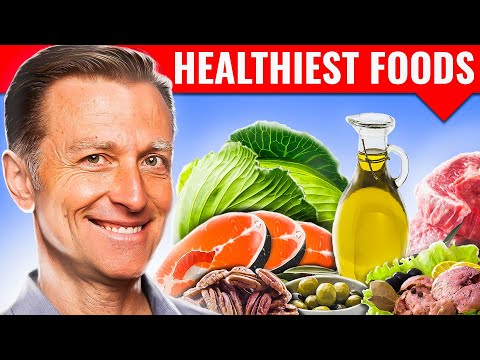
The Healthiest Foods You Need in Your Diet – Dr. Berg's Expert Advice
The Seven Healthiest Foods You Can Eat
In this video, the speaker discusses the seven healthiest foods to eat. They explain what makes a food healthy and how certain foods can make us sick. The focus is on nutrient-dense foods that enhance nutrient absorption and have low carb content.
Insulin and Nutrient Density
- Foods that raise insulin levels can inhibit health and make us ill.
- Nutrient-dense foods are important for overall health.
- Low-carb foods, fiber, and fat do not trigger an insulin response.
- Lean protein creates a higher insulin response compared to fattier protein.
Importance of Nutrients
- A higher fat-to-protein ratio in foods is desirable.
- Nutrient density includes vitamins, minerals, trace minerals, essential fatty acids (like omega-3), and phytonutrients.
- Phytonutrients provide additional health benefits beyond regular vitamins and minerals.
Sauerkraut - Low Carb & High Nutrient Food
- Sauerkraut contains only 1.9 grams of net carbs per cup, making it low carb.
- It has the highest vitamin C content among all foods (over 700mg per cup).
- Vitamin C is crucial for collagen production, bone health, heart protection against free radicals, and overall antioxidant support.
- Sauerkraut is a good prebiotic and probiotic due to its fiber content and fermentation process.
- It aids digestion as cabbage (the main ingredient) is easy to digest compared to other vegetables like broccoli.
- Lactic acid in sauerkraut supports beneficial bacteria while inhibiting pathogens.
- It is also rich in vitamin K2, vitamin E, and even contains vitamin U with various health benefits.
Arugula - Nutrient-Rich Salad Base
- Arugula is a cruciferous vegetable with high nutrient content.
- It supports liver function and is a preferable salad base compared to spinach (which is high in oxalates).
- Arugula has anti-inflammatory properties and promotes nitric oxide production, benefiting cardiovascular health and libido.
Remaining Foods
- The video does not cover the remaining five healthiest foods mentioned in the title.
The transcript provided only covers a portion of the video, so the summary is limited to the information available.
The Health Benefits of Salmon
This section discusses the health benefits of salmon, including its high omega-3 fatty acid content and low mercury levels.
Fatty Acid Content and Mercury Levels
- Salmon is high in omega-3 fatty acids, which are beneficial for brain, heart, and joint health.
- Omega-3 fatty acids have anti-cancer properties.
- Most people consume too many omega-6 fats and not enough omega-3 fats, leading to inflammation in the body.
- Salmon has a favorable fat to protein ratio, making it a good choice for overall health.
Selenium Counters Mercury
- The mercury levels in salmon are substantially lower than other types of fish.
- Selenium present in salmon helps counteract the absorption of mercury.
Additional Nutrients
- Salmon is high in potassium, zinc, and calcium.
The Benefits of Cod Liver
This section highlights the benefits of consuming cod liver, including its nutrient density and high omega-3 fatty acid content.
Nutrient Density of Organ Meats
- Organ meats are highly nutritious but often disliked due to taste or difficulty finding high-quality options.
Delicious and Nutritious Cod Liver
- Wild-caught cod liver is easy to find and has a pleasant taste when consumed within one to two days.
Omega-3 Fatty Acid Content Comparison
- Cod liver contains significantly higher amounts of omega-3 fatty acids compared to other fish like cod.
- Icelandic cod liver oil is a delicious option that provides additional benefits.
Additional Benefits
- Cod liver contains vitamin A, vitamin D, vitamin K2, iodine, and B vitamins.
- Vitamin A supports eye health, immune function, and skin lining.
- Vitamin D is beneficial for blood pressure, pain, depression, and the immune system.
- Cod liver has a favorable fat to protein ratio, making it suitable for low insulin response.
Importance of Cod Liver Oil
This section emphasizes the importance of consuming cod liver oil for its nutritional benefits, especially for children and pregnant females.
Nutritional Benefits
- Cod liver oil provides essential fatty acids and nutrients.
- It contains vitamin A, vitamin D, vitamin K2, iodine, and B vitamins.
Omega-3 Fatty Acids in Cod Liver Oil
- Cod liver oil contains EPA and DHA omega-3 fatty acids.
- Fish oil does not provide the same levels of vitamins as cod liver oil.
Health Benefits
- Vitamin A supports eye health, immune function, and skin lining.
- Vitamin D is beneficial for blood pressure, pain management, depression, and the immune system.
Consumption Recommendations
- Consuming half of a serving of cod liver or cod liver oil once or twice a week is recommended.
- Children and pregnant females can benefit greatly from consuming cod liver oil.
Grass-Fed Organic Hamburger as a Healthy Food
The speaker discusses the health benefits of grass-fed organic hamburger and why it can be considered a healthy food option.
Grass-Fed Organic Hamburger Benefits
- Grass-fed organic hamburger is easy to digest and can be included in various meals.
- It is not the same as processed meat or fast-food hamburgers, which are less healthy.
- Red meat, when consumed in high quality forms like grass-fed organic hamburger, does not cause cancer or heart problems.
- Some individuals may have difficulty digesting red meat but find hamburger easier to digest due to its higher fat content compared to steak.
- As we age, our stomach acid decreases, making it harder to digest red meat. Taking betaine hydrochloride supplements can help increase stomach acid levels for better digestion.
- Hamburger is a good source of amino acids, available iron, B vitamins (B12, B6, B2, B3, B5), phosphorus, zinc, selenium, and carnosine.
- Carnosine found in beef reduces glycation (a process that promotes aging) and inflammation while supporting the immune system.
- Consuming hamburger with its higher fat content aids in better digestion compared to leaner proteins.
Pecans - The Healthiest Nut
The speaker highlights pecans as the healthiest nut option among various nuts due to their low net carbs and other nutritional benefits.
Pecans - Healthiest Nut Option
- Pecans have the lowest net carbs among nuts and are satisfying after meals with their high fat content.
- With only 4 grams of net carbs per cup (considering an allowance of up to 50 grams on keto), pecans are suitable for low-carb diets.
- They contain a good amount of fiber (10 grams per cup) and have a favorable fat-to-protein ratio, making them low on the insulin index.
- Pecans are rich in zinc, copper, vitamin B1, and antioxidants.
- They are low in oxalates (which can contribute to kidney stones) and beneficial for heart health, blood sugar regulation, and reducing complications from chronic diseases.
- Pecans are easy to digest compared to other nuts like walnuts, peanuts, brazil nuts, and macadamia nuts.
Extra Virgin Olive Oil
The speaker emphasizes the importance of using real extra virgin olive oil due to its numerous health benefits.
Benefits of Extra Virgin Olive Oil
- Genuine extra virgin olive oil is recommended for its health benefits.
- It is rich in monounsaturated fats that promote heart health.
- Extra virgin olive oil contains polyphenols with antioxidant properties that help reduce inflammation and protect against chronic diseases.
- It has been associated with improved cognitive function and reduced risk of stroke.
- Using extra virgin olive oil in cooking or as a dressing can enhance the taste of meals while providing health benefits.
The transcript provided does not contain any further sections or timestamps.
New Section
In this section, the speaker discusses the characteristics of real extra virgin olive oil and its health benefits.
Characteristics of Real Extra Virgin Olive Oil
- Real extra virgin olive oil has a distinct taste with a little bite to it and a great aroma like fresh cut grass. It may give a slight irritation in the back part of the throat.
- The speaker uses real extra virgin olive oil on their salad daily.
Health Benefits of Extra Virgin Olive Oil
- Extra virgin olive oil contains vitamins E and A, as well as minerals like magnesium and potassium.
- It has significant phytonutrients that can extend lifespan, support telomeres (which are associated with longevity), and repair mitochondria (important for preventing cancer).
- Extra virgin olive oil has anti-inflammatory properties comparable to ibuprofen and can help relieve pain.
- Compounds in extra virgin olive oil can reduce beta amyloids, which contribute to brain plaques associated with Alzheimer's disease.
- It has anti-clotting, antimicrobial, and retinol protective effects.
- Phytonutrients in extra virgin olive oil are 20 times more powerful than green tea in certain cases.
- The fat in olive oil helps extract phytonutrients from salads.
New Section
In this section, the speaker explains why extra virgin olive oil is considered healthy due to its nutritional content.
Nutritional Content of Extra Virgin Olive Oil
- Extra virgin olive oil contains vitamins E and A, as well as minerals like magnesium and potassium.
- As a fat, it does not have an effect on insulin levels.
- It contains significant phytonutrients that offer various health benefits.
New Section
In this section, the speaker highlights additional health benefits of extra virgin olive oil, particularly its effects on aging and cancer prevention.
Effects on Aging and Cancer Prevention
- Extra virgin olive oil supports telomeres, which are associated with longevity.
- It helps repair mitochondria, which is important for preventing cancer.
- Olive oil has anti-inflammatory properties comparable to ibuprofen.
- Compounds in extra virgin olive oil can reduce beta amyloids, which contribute to brain plaques associated with Alzheimer's disease.
New Section
In this section, the speaker discusses the benefits of extra virgin olive oil for eye health and its antimicrobial properties.
Eye Health and Antimicrobial Properties
- Extra virgin olive oil has retinol protective effects that support the retina of the eye.
- It is especially beneficial for individuals with diabetes or high sugar levels.
- Certain phytonutrients in extra virgin olive oil are 20 times more powerful than green tea in certain cases.
- Olive oil has anti-clotting and antimicrobial properties.
New Section
In this section, the speaker emphasizes the importance of incorporating extra virgin olive oil into one's diet for its various health benefits.
Incorporating Extra Virgin Olive Oil into Your Diet
- Extra virgin olive oil should not be used sparingly but rather added generously to salads.
- The fat in olive oil helps extract phytonutrients from salads.
- Regular consumption of extra virgin olive oil can provide numerous health benefits.
The timestamps provided above correspond to the approximate time in seconds where each section starts.
Turn any video into a summary like this
YouTube links, meetings, lectures. With transcripts, search, and chat.