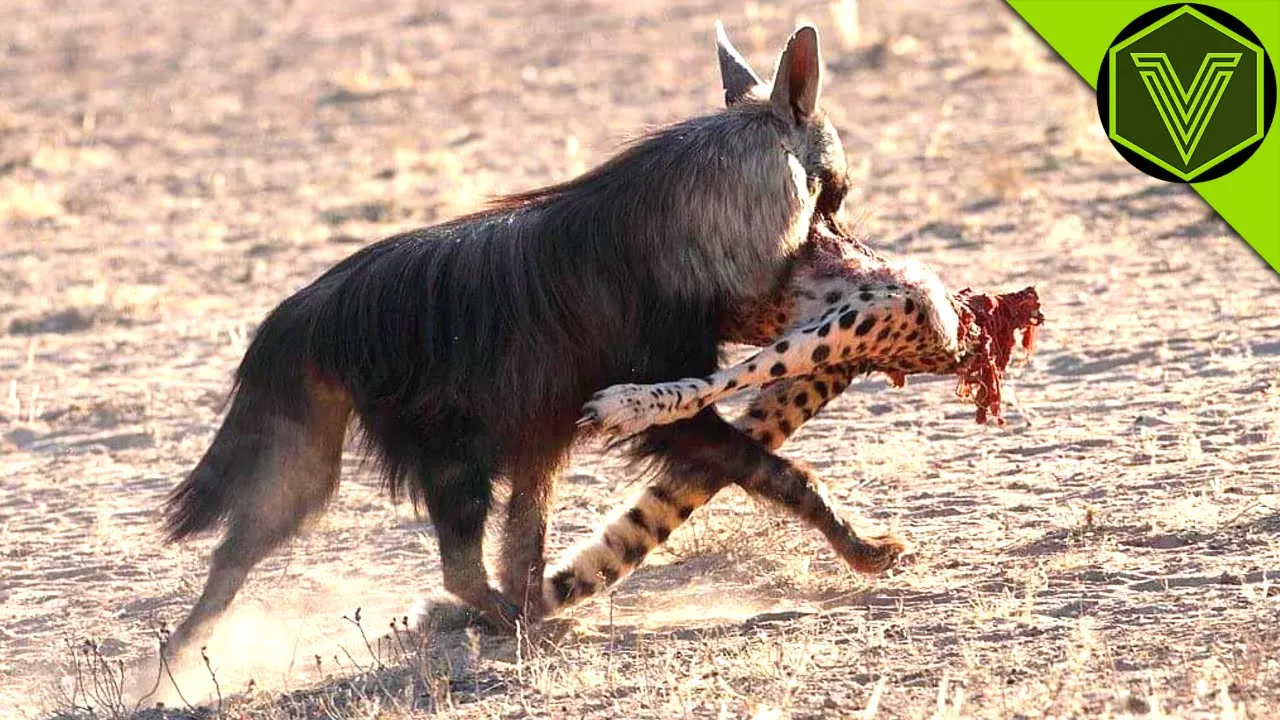
BROWN HYENA — the nightmare of cheetahs and leopards! Brown hyena vs lion and wild dogs!
The Brown Hyena: Behavior and Adaptations
This section provides information about the behavior and adaptations of the brown hyena, including its habitat, social structure, hunting habits, and interactions with other predators.
Habitat and Versatility
- The brown hyena is a member of the order Carnivora and one of the 4 modern species of hyenas.
- They inhabit Southern Africa and prefer to live in savannas, semi-deserts, and deserts.
- However, they are very versatile and can also be found in woodlands, mountains, and on coasts.
Social Structure
- Brown hyenas often live solitarily but can also form small groups called clans.
- Each recently formed clan includes the dominant male, the dominant female, and their offspring.
- There can also be immigrants from other clans, but the total number of clan members rarely exceeds 10.
- Even within clans, brown hyenas search for food individually and never hunt in packs.
Hunting Habits
- Brown hyenas are primarily scavengers but also opportunistic predators.
- They are not good at hunting fast prey but are adapted to stealing prey from other predators.
- Cheetahs and leopards are common opponents that usually leave their prey without serious resistance.
- Brown hyenas have strong jaws and long hair that protects them from enemies' claws and teeth.
Interactions with Other Predators
- Highly social predators like African wild dogs pose a greater threat to brown hyenas than big cats do.
- Spotted hyenas are significantly stronger than brown hyenas but encounters usually end without a fight.
- Lions are the most dangerous natural enemies of brown hyenas, and the only way for a hyena to survive is to run.
Adaptations to Harsh Environments
- Brown hyenas and jackals have learned to benefit from living nearby each other.
- They can survive in dry environments like the Namib Desert by absorbing water from their food.
- Cape fur seals are an important food source for brown hyenas in coastal areas.
The transcript provided does not include timestamps for all sections, so some bullet points may not have associated timestamps.
New Section
This section discusses the mating and reproduction behavior of brown hyenas.
Mating and Reproduction
- Females prefer to mate with unrelated males from other clans to avoid inbreeding.
- When a pair is formed, they become the first dominant individuals of a new clan.
- The female finds a suitable place for a den, such as a cave or burrow, to give birth.
- The number of cubs usually ranges from 1 to 5, and they feed only on milk for about 3 months.
- After 3 months, the cubs start diversifying their diet with food brought by both parents.
- At around 15 months old, the cubs switch to adult food and become independent.
New Section
This section discusses the social structure and behavior of brown hyenas.
Social Structure
- Most adult males leave their native clan and lead solitary lives.
- Females usually remain in their clan and raise their cubs in cooperation with other clan members.
- Solitary males can mate with females from other clans while staying solitary or try to join a clan by fighting the dominant male.
- Some solitary males live peacefully in a clan as low-ranking members and can mate with some females.
New Section
This section discusses the population status and threats faced by brown hyenas.
Population Status and Threats
- Brown hyenas are one of the rarest African predators, but most populations remain stable.
- The scarcity of resources in their habitats is the main cause of their low numbers.
- Humans also have a significant impact on brown hyenas, as they can be hunted for killing livestock.
- However, most brown hyenas live in areas of little interest to humans and are protected in conservation areas.
New Section
This section concludes the video and encourages viewers to like, share, and comment.
Conclusion
- Brown hyenas do not attack humans but may kill livestock, leading to conflicts with humans.
- Viewers are encouraged to give the video a thumbs up and share their impressions in the comments.
Turn any video into a summary like this
YouTube links, meetings, lectures. With transcripts, search, and chat.