From Prussian Might to Soviet Ruin: Kaliningrad and Königsberg
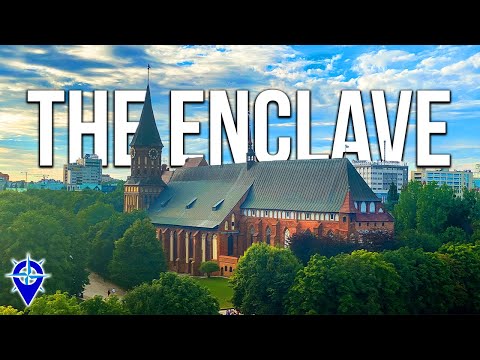
Introduction to Koenigsberg Castle
This section provides an introduction to Koenigsberg Castle, its historical significance, and its role as the seat of power for the Germanic Teutonic Knights and the Prussian monarchy.
The History of Koenigsberg Castle
- Koenigsberg Castle was the seat of power for the Germanic Teutonic Knights who conquered and colonized parts of Eastern Europe.
- It also served as the residence of the Prussian monarchy until the end of World War I.
- The castle withstood heavy bombings during World War II and became a symbol of defense for the Third Reich.
- However, it could not withstand Sovietization, and its main tower came down in 1959.
The House of Soviets
- After the destruction of Koenigsberg Castle, construction began on the House of Soviets in 1970.
- Intended to be a central administration building, it faced problems due to its dense concrete structure being too heavy for the marshy soil underneath.
- Only 21 stories were completed instead of the original 28-story design, and development was stopped in 1985 due to funding issues.
Kaliningrad's Identity
- Today, Kaliningrad is often seen as an outpost of Russian military presence, crime-infested, and dilapidated.
- However, it used to be known as Koenigsberg and was claimed by both Germany and the Soviet Union as their own.
- It was a historic frontier where Germans and Soviets coexisted and attempted to forge a new world.
The Teutonic Order's Conquest
This section explores the origins and conquests of the Teutonic Order in Eastern Europe.
Origins of the Teutonic Order
- The Teutonic Order was founded by Germans during the Third Crusade around 1190 to provide medical care for crusaders in the Holy Land.
Conquest of Prussian Tribes
- In the early 13th century, the Teutonic Order launched a campaign to conquer and Christianize the Prussian tribes in what is now Northern Poland and Kaliningrad Oblast.
- This conquest resulted in the creation of the state of the Teutonic Order, which spanned across Northern Poland, Kaliningrad, Lithuania, Latvia, and Estonia.
Foundation of Koenigsberg
- Koenigsberg was founded in 1255 on the site of an existing old Prussian settlement.
- The castle built by the Teutonic Order became the center of their new state, with fraggle River serving as a major transportation artery.
Rise and Importance of Koenigsberg
This section highlights the growth and significance of Koenigsberg as a trading hub and cultural center.
Trading Hub and Hanseatic League Membership
- The dense forests and rugged terrain surrounding Koenigsberg provided natural protection from outside threats.
- Fraggle River facilitated trade, attracting German merchants to settle in Koenigsberg.
- In 1340, Koenigsberg joined the Hanseatic League, further boosting its importance as a trading hub.
Fortifications and Cultural Centers
- Castles and fortifications were constructed to protect Koenigsberg as it grew in importance.
- Grand churches and cultural centers showcased the power and influence of the Teutonic Knights.
- German became the dominant language spoken in Koenigsberg by the 16th century.
German Character and Philosophical Legacy
This section explores the German character of Koenigsberg and its contribution to philosophy.
German Influence and Philosophers
- Koenigsberg remained quintessentially German in its character, despite changing hands between Prussia, Poland, and Russia.
- The city produced renowned philosophers like Emmanuel Kant, born in 1724.
- Kant's work focused on human experience and knowledge, emphasizing reason and rationality.
Cornerstone of German Philosophical Tradition
- Kant's concept of the categorical imperative, evaluating actions based on moral worth rather than consequences, is a cornerstone of German philosophical tradition.
- Koenigsberg and East Prussia were not solely German; they were influenced by Lithuanian and Polish cultures as well.
East Prussia in European History
This section discusses the geopolitical changes that affected East Prussia.
Geopolitical Shifts
- The formation of a unified Germany after the Franco-Prussian War in 1870 changed the balance of power in Europe.
- This alarmed Britain and Russia, leading to closer cooperation between them to contain Germany's growing might.
- These tensions eventually led to World War I, during which East Prussia became a symbol of Germany's heroism.
New Section
This section discusses the historical context of East Prussia and Koenigsberg, highlighting their separation from the rest of Weimar Germany due to the creation of the Polish Corridor. It also explores the rise of radical German nationalism in response to fears of invasion and Bolshevik infiltration.
The Separation of East Prussia
- East Prussia and Koenigsberg were separated from the rest of Weimar Germany following the restoration of independent Poland and the creation of the Polish Corridor.
- This resulted in East Prussia becoming an enclave separated from its Fatherland for the first time in history.
Rise of Radical German Nationalism
- As more people in Koenigsberg searched for radical solutions to post-war problems, support for Communists grew as they were seen as an anti-democratic party.
- However, a new nationalist party emerged, exploiting fears of invasion and promoting German nationalism against Poles, Lithuanians, and Russians.
- This nationalist party highlighted economic inadequacies of socialism and democracy in relation to wartime debts.
Germanization Efforts
- In the late 1930s, a strong Germanization effort took place in East Prussia.
- Lithuanian and Polish place names were replaced with German ones, and their languages or religions were no longer tolerated.
- By 1933, East Prussia had become a territory with significant support for fascist rule.
Military Significance
- In 1935, Koenigsberg was designated as Germany's first military district by Vermach.
- Despite being ethnically mixed, it became a focal point for Germany's military efforts.
- Being "German" became essential while other identities were suppressed.
New Section
This section discusses the events leading up to World War II, including Germany's attack on Poland and the elimination of the Polish Corridor. It also highlights Hitler's personal dislike for East Prussia and his time spent in the region.
German Invasion of Poland
- On September 1, 1939, Germany launched an attack on Poland, marking the beginning of World War II.
- The invasion resulted in the elimination of the Polish Corridor, making East Prussia no longer a vulnerable border region.
Hitler's Time in East Prussia
- Despite Hitler's personal dislike for East Prussia due to its terrain, he spent a significant amount of time there during his rule.
- The area surrounding Wolf's Lair became heavily guarded as it served as Hitler's headquarters for planning Operation Barbarossa and Blitzkrieg campaigns.
New Section
This section focuses on the events during World War II that impacted Koenigsberg and East Prussia. It includes heavy bombardment, Soviet invasion, and the futile defense efforts by German forces.
Bombardment and Devastation
- In August 1944, Koenigsberg experienced heavy bombardment over two nights, resulting in significant destruction.
- Over 50% of the city and over 90% of the city center were destroyed.
- Famous bridges collapsed into the Prego River, leaving only two remaining.
Soviet Invasion
- By January 1945, Koenigsberg was surrounded by Soviet forces.
- The city was cut off from the outside world for two months with a quarter-million soldiers compared to a smaller number of German soldiers inside.
- Despite overwhelming odds, Hitler refused to surrender as he saw Koenigsberg as an invincible bastion of German spirit.
Devastation and Defense
- Koenigsberg was one of the most devastated cities in Eastern Europe, heavily damaged by British bombing raids and a scorched Earth retreat by German forces.
- The remaining population consisted primarily of women, children, and the elderly.
- The city was fiercely defended but ultimately fell to Soviet forces in the spring of 1945.
The summary has been provided based on the available transcript.
The Fate of Koenigsberg and the Birth of Kaliningrad
This section discusses the aftermath of World War II in East Prussia, particularly the fate of Koenigsberg and its transformation into Kaliningrad.
The Division of East Prussia
- Churchill suggested giving most of East Prussia to Poland, but Stalin demanded a part of Koenigsberg as repayment.
- The Soviet Union claimed historical ties to the territory and needed an ice-free Baltic Seaport.
- Northern East Prussia and Koenigsberg were provisionally ceded to the Soviet Union.
Devastation in Koenigsberg
- Koenigsberg was left in ruins after heavy fighting and a prolonged siege during the war.
- Approximately 90% of the city was destroyed, with only 120,000 survivors out of a previous population.
- Infrastructure such as bridges, roads, railways, electricity generators, and water supplies were decimated.
Neglect by the Soviet Union
- Rebuilding Koenigsberg was not a priority for the Soviet Union.
- There was no plan or budget for reconstruction, and no established government to oversee it.
- The Red Army organized administration themselves with little guidance from Moscow or help from local Germans.
Post-War Challenges
- Lack of food production led to German civilians becoming dependent on their captors for survival.
- Epidemic outbreaks caused high infection and mortality rates in post-war Kaliningrad.
- In 1946, Koenigsberg was renamed Kaliningrad after Mikhail Kalinin, despite his lack of connection to the city.
Rebuilding Efforts
- Russian settlers arrived in Kaliningrad to rebuild agriculture and factories.
- Programs were initiated to rehabilitate the German population initially assumed to remain long-term.
- However, many Germans felt cheated as they arrived in a city that needed complete reconstruction.
Challenges for German Integration
- Germans were not fully integrated into Soviet life and faced discrimination in terms of pay and residency.
- Reports emerged about the poor conditions in Kaliningrad, risking damage to the Soviet Union's international reputation.
Settling Kaliningrad with Collective Farmers and Industrial Workers
This section focuses on the settlement of Kaliningrad with collective farmers and industrial workers after World War II.
Population Growth
- The Soviet Union initiated a program to settle Kaliningrad with collective farmers and industrial workers.
- By late August, the population had grown to 90,000, with only 37,000 Germans remaining.
- Most settlers were under 40 years old and came from Western regions devastated by German occupation.
Promised Incentives
- Settlers were promised incentives such as free train fare, transfer of cattle and possessions, financial support, loans for housing, and tax exemptions.
- However, many settlers felt cheated as they arrived in a city that needed complete rebuilding.
Unstable Population
- For the first 10 years, the Soviet population in Kaliningrad remained unstable as people arrived and left due to difficult living conditions.
- Life in post-war Kaliningrad was challenging and often worse than where Russian workers came from.
Challenges for German Integration
- Rehabilitation programs aimed to incorporate Germans into Soviet life but faced difficulties.
- Pay discrepancies existed between Germans and Soviet workers.
- German people were not fully allowed to assimilate into the new regime while trying to adapt to it.
Reports on Living Conditions
- Shocking reports emerged about the conditions of life in Kaliningrad from those who left the city.
- These reports risked damaging the Soviet Union's international reputation.
New Section
This section discusses the expulsion of Germans from Kaliningrad and the larger population transfers in Eastern Europe after World War II.
Expulsion of Germans from Kaliningrad
- The Soviet government issued an order to purge the new Soviet state of Germans, using them as scapegoats to justify slow reconstruction and progress in Kaliningrad.
- Germans were known for their skills and expertise, making their loss a significant blow to the city's workforce.
- Between 1947 and 1948, most of Kaliningrad's German population was expelled, contributing to one of the largest population transfers in history.
Destruction of German Influence
- The Soviet government made efforts to remove German monuments and signage in Kaliningrad.
- The ruins of Kaliningrad were used as a backdrop for Soviet war films that portrayed the city as a symbol of Prussian militarism.
- Koenigsberg Castle, considered fascist by the Soviet government, was eventually destroyed despite protests from architects, historians, and residents.
New Section
This section explores how Kaliningrad became isolated after the collapse of the Soviet Union and its strategic significance today.
Isolation after the Collapse
- After the collapse of the Soviet Union in 1991, Kaliningrad found itself separated from Russia by independent countries.
- Poland and Lithuania joining NATO and subsequently the European Union further exacerbated this isolation.
- All land links between Kaliningrad and Russia had to pass through NATO/EU members, turning it into an isolated exclave.
Strategic Significance Today
- Due to its strategic location and Russian military presence, Kaliningrad has gained global attention in Western media.
- It is believed that nuclear-capable weapons systems are deployed there along with claims of non-strategic nuclear weapons existence.
- Proximity to NATO member states provides Russia with a strategic foothold and a warm water port.
New Section
This section draws parallels between Kaliningrad's role today and the historical significance of Koenigsberg in East Prussia.
Parallels with Koenigsberg
- Kaliningrad now performs a similar role to what Koenigsberg and East Prussia used to fulfill for the German Reich.
- It serves as a forward military base projecting power with significant military assets.
- The New York Times article suggests that Kaliningrad is seen as sensible to its fascist government.
New Section
This section reflects on the potential future of Kaliningrad and hopes for peace and prosperity.
Future Prospects
- If another catastrophic war were to occur, Kaliningrad could be wiped off the map once again.
- The House of the Soviets, seen as strangling the city, is hoped to come crashing down someday.
- Germans returning to Koenigsberg and Russians living in Kaliningrad in peace and prosperity are desired outcomes.
Timestamps have been associated with relevant bullet points.
Turn any video into a summary like this
YouTube links, meetings, lectures. With transcripts, search, and chat.