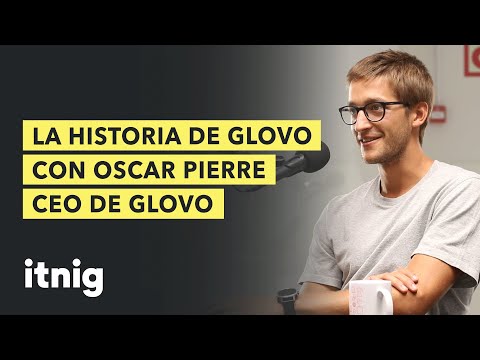
La historia completa de Glovo con Oscar Pierre, CEO - Podcast 107
Welcome to StarthapingSight Stories
Introduction to the Podcast
- The podcast "StarthapingSight Stories" by Indic discusses startups, business, and technology.
- This episode is sponsored by Camalún, a company that designs and produces promotional items for marketing actions with an extensive catalog of customizable products.
Guest Introduction: Pierre
- Pierre introduces himself and shares his background in Barcelona, mentioning the evolution of his idea aimed at creating a significant impact in cities.
- Initially started as a simple app for deliveries called "Piero," which has now expanded into a marketplace featuring various local stores and restaurants.
Expansion and Market Strategy
Growth Journey
- Over four years, the company has expanded to 26 countries, focusing on less competitive markets to establish its presence first.
- The concept of delivery services was not new; previous attempts existed but failed to gain traction beyond basic communication methods like Facebook or WhatsApp.
Historical Context
- Pierre reflects on past delivery services in Barcelona, comparing them to their current model. He mentions an old service known as "el ángel," which was an analog solution for deliveries.
Service Evolution and User Experience
Service Features
- The service allows users to order from any store within the city quickly. Selection is crucial for attracting and retaining customers.
- The primary value proposition focuses on convenience; however, they faced challenges with initial user engagement due to high costs and usability issues.
Challenges Faced
- Early iterations struggled with user acquisition; despite media attention, actual usage was low. They realized that their pricing model limited accessibility.
- Users felt overwhelmed when prompted directly about what they wanted instead of being presented with options. This feedback led them to rethink their approach.
Refining the Business Model
Key Insights for Improvement
- To enhance growth potential, they recognized the need for lower prices and better content presentation upon user entry into the app.
- They aimed to create a more engaging experience similar to platforms like Amazon by showcasing numerous ideas while allowing users flexibility in choices.
Grupalia's Journey and Market Insights
Early Investment and Growth
- The speaker discusses their first investor, who was also the older brother of their best friend, highlighting personal connections in business.
- Initial focus on selling products through collaborations with local businesses, particularly restaurants, indicating a strategy to penetrate the food market.
- Emphasis on executing operations in Barcelona and Madrid, where they began to see traction, especially in food delivery.
Competition Landscape
- The speaker notes competition from established players like Justin and Delibero but mentions that the market was still maturing.
- Comparison of past and present offerings from competitors like Justin shows little change over time despite existing for several years.
Evolution of Food Delivery Models
- Introduction of two waves in food delivery: Generation 1 (early aggregators like Justin) versus Generation 2 (newer models focusing on enhanced user experience).
- Generation 1 companies primarily aggregated existing restaurant services; however, Generation 2 aimed to improve value propositions for both users and restaurants.
Strategic Advantages
- Discussion about how Generation 2 unlocked new selections for users by partnering with major brands that previously avoided delivery logistics.
- Recognition that many competitors were small startups at this stage, allowing Grupalia to leverage its unique value proposition against them.
Innovative Tactics
- The speaker describes creating "fake stores" as a growth hack to showcase popular brands without formal agreements initially.
- This approach allowed them to offer a wide selection quickly while managing relationships with restaurants creatively.
Challenges and Market Dynamics
- Legal concerns arose regarding brand representation when using logos without permission; creative solutions were employed during this phase.
- The use of non-official logos led to competitive advantages but raised ethical questions about branding practices.
Long-term Strategy
- Acknowledgment that having extensive offerings was crucial for competing effectively against larger players like Justin.
- Discussion around aggressive investment strategies aimed at capturing market share while managing operational costs associated with partnerships.
Market Competition and Strategies in Spain
Market Pressures and Sales Agreements
- The discussion highlights the competitive pressure in the market, particularly referencing Spain where fake partners account for less than 1% of sales. The sales team has successfully secured significant agreements with major retailers like Mercadona.
Product Offerings and User Experience
- There is a focus on enhancing user experience by offering a "Super Globo" service that promises convenience with supermarket deliveries within 20 minutes. This strategy aims to compete effectively against established brands like Carrefour.
Strategic Partnerships
- The conversation touches on partnerships with large retailers such as Carrefour, indicating a dual strategy of vertical integration while also collaborating with existing grocery chains to expand their offerings. This includes stocking popular items from these retailers.
Competitive Landscape Against Amazon
- A notable point made is that many startups are competing directly with Amazon, but Globo positions itself uniquely by focusing on immediate delivery needs that Amazon does not cater to, such as local errands or quick food deliveries.
Challenges Faced by Competitors
- Despite Amazon's vast resources, it struggled to penetrate certain markets (e.g., food delivery) even with its extensive user base and budget, highlighting the challenges faced by larger companies when entering niche markets dominated by agile competitors like Globo.
Operational Complexity and Technical Needs
Technical Infrastructure Requirements
- The complexity of managing numerous product categories across multiple countries necessitates a robust technical infrastructure, which includes hiring hundreds of programmers to support operations efficiently across 26 countries.
This structured approach provides clarity on key discussions regarding market strategies, competition dynamics, operational complexities, and strategic partnerships within the context of the Spanish market landscape as discussed in the transcript.
Insights on Market Dynamics and Partner Selection
Complexity of City Operations
- The speaker discusses the operational complexities in cities across different countries like Egypt, Kazakhstan, and Peru, emphasizing the unique challenges each presents.
- A recent acquisition of a tech team from a company in Poland is mentioned, indicating an expansion strategy focused on building teams in various locations.
User Acquisition Challenges
- The conversation shifts to the difficulties of acquiring merchants, riders, and customers, highlighting that all three are considered users with distinct satisfaction metrics.
- The speaker identifies partners as the most vulnerable aspect of their business model, stressing the importance of selecting competitive partners for success.
Importance of Quality and Exclusivity
- Emphasizing selection quality over quantity, the speaker notes that having exclusive partnerships can significantly enhance market competitiveness.
- Exclusivity is highlighted as a daily operational focus across all countries where they operate.
Partner Engagement Strategies
- Approximately 20% of orders come from exclusive partners; this exclusivity is seen as critical for aggressive partner acquisition strategies.
- The discussion touches on how competition influences partner engagement strategies, particularly referencing aggressive competitors like RAPI in Latin America.
Competitive Landscape Insights
- The speaker describes their approach as rational compared to competitors who engage in extreme tactics to attract partners.
- Observations about market dynamics indicate that while many players are aggressive, there’s recognition that growth potential exists within certain limits—suggesting no room for monopolies.
Market Entry and Marketing Strategies
Market Penetration Opportunities
- There’s a belief that only one or two major players can thrive in each country due to limited market space; this insight shapes strategic decisions regarding entry into new markets like Turkey.
Marketing Approaches
- Capturing high-quality merchants is identified as challenging; however, automated onboarding processes have been implemented to facilitate merchant integration without direct contact.
Recruitment Tactics for Riders and Customers
- Rider recruitment relies heavily on organic methods such as word-of-mouth and job portals when entering new cities.
- Customer acquisition strategies involve leveraging offline marketing expertise through their CMO's background to create brand awareness effectively.
This structured summary captures key insights from the transcript while providing timestamps for easy reference.
Marketing Strategies and Growth Insights
Offline vs. Online Campaign Effectiveness
- The speaker emphasizes their strength in offline marketing campaigns, particularly television and outdoor advertising, suggesting they excel at delivering clear messages and effective media planning.
- They critique competitors who invest heavily in large-scale campaigns (e.g., during the World Cup) but fail to maintain consistent engagement, labeling such efforts as inefficient.
- A strategic approach is discussed where initial brand creation focuses on offline methods before gradually increasing online ad spending; this has shown a correlation with reduced customer acquisition costs (CAC).
Financial Performance and Market Expansion
- The speaker shares impressive sales growth figures: from €14 million in 2017 to €52 million in 2018, projecting over €250 million for the current year.
- Discussion of market stability indicates that while there is some uncertainty with new city openings, overall business plans are becoming more predictable.
Key Markets and Profitability
- Spain is identified as the largest market by orders, followed closely by Italy; other growing markets include Argentina, Peru, Turkey, Romania, and Poland.
- Spain is noted as a profitable country due to its established operations; profitability metrics are discussed concerning operational costs like salaries.
Operational Challenges and City Dynamics
- The speaker mentions challenges faced in smaller markets like Honduras which struggle to achieve profitability due to low order volumes compared to larger cities.
- Plans for expansion within Spain include opening 70 new cities aiming for over 100 total locations; synergies between cities are highlighted as beneficial for sales strategies.
Business Planning and Future Projections
- Financial discussions reveal past losses but also an optimistic outlook on future growth driven by dynamic business strategies and capital raising efforts.
- The importance of adaptability in business plans is emphasized; entrepreneurs often revise their expectations based on real-time performance data rather than sticking rigidly to initial projections.
Globo's Success: Key Insights and Strategies
Adaptation and Learning from Mistakes
- The speaker emphasizes that Globo's success is largely due to its ability to adapt and learn from failures, rather than having a brilliant initial idea.
- They highlight the importance of understanding what does not work in order to improve and innovate effectively.
Team Building and Leadership
- The speaker reflects on their early career, noting the significance of honesty about their limitations and the necessity of building a strong team with skilled individuals.
- They mention creating an environment where talented team members can operate freely, which has been crucial for growth.
Risk Management and Decision Making
- Globo has consistently taken significant risks, often being on the brink of failure but viewing these challenges as part of their journey.
- The company operates rationally within a competitive landscape, adapting strategies based on market pressures from larger competitors like Uber Eats.
Fundraising Challenges
- Early fundraising efforts were challenging due to competition with larger companies raising substantial amounts; they had to be creative in securing smaller investments.
- The speaker discusses how transparency with the team regarding fundraising difficulties fostered a culture focused on efficiency and profitability.
Control and Governance Structure
- Despite raising significant capital, Globo maintains a democratic governance structure where no single investor holds excessive control over decision-making.
- The speaker notes that while they did not initially plan to raise such large sums, maintaining control through diverse investors has been beneficial.
Investment Mindset and Market Opportunities
The Dual Approach to Financing
- The speaker emphasizes the importance of maintaining a dual mindset in financing, focusing on both customer relationships and company margins while also considering investor interests.
- A reference is made to Uber Eats' growth trajectory, highlighting how initial investments have significantly increased over time, indicating a robust market potential.
Competitive Landscape and Investor Interest
- Discussion about SoftBank's interest in Globo suggests that major investors recognize the potential for significant growth in the market.
- The conversation touches on SoftBank's investment strategies, noting their willingness to invest heavily in companies like Rappi and others within similar sectors.
Rationality vs. Aggression in Investment Strategies
- The speaker reflects on how entering into partnerships with SoftBank can lead to irrational decision-making within companies, which may affect long-term strategy.
- There’s an acknowledgment of the challenges faced when competing against more rational competitors; the need for aggressive user acquisition is highlighted as a key strategy.
Capital Allocation Challenges
- Concerns are raised regarding SoftBank's capital allocation strategies and whether they can sustain high levels of investment without thorough analysis.
- The discussion indicates that while there are no obligations for excessive spending, companies must navigate competitive pressures effectively.
Ownership Dynamics and Entrepreneurial Control
- Entrepreneurs often face dilemmas when raising funds; they risk losing control over their company despite gaining financial resources.
- A personal reflection reveals that maintaining at least 10% ownership is crucial for founders to feel connected to their ventures while balancing growth ambitions.
Team Motivation and the Role of Founders
Importance of Team Dynamics
- The final key point discussed is the significance of team motivation, emphasizing that it must come from the founder and CEO to avoid issues within the organization.
- The conversation touches on how each funding round involves issuing options, highlighting a common practice in startups to manage equity and investor concerns.
Regulatory Challenges for Gig Workers
- The discussion shifts to the challenges faced by gig workers, particularly riders, and their labor rights amidst rising conflicts surrounding their employment status.
- A vision is presented where work should be flexible without barriers, ensuring fair pay—specifically aiming for 30% above minimum wage while lacking traditional job security.
Solutions for Gig Economy Workers
- Surveys indicate that this model provides a viable solution for many individuals seeking flexible work arrangements; it's seen as a stepping stone rather than a permanent job.
- The speaker notes that while gig workers earn more than minimum wage, they lack social security benefits typically associated with formal employment contracts.
Global Context of Flexible Work
- It’s emphasized that the demand for flexible jobs is not unique to one company but part of a global trend affecting urban areas worldwide.
- There’s an appeal to government bodies in Spain to recognize this global shift towards flexibility in work arrangements and establish regulatory frameworks that support such models.
Need for Legal Framework Adjustments
- Current legal structures create barriers between freelance work and traditional employment; there’s a call for regulations that allow companies to offer better benefits without compromising worker status.
- The speaker expresses frustration over existing legal advice which hinders efforts to provide comprehensive insurance and training opportunities for gig workers.
Future Directions in Employment Contracts
- There's concern about Spain's slow response compared to other countries regarding labor laws affecting gig economy platforms; judicial actions are seen as counterproductive.
- An ideal contract would blend freelance flexibility with employee benefits, allowing companies like theirs to invest more in worker welfare while adapting to modern workforce needs.
Cost and Flexibility in Business Models
The Importance of Flexibility
- Discusses the cost implications and the need for a flexible model that allows constant activation and deactivation of services, which is crucial for platforms like Uber.
- Highlights the necessity of flexibility during peak demand times, such as major events (e.g., Barcelona vs. Madrid matches), to ensure restaurants can meet customer orders.
Challenges with Licensing Sessions
- Addresses issues related to licensing sessions, particularly concerning individuals without residency permits in Spain, indicating a significant operational challenge.
- Mentions efforts to manually track user behavior to prevent multiple users from accessing a single account, emphasizing the importance of data models in this process.
Personal Growth and Company Evolution
Personal Journey within the Company
- Shares a personal story about transitioning from an intern to a key player in a large company, reflecting on how this journey has been life-changing.
- Emphasizes the value of hard work and dedication over merely clocking hours, noting that sacrifices are part of building something significant.
Future Aspirations
- Expresses hope for continued innovation within the company while acknowledging that future entrepreneurial ventures may not match current experiences at Globo.
Mentorship and Leadership Development
Role of Mentorship
- Describes Sacha's role as an early investor and mentor who significantly influenced leadership development within the company.
- Explains how Sacha contributed by being actively involved without defined roles initially, fostering team unity during critical growth phases.
Building Organizational Structure
- Discusses how leadership evolved naturally over time as responsibilities were delegated among team members with specific expertise.
Social Impact and Regulatory Challenges
Addressing Social Issues
- Talks about Sacha’s involvement in managing relationships with governments and addressing regulatory challenges due to their impact on labor markets across countries.
Commitment to Positive Change
- Highlights initiatives aimed at improving conditions for gig workers (Glovers), including training programs designed to empower them towards entrepreneurship.
Funding Opportunities for Community Projects
Exploring Financial Support for Local Initiatives
- Discussion on the potential to provide financial assistance to individuals who have been involved in community service (referred to as "Glovers") and are looking to start a bakery or enroll in an IT course.
- Emphasis on the importance of supporting local entrepreneurs and educational pursuits as a means of fostering community development.
- The speaker expresses interest in ongoing updates about these initiatives, indicating a commitment to follow up every year or two.
- Acknowledgment of the audience's engagement and support, suggesting that community involvement is crucial for the success of such projects.