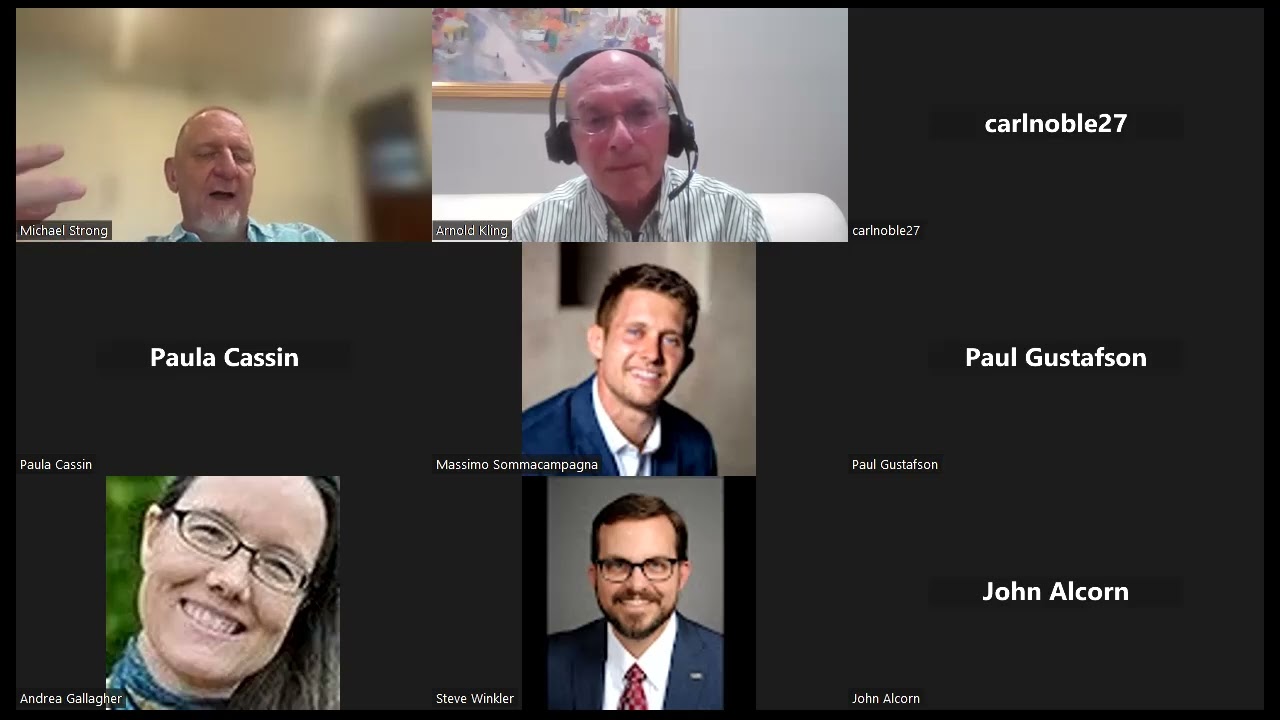
Michael Strong on the Socratic Experience
Welcome and Early Education
In this section, Michael Strong discusses his early education experiences, highlighting his journey through different public schools and the pivotal moments that shaped his views on education.
Early Education Journey
- Michael attended local public schools in Denver until he was 10 years old before moving to rural northern Minnesota for the rest of his junior year.
- His perspective on education shifted during his junior year of high school when he encountered a teacher who led discussions on Plato and Boer, sparking his interest in philosophy.
- Discovered St. John's College, known for its great books program, which captivated him with four years of reading and discussing classics.
- Despite attending Harvard initially, Michael's passion for Socratic dialogue led him back to St. John's College to delve deeper into intellectual discourse.
- Michael found traditional lectures unengaging and preferred interactive discussions, shaping his educational preferences.
Transition to Education Initiatives
This segment delves into Michael Strong's transition into the field of education through leading Socratic seminars in Chicago Public Schools while pursuing graduate studies at the University of Chicago.
Transition to Educational Initiatives
- While studying political philosophy at the University of Chicago, Michael began conducting Socratic seminars in Chicago Public Schools under morm Rattler's P projects since the late 1980s.
- He felt a sense of liberation when engaging students in inner-city classrooms through lively discussions on various stories like "The Monkey Paw" and other classic literature.
- The Socratic seminar approach differed from traditional teaching methods by emphasizing open-ended questions that encouraged critical thinking rather than seeking specific answers.
- Observations from diverse individuals like a Rabbi highlighted the value of continuous interpretation and argumentation around texts within educational settings.
Involvement in National Education Projects
This part focuses on Michael Strong's involvement in national education initiatives such as the Alaska paa project aimed at reforming public school systems through Socratic seminar traditions.
National Education Projects
- Engaged with the Alaska paa project under morm Radler's leadership to introduce Socratic seminar practices into public schools nationally.
- The paa initiative sought to revive the ancient Greek concept of pidea as a model for modern education based on discovering truth, goodness, and beauty through discussion.
- Inspired by figures like Robert M. Hutchins and morm Radler, Michael contributed to bringing Socratic seminar traditions into public schools as part of educational reform efforts.
Grant Money and Starting a Private School
In this section, the speaker discusses receiving grant money to start a private school due to positive feedback from parents and teachers.
Grant Money and Positive Reception
- The speaker received grant money initially but later ran out of funds.
- Parents who appreciated the educational approach requested the creation of a private school.
- Teachers showed enthusiasm for the teaching methods, with data indicating high student dissatisfaction in traditional schooling.
Transition to Creating Monas High School
This part covers the transition from running out of grant money to being recruited to create a Monas High School in San Antonio.
Recruited for Monas High School
- Transitioned from Alaska to San Antonio after being approached by Jim Judson to establish Monas High School.
- Emphasized the connection between Monas philosophy and Socratic seminars for intellectual independence.
History and Impact of Montessori Education
Here, the speaker delves into the history and impact of Montessori education globally.
Montessori Education History
- Maria Montessori's method gained international recognition a century ago, supported by notable figures like Thomas Edison and Helen Keller.
- The movement faced setbacks in the US due to criticism but continued in Holland post-war.
Evolution of Montessori Education in the US
This segment explores how Montessori education resurged in the US through grassroots efforts.
Resurgence of Montessori Education
- A resurgence occurred in America during the late 1950s, leading to numerous schools across different levels over decades.
- The movement's growth relied on individuals creating small-scale schools outside traditional systems, impacting educators' earnings significantly.
Interview Insights
In this section, the speaker discusses the impact of standard education on students' initiative and creativity, drawing comparisons between Montessori and public school systems.
Impact of Montessori Education
- Standard education focuses on obedience and passivity, while Montessori encourages initiative and creativity.
- Students from Montessori schools are more likely to take initiative compared to those from public schools.
- In a Montessori classroom, students choose their work, set goals, and achieve them independently.
- Montessori students exhibit goal-oriented behavior similar to adults in a professional workplace.
- Alumni noted that while academically equal, Montessori students were more comfortable engaging with adults.
Educational Innovations
The speaker reflects on their experience establishing innovative educational programs in different settings.
Educational Program Development
- Initial challenges in creating a high school led to exploring new opportunities for educational innovation.
- Collaboration with like-minded individuals facilitated the creation of advanced academic programs for gifted students.
- Introduction of challenging texts like Plato and Shakespeare for middle schoolers enhanced academic rigor.
- Focus on free-market principles and difficult texts resonated with stakeholders interested in innovative education.
- Implementation of abstract math curriculum and AP science courses showcased academic advancement among students.
Community Engagement
The speaker discusses community dynamics and differences in managing educational initiatives.
Community Dynamics
- Collaboration with a libertarian individual led to divergent views on managing an advanced academic program.
- Transitioning to create charter high schools highlighted the importance of community needs and engagement.
Poor Education System in Louisiana
The speaker discusses the transformation of the education system in Louisiana through an AP program, highlighting the state's academic challenges and improvements.
Transformation of Education System
- Louisiana was academically weak but improved through an AP program.
- Initial success faced challenges with new licensing requirements for school principals.
- Despite ranking well nationally, the speaker had to leave due to lack of required licenses.
Entrepreneurial Ventures and Educational Passion
The speaker delves into his entrepreneurial journey and passion for education, connecting with like-minded individuals.
Entrepreneurial Journey
- Interaction with John Mackey and Gary Hoover, both entrepreneurs from Austin.
- Influence from University of Chicago economics studies under Becker.
- Collaboration with John Mackey led to a shared libertarian ideology.
Innovative Approach to Education
The speaker explains the concept behind "Freedom Lights" as a unique educational approach blending libertarianism with left-friendly ideals.
Educational Philosophy
- Focus on entrepreneurial solutions rather than opposition to taxes and regulations.
- Aimed at packaging libertarianism in a left-friendly manner for cultural acceptance.
Return to Education and New Initiatives
After a detour into economic zones, the speaker re-engages with education initiatives post-Honduras experience.
Re-entry into Education
- Shift back to education after Honduras project failure in 2012.
- Involvement in founding Co-School in Austin followed by collaboration with Higher Ground Education network.
Socratic Experience School Model
Detailed explanation of the Socratic Experience School model focusing on personalized learning and core programs.
Socratic Experience Structure
- Introduction of Socratic Experience model emphasizing dialogue-based online learning.
Socratic Humanities Curriculum Overview
The speaker discusses the structure and content of the Socratic Humanities curriculum, emphasizing a focus on personal growth, classical texts from various cultures, philosophy, and writing skills development.
Socratic Humanities Curriculum Components
- The curriculum covers classical texts from China, India, Greece, Rome, Christianity, Islam, philosophy, poetry, and literature.
- Writing instruction is integrated into the program through student-led arguments that form the basis for writing assignments. Feedback is provided via Google Docs to enhance writing skills.
- Students engage in passionate debates on topics like bringing back woolly mammoths from extinction to generate ideas for writing assignments. Emphasis is placed on clear thinking as a foundation for effective writing.
Socratic STEM Program Structure
The speaker outlines the components of the Socratic STEM program which includes problem-solving activities in math and science alongside discussions on evidence and scientific decision-making processes.
Socratic STEM Program Elements
- The program involves problem-solving sessions including hard problems, brain teasers, logic puzzles, SAT math problems, math competition problems without advanced mathematics requirements.
- Math problem-solving techniques are emphasized using strategies like "How to Solve It" by George Pólya. Science problem-solving sessions involve reading articles on evidence and scientific reasoning.
Math Instruction Approach and Support System
Details about the math instruction approach within the curriculum are discussed along with support mechanisms such as personalized tutoring options for students needing additional help.
Math Instruction Approach and Support System
- Math instruction progresses through sequential levels from sixth grade to Algebra 1 using apps like Mathspace or Khan Academy. Students set goals with some completing two years of math per year while others receive summer tutoring if needed.
- International staff members provide affordable one-on-one math tutoring due to wage differences. This allows for high-quality tutoring services at reasonable costs compared to US standards.
Integration of AI in Education
The discussion revolves around incorporating AI tools like Khan Academy's Con Migo into education programs while highlighting its effectiveness as a supplement rather than a transformative tool at present.
Integration of AI in Education
- AI tools like Con Migo offer adaptive learning experiences but are seen as supplementary rather than revolutionary. Students can choose between AI assistance or human support based on their preferences.
Learning and Productivity Projects for Students
The discussion revolves around students engaging in productivity and project management platforms to work on entrepreneurial and creative projects aligned with their interests.
Student Projects
- A 12-year-old student is assisting his father in identifying tax delinquent properties suitable for investment, managing a team of 12 overseas assistants.
- Another student is recruiting influencers for a gaming company, opting for commission over a $150,000 salary, potentially earning over $200,000 this year.
In-Person Interaction and Program Development
Addressing the importance of in-person interactions within virtual environments and discussing plans for hybrid programs to combine virtual education with physical experiences.
In-Person Engagement
- Efforts to facilitate in-person gatherings in locations like Greece and various cities across the U.S., highlighting the significance of physical interaction.
- Designing a hybrid program where organizations can host in-person experiences alongside virtual education to enhance the learning environment.
Scalability and Quality Control
Exploring the scalability of the program and strategies for maintaining quality control through technology integration.
Scalability Factors
- Envisioning doubling enrollment annually with potential scalability due to high interest from educators and ample staffing resources.
- Emphasizing the challenge of ensuring quality control as a key concern when scaling up operations, utilizing AI for monitoring class performance.
Tech-Enabled Human Interaction
Discussing the importance of leveraging technology to enhance human interaction quality within educational settings.
Human-Centric Approach
Do It in Local Environments
In this section, the speaker discusses the idea of implementing tools to assist individuals in setting up their own quality control systems locally.
Implementing Tools for Quality Control
- The speaker mentions the possibility of using various tools to help individuals set up quality control systems in their local environments.
- They highlight the goal of training an AI to identify high-quality dialogue patterns through tools for scaling tech-optimized human interaction.
- Customer acquisition is identified as a significant challenge, with a focus on reducing costs and optimizing creative strategies.
- Understanding customer acquisition funnels and identifying potential drop-off points is crucial for scaling profitably.
- The process of engaging potential customers involves capturing contact information, scheduling calls, and arranging shadow days to increase sales conversion rates.
Identifying Customer Avatars
This section delves into different customer avatars and their characteristics within the context of customer acquisition strategies.
Customer Avatar Segmentation
- Three primary customer avatars are discussed: creative and entrepreneurial parents, homeschoolers, and parents seeking alternatives due to learning differences or other issues.
- Each avatar has distinct traits such as willingness to pay full tuition, preference for socialization opportunities, or escaping traditional educational systems.
Competitive Advantages and Market Positioning
The speaker reflects on competitive advantages, market positioning, and future growth prospects within the education sector.
Competitive Landscape Analysis
- Voucher programs are mentioned as a competitive advantage, with existing partnerships facilitating student enrollment from specific regions.
- Emphasizing differentiation from traditional schooling methods attracts parents who seek innovative educational approaches.
- The speaker envisions a shift towards agent-based schooling models gaining market share over time through early adoption stages.
Challenges in Public Education
Addressing challenges in public education systems while proposing alternative solutions for enhancing student well-being.
Critique of Public Education
Accountability in Public Education
The discussion revolves around the accountability movement in public education, likening it to a scenario where test score metrics dominate, leading to reduced autonomy for classroom teachers and potential dissatisfaction among educators.
Impact of Accountability Movement
- Predictions suggest that within the next 10 to 20 years, a majority of students may opt out of traditional public schools due to dissatisfaction and seek alternative educational options.
- With the rise of Education Savings Account (ESA) legislation in red states, it is anticipated that most students will transition out of traditional public schools, potentially altering the educational landscape significantly.
Homeschooling Dynamics
- Homeschooling often starts with a traditional curriculum but gradually evolves into a more flexible approach, emphasizing high-level skills over strict adherence to state standards.
- Advocates argue that homeschooling allows for more engaging and fulfilling learning experiences compared to traditional schooling, promoting entrepreneurial projects and overall life satisfaction.
Innovative Learning Approaches
The conversation delves into innovative learning methodologies such as Alpha school's two-hour learning model focusing on math and language arts through apps, complemented by student-driven projects.
Alpha School's Approach
- Alpha school emphasizes app-based learning for academics while dedicating the rest of the day to student projects, fostering a balance between structured learning and creative exploration.
- Addressing concerns about socialization in non-traditional settings, emphasis is placed on high-touch interactions among students leading to enhanced articulation skills and positive social experiences.
Student Mentoring and Socialization
The dialogue explores historical instances like Joseph Lancaster's teaching method advocating for students mentoring each other as an effective way to enhance socialization within educational settings.
Student Mentorship Dynamics
- Highlighting the significance of students mentoring each other, the approach aims at creating enriching interactions leading to improved social experiences surpassing those found in many public schools.
College Admission Strategy and Project-Based Learning
Michael discusses the importance of motivating students within the education system to optimize their potential. He also touches on project-based learning and its impact on college admissions.
College Admission Strategy
- Michael outlines the college admission strategy, which includes achieving great SAT scores, taking a few college courses, excelling in AP or college courses, and engaging in impactful projects.
Project-Based Learning for College Admissions
- Students with high SAT scores and a track record of success in AP or college courses demonstrate their academic caliber to universities.
- Michael references Cal Newport's book "How to Be a High School Superstar," emphasizing the shift towards focusing on substantial projects over accumulating various extracurricular activities for college admissions.
- Anecdote shared about a student who gained admission to Stanford by demonstrating entrepreneurial skills through raising funds as a venture capitalist at 16 years old.
Direct-to-Workplace Opportunities and Educational Innovation
Michael elaborates on pathways for students to enter the workforce directly and highlights the evolving landscape of education through innovative approaches like educational scholarship accounts.
Direct-to-Workplace Opportunities
- Certain fields like software development and digital marketing offer opportunities for students to bypass traditional higher education routes and enter the workforce based on skill proficiency.
Educational Innovation
- Discussion on how students can pursue work first and consider obtaining a degree later if desired, particularly in software development and digital marketing.
Educational Scholarship Accounts and Future Trends
The conversation shifts towards educational scholarship accounts (ESAs), their impact on education, future trends, and opportunities for innovation.
Educational Scholarship Accounts (ESAs)
- ESAs are highlighted as transformative tools in education, providing financial support for students to attend various types of schools such as private institutions or homeschooling.
Future Trends in Education
- Anticipation of significant changes in education with an increasing number of states adopting ESAs, potentially revolutionizing access to education for millions of students.
Closing Remarks
Concluding thoughts from Michael regarding exploring new educational paradigms, promoting diversity in education, and inviting engagement with his platforms.
Encouragement for Exploration
- Michael encourages individuals to explore innovative educational models like ESAs that are reshaping traditional approaches to learning.
Engagement Opportunities