Date Warehouse Tutorial - Introduction (Lesson 1)
Introduction to Data Warehousing and Business Intelligence
This section introduces the concepts of Business Intelligence (BI) and Data Warehousing (DW), outlining their significance in organizational strategy and competitive advantage.
Understanding Business Intelligence
- BI is defined as an organization's ability to convert its capabilities into knowledge, leading to new opportunities. This can provide a competitive advantage when effectively implemented.
- BI technologies offer historical, current, and predictive views of business operations, encompassing functions like reporting, analytics, data mining, and benchmarking.
Overview of Data Warehousing
- A Data Warehouse (DW) is a database designed for reporting and analysis; it consolidates data from operational systems such as marketing and sales.
- The data may pass through an Operational Data Store before being utilized in the DW for reporting purposes. OLAP (Online Analytical Processing) is a key technique used for analyzing this data.
Data Structures in Data Warehousing
This section discusses the structural components of data warehousing including cubes, dimensions, measures, and schemas.
Multi-Dimensional Data Representation
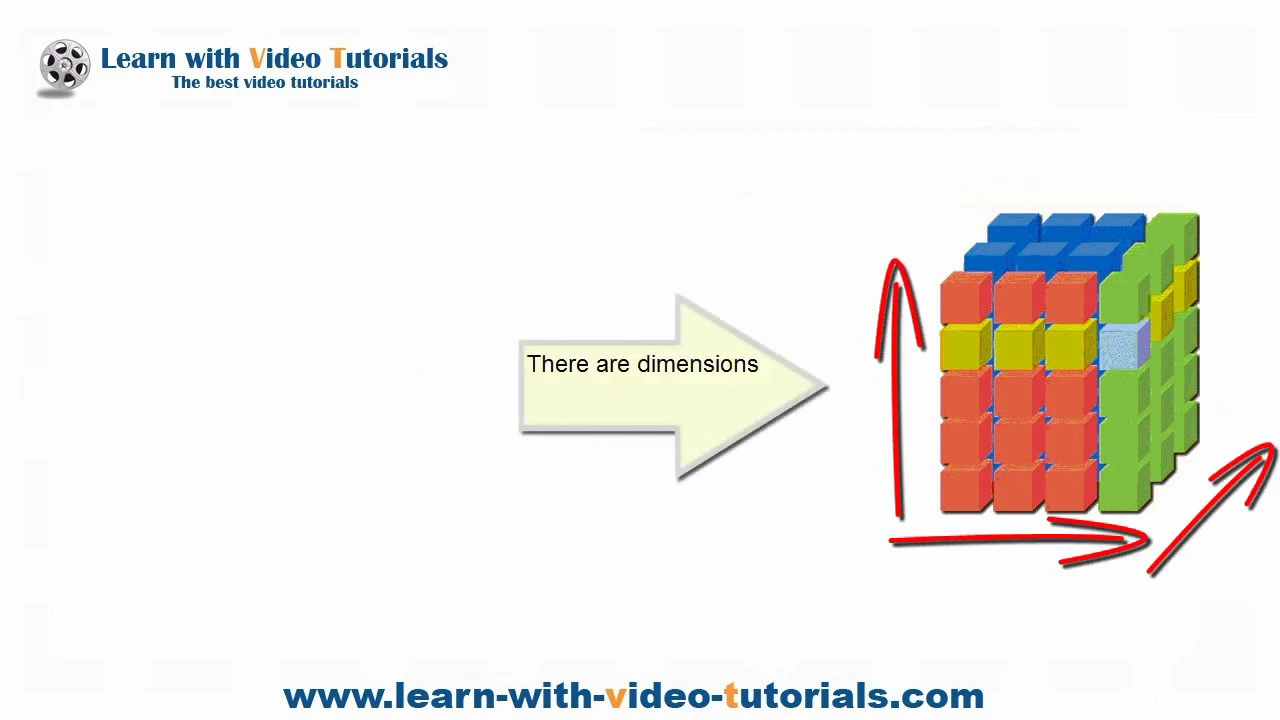
- A cube represents multi-dimensional datasets where each cell contains measures like sales or profits; higher dimensionality may be referred to as hypercubes.
- Dimensions are organized hierarchically with parent-child relationships that allow aggregation at various levels (e.g., months aggregated into quarters).
ETL Process in Data Warehousing
- The Extract, Transform, Load (ETL) process involves extracting data from various sources, transforming it for operational needs, and loading it into the target database or DW. The extraction phase is often the most challenging aspect of ETL due to varying source formats.
- Common source formats include relational databases and flat files; non-relational structures may also be involved depending on the project requirements. Streaming extraction methods can eliminate intermediate storage needs during ETL processes.
OLAP Techniques in Business Intelligence
This section elaborates on Online Analytical Processing techniques used within BI frameworks.
Applications of OLAP
- OLAP enables swift responses to multi-dimensional analytical queries; it's integral to business intelligence applications such as sales reporting and financial forecasting. New applications are emerging across various sectors including agriculture.
- The term OLAP was derived from traditional database terminology related to Online Transaction Processing (OLTP). It encompasses different methodologies like MOLAP (Multi-dimensional OLAP) which stores data in optimized arrays rather than relational databases.
Hybrid Approaches in OLAP