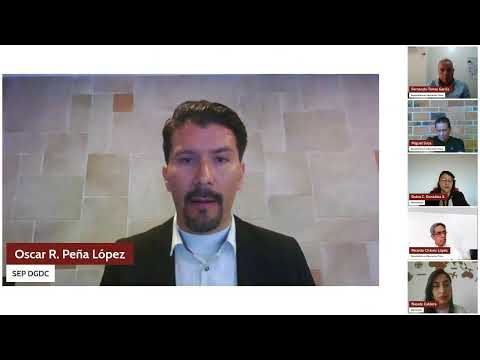
Aportaciones de la Educación Física en la formación integral de niñas, niños y adolescentes.
Welcome to the Educational Meeting on Physical Education
Introduction and Purpose
- The meeting is hosted by the Secretaría de Educación Pública, focusing on advancements and challenges in physical education within the framework of the new Mexican school system.
- The event aims to provide pedagogical references that enhance understanding of current physical education approaches and promote dialogue about diverse teaching proposals.
Upcoming Activities
- Today's session discusses contributions of physical education to holistic development for children and adolescents, followed by future conferences scheduled for April 24, May 8, and May 29.
Opening Remarks
- Sochi Leticia Moreno Fernández, Director General of Curriculum Development, emphasizes the importance of humanistic educational interventions recognizing diversity in thoughts and actions.
- She highlights that physical education offers opportunities for emotional, social, and motor experiences essential throughout basic education.
Importance of Physical Education
Contributions to Student Development
- Physical education is recognized for its role in promoting healthy lifestyles, emotional regulation, values formation, identity construction, and a sense of belonging among students.
Methodological Diversity
- Sessions in physical education are ideal for integrating various methodologies that encourage critical thinking and autonomy among students.
Dialogue Session Introduction
Transition to Discussion
- Óscar Román Peña López introduces the dialogue session focused on contributions from experts regarding integral formation through physical education.
Expert Panel Introduction
- The panel includes specialists like Ricardo Chávez López (educational sociology), Fernando Torres García (education doctor), and Miguel Ángel Dávila Sosa (pedagogy expert).
Dynamics of the Dialogue Session
Structure Overview
- The dialogue will consist of four questions guiding discussions among specialists who will respond within a time frame of 5 to 7 minutes each.
Reform Process in Physical Education
Historical Context
- The discussion begins with an exploration into how curricular reforms have aimed at fostering integral training responsive to societal challenges while identifying areas needing improvement.
Insights from Ricardo Chávez
Integral Education Perspective
- Ricardo Chávez emphasizes that modern educational institutions aim for comprehensive learning encompassing cognitive, motor skills, and socio-emotional aspects.
Evolution Over Time
- He notes significant changes over two decades leading up to a more theoretical approach in physical education curriculum development initiated around 2002.
Fernando Torres' Perspective
Continuity in Educational Reforms
- Fernando Torres agrees with previous insights about historical shifts starting from the National Agreement on Educational Modernization in 1992 as pivotal moments influencing educational frameworks.
New Discourses Emergence
- He identifies new discourses emerging since the late '90's which transformed traditional views on physical education towards a more holistic understanding involving corporeality and motricity concepts.
Miguel Dávila's Contribution
Intent Behind Curricular Changes
- Miguel Dávila asserts that no new curriculum is designed with intentions to worsen prior systems; rather they aim at improving clarity based on contemporary contexts.
Historical Reflection
- He reflects upon past reforms emphasizing their alignment with evolving societal needs while acknowledging ongoing debates surrounding these transformations.
The Role of Physical Education in Humanistic Approaches
Conceptual Framework and Strategies
- The Anglo-Saxon model emphasizes competitive categories, while a humanistic view of physical education promotes diverse strategies that shift the paradigm from winning and losing to cooperative games and modified activities.
- Current reforms in education are accompanied by state policies aimed at changing paradigms, focusing on motor behaviors of children rather than just competitive outcomes.
- Emphasis is placed on the importance of interventions by physical education teachers for the benefit of all children, not just a select few.
Movement and Expression
- The act of moving encompasses infinite possibilities that should be recognized within school environments where children engage joyfully with each other.
- According to Jack Florence, children's needs for movement, discovery, and security must be addressed through playful and engaging physical education practices.
Educational Content Evolution
- There is a call for recognizing the unique knowledge within physical education that complements other subjects like math or language arts but has evolved significantly over time.
- Programs should focus on foundational motor skills while integrating concepts such as corporeality and creativity into play.
Collaboration Among Educators
Interdisciplinary Approach
- Collaboration among educators is essential to create a comprehensive pedagogical framework that supports holistic development across cognitive, emotional, social, and personal dimensions.
- Emotional intelligence and interpersonal relationships are crucial aspects often overlooked in traditional educational frameworks.
Rethinking Sports Education
- School sports should not solely focus on competition; instead, they should contextualize valuable lessons from sports within school settings to ensure inclusive participation.
Transforming Physical Education Practices
Shifting Focus from Competition
- The teaching approach must prioritize children's interests over rigid standards; it’s about utilizing skills for everyone's benefit rather than merely competing.
Historical Context
- Understanding the historical context of physical education reveals its evolution alongside societal changes and educational reforms aimed at fostering integral development in students.
Learning Outcomes in Physical Education
Importance of Learning Experiences
- Discussions arise regarding what specific learnings occur during physical education sessions that are relevant to students' lives today amidst rapid societal changes.
Historical Foundations
- Tracing back to early 20th-century Mexican pedagogy highlights how foundational ideas shaped current educational practices despite resource limitations.
Challenges Faced by Physical Education
Resource Limitations
- Historical challenges included insufficient resources and trained educators which limited effective implementation of progressive educational theories in schools.
Dominance of Sports Model
- The dominance of sports-focused models arose due to practical necessities rather than ideological imposition; this was exacerbated by teacher shortages throughout history.
Modernizing Educational Practices
Need for Comprehensive Development
- A significant expansion in teacher training during the 1960's allowed for more comprehensive approaches towards modernizing physical education curricula beyond mere athleticism.
Revolutionizing Perspectives on Body Awareness
New Concepts Emerging
- Concepts like corporeality versus mere bodily existence emphasize awareness beyond physicality—recognizing emotions tied to movement enhances learning experiences.
Socialization Through Movement
Learning Through Interaction
- Children learn vital social skills through interactions during physical activities which foster teamwork, communication, and understanding different perspectives.
Pedagogical Shift Towards Holistic Development
Moving Beyond Pragmatism
- Transitioning from viewing bodies as machines towards understanding them as complex beings capable of emotional expression enriches educational experiences.
Linking Physical Education with Other Disciplines
Conceptual Framework
- The discussion emphasizes the integration of physical education with other disciplines, highlighting the concepts of corporeality and motricity as essential for creating connections within educational frameworks.
- It challenges the traditional view of the body as merely a biological entity, asserting that it encompasses emotions, social interactions, and cognitive activities.
- Motricity is presented not just as movement mechanics but as a reflection of human history and culture, emphasizing its broader implications.
Importance of Socialization
- The pandemic highlighted the critical role of socialization in education; lack thereof negatively impacted learning outcomes for children and adolescents.
- Socialization acts as a lubricant in education, facilitating smoother learning across various disciplines by enhancing interpersonal connections.
Interdisciplinary Learning Approaches
Breaking Down Silos
- The current educational proposal aims to transcend segmented fields by promoting formative areas rather than isolated subjects.
- There exists a strong interrelation between physical education and scientific knowledge (biology, physics, chemistry), suggesting that bodily expression can enhance understanding in these areas.
Impact on Broader Educational Fields
- Skills learned in physical education can significantly influence artistic education and even mathematics without forcing playful methods into teaching basic arithmetic.
- The integration of physical education into other formative fields is crucial for holistic development.
Contributions to Comprehensive Development
Role of Physical Education
- Physical education plays an essential role in developing competencies outlined in current educational plans for preschool through secondary levels.
Addressing Perceptions
- There is a need to recognize the fundamental contributions of physical education to student development beyond mere activity or playtime.
Responsibilities Within Physical Education
Core Functions
- Physical education must fulfill its foundational roles: enhancing motor skills and fostering an understanding of one's body while ensuring meaningful engagement during sessions.
Overcoming Neglect
- Acknowledgment is needed regarding the undervaluation faced by physical educators from peers and authorities who may see it as less significant compared to academic subjects.
Identity Formation Through Movement
Understanding Self
- Children develop their identity through corporeal awareness; this understanding aids them academically when they grasp basic concepts like unity in mathematics.
Communication Skills
- Body language serves as a vital form of communication; recognizing this enhances emotional expression among students during physical activities.
Ethical Values Through Physical Education
Value Acquisition
- Students learn ethical values through interaction during physical activities; educators serve as role models demonstrating these values effectively.
Community Engagement
- Emphasizing community over individualism helps combat societal issues such as consumerism and narcissism prevalent among youth today.
Opportunities for Growth
Current Educational Landscape
- The ongoing curriculum reform presents an opportunity to showcase how physical education contributes significantly to comprehensive student development beyond just movement.
Vision for Future Integration
Expanding Horizons
- Educators should embrace their potential impact on holistic student growth while fostering interdisciplinary collaboration within schools.
Creating Life Projects Through Education
Broadening Educational Goals
- Schools should aim not only to impart knowledge but also assist students in crafting life projects that extend beyond academic confines.
Importance of Practical Application
- Knowledge gained must be applicable to everyday life situations; helping students envision their future paths is crucial.
Collaboration Across Disciplines
- Encouraging cooperation between different subject teachers can enhance overall educational experiences for students.
Movement's Role in Learning Processes
- Recognizing movement's significance fosters better psychological processes among children; educators must advocate for its inclusion across curricula.
Bridging Gaps Between Subjects
- Integrating lessons from various disciplines can enrich children's learning experiences if approached collaboratively by all educators involved.
Enhancing Community Connections
Building Relationships with Local Context
- Engaging with local communities allows educators to incorporate relevant cultural values into lessons effectively.
Developing Social Skills
- Teaching social skills through sports promotes teamwork while addressing behavioral issues observed outside school environments.
Emotional Expression
- Facilitating discussions around emotions encourages children’s ability to articulate feelings constructively within peer interactions.
Challenges Ahead
Identifying Key Issues
- Several challenges persist within both general educational systems and specifically concerning pre-school through secondary levels regarding infrastructure needs identified earlier on throughout discussions held here today .
Infrastructure Needs
- Improving facilities dedicated solely towards providing quality instruction remains paramount moving forward if we wish our programs succeed long-term .
Professional Development
- Continuous training opportunities are necessary so that all professionals remain updated about best practices related directly back towards improving student outcomes overall .
Conclusion: Moving Forward Together
Collaborative Efforts Required
- Collective action amongst stakeholders will ultimately determine success rates achieved via implementing proposed changes discussed herein today .
Reflections on Physical Education Beliefs
Challenging Established Beliefs
- The speaker emphasizes the need to critically evaluate long-held beliefs in physical education, questioning which are still relevant and which may no longer serve the field effectively.
- Common misconceptions include the idea that physical education has always existed and that it is merely a modern construct; this belief needs reevaluation.
- The notion that physical education is a science is challenged; instead, it is described as a pedagogical practice focused on intervention rather than scientific inquiry.
Ethical Responsibility of Educators
- Educators must recognize their ethical responsibility towards students, particularly in shaping young minds during formative years.
- The importance of understanding that educating children involves an ethical dimension, where educators are accountable for their influence on students' lives.
Adapting to Modern Educational Needs
Evolving Student Demographics
- There is a recognition that today's children differ significantly from those of previous generations, necessitating adaptations in educational approaches.
- Emphasis on teaching children self-care and health awareness reflects contemporary educational priorities, linking physical well-being with mental health.
Challenges Facing Physical Education
- The speaker identifies numerous challenges within the profession, including varying practices across different regions and schools.
- Acknowledgment of changes in school attendance patterns highlights the need for innovative strategies to engage students effectively.
Conceptual Clarity in Physical Education
Distinguishing Between Concepts
- Clarification between competitive sports and general physical activity is crucial; not all sports are inherently competitive.
- Misunderstandings about what constitutes high-performance sports versus recreational activities must be addressed for clearer communication among educators.
Continuous Professional Development
- Ongoing professional development for educators is essential; they should engage in self-directed learning alongside formal training opportunities provided by institutions.
Contextualizing Educational Practices
Importance of Local Context
- Tailoring educational practices to local contexts ensures relevance; what works in one region may not apply universally across Mexico's diverse landscapes.
Diverse Educational Settings
- Recognition of various types of educational settings (e.g., rural vs. urban schools), emphasizing the need for adaptable curricula based on specific community needs.
Rethinking Educational Framework
Adjusting Educational Systems
- The focus should shift from expecting students to adapt to rigid systems toward creating flexible environments that cater to individual student needs.
Role of Educators
- Teachers play a pivotal role in fostering growth beyond mere academic achievement; they contribute significantly to holistic student development through movement and interaction.
Engaging with Audience Feedback
Community Involvement
- Audience engagement during discussions highlights the importance of community feedback in shaping future educational methodologies and practices.
Addressing Questions
- Questions raised by participants reflect ongoing concerns regarding the objectives and effectiveness of physical education programs within schools.
Defining Education's Scope
Nature of Physical Education
- The speaker argues against categorizing physical education as a science, asserting its nature as an area focused on practical pedagogy rather than theoretical study.
Conclusion: Moving Forward Together
- Collaboration among educators can lead to improved strategies for addressing discrepancies within the field while promoting mutual growth through shared experiences.
Turn any video into a summary like this
YouTube links, meetings, lectures. With transcripts, search, and chat.