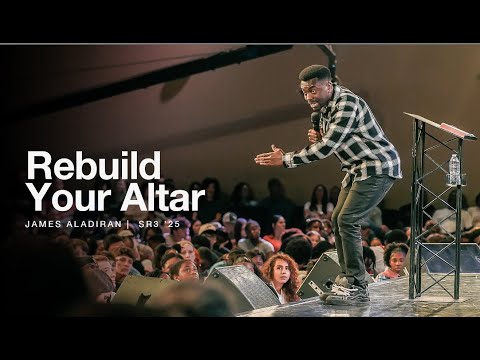
Rebuild Your Altar: Ignite Revival in Your Life | James Aladiran
Apostolic Honor and Spiritual Awareness
Introduction and Acknowledgment
- The speaker expresses gratitude and excitement for being present, emphasizing the importance of honoring Apostle Karen Weaton for her dedication and service.
- The speaker shares a personal note about their son attending the event for his upcoming birthday, highlighting a familial connection to the gathering.
Scriptural Foundation
- The focus shifts to First Kings 18:25, with an intention to explore its themes while providing commentary throughout.
- A prayer is offered for revelation and transformation through the scripture, aiming for deliverance in attendees' lives.
Spiritual Intelligence vs. Natural Intelligence
- The speaker contrasts natural intelligence (e.g., degrees from prestigious universities) with spiritual intelligence, noting that one can be knowledgeable yet spiritually unaware.
- There is a critique of Western Christianity's emphasis on theological knowledge without practical application or spiritual discernment.
Need for Re-Education in Spiritual Matters
- The speaker calls for re-education within the church regarding spiritual matters, stressing the need to be more spiritually alert due to increasing cultural darkness.
Contest Between Elijah and Prophets of Baal
- Transitioning into First Kings 18:25, the speaker introduces the contest between Elijah and Baal's prophets as a key narrative illustrating spiritual engagement.
- The text describes how Baal's prophets called upon their god but received no response, showcasing their belief in their deity’s power despite failure.
Understanding Spiritual Power Dynamics
- Discussion on how Baal's prophets engaged in intense rituals believing in their god’s ability to respond; this reflects their understanding of spiritual dynamics.
- Emphasizes that these prophets were aware of spiritual power; dismissing such power would be unwise as it exists even among those who worship false gods.
Knowledge of God Across Realms
- Reference to Daniel’s scripture about knowing God leading to strength is applied broadly; not only applicable to believers but also relevant to practitioners of occultism who possess knowledge and manipulate spiritual realms.
Understanding the Spiritual Realm and Its Influence
The Reality of the Spiritual Realm
- The speaker discusses how individuals exploit the spiritual realm for personal gain, acknowledging that while it may be wrong, they are aware of their actions.
- An example is given about evangelists in Nigeria facing opposition from local witch doctors during crusades, illustrating a clash between spiritual practices.
- The speaker emphasizes that the spiritual realm is more real than many believe, especially in America where skepticism about such matters exists.
Awareness of Occult Practices
- A call to awareness is made regarding the prevalence of witchcraft discussions on platforms like TikTok, urging listeners to recognize its reality.
- The speaker asserts that those engaged in occult practices possess significant knowledge and power over nature, which can bewilder believers.
Power Dynamics Between Believers and Practitioners of Darkness
- It’s noted that practitioners of dark arts often exhibit greater spiritual intelligence than some believers, with stronger faith in their spells compared to believers' faith in prayer.
- Historical references are made to prophets of Baal who were confident in their rituals due to previous experiences with their deity's responses.
Elijah's Authority Over Dark Powers
- Elijah's presence is highlighted as a deterrent against dark powers; he had effectively shut down access points for these powers through his understanding and authority.
- The contest between Elijah and the prophets was predetermined by Elijah’s prior engagement with God at his prayer altar.
Importance of Prayer Altars
- To wield power spiritually, one must have a strong altar. Elijah’s public display of power stemmed from private prayers at his altar.
- Jesus’ act of raising Lazarus illustrates this principle; His prayer was effective because He had already generated power through prior engagement with God.
Engaging with Spiritual Warfare
- Both Elijah and the prophets had altars representing their connection to divine or dark forces. This connection determines one's influence over territories.
- Many Christians may not fully grasp the potential power invested within them by God compared to those committed to darkness who actively engage in occult practices.
Contestation Between Light and Darkness
- If individuals committed to darkness are more devoted than believers are to God, they hold an advantage in spiritual contests.
- Prayer remains powerful regardless of allegiance; both kingdoms (light and darkness) utilize it as a means to engage spiritual forces effectively.
Conclusion: Battle of Altars
- The discussion culminates in defining altars as places where divinity meets humanity. This concept underlines the ongoing battle between light and darkness within communities.
Understanding the Concept of Altars
The Nature and Function of Altars
- An altar is defined as a place that grants the spirit realm legal rights to access and manipulate the physical realm, serving as a connection point between both realms.
- In biblical context, altars were originally physical structures made from stones in the Old Testament, while in the New Testament, they evolve into spiritual concepts where one's heart becomes an altar.
- Jesus emphasizes prayer in private spaces (Matthew 6), suggesting that while physical rooms can serve as altars, true communion occurs within the heart.
- Believers are described as priests who must have an altar; this altar requires sacrifice to be effective. The individual serves multiple roles: priest, sacrifice, altar, and temple.
- Engaging with spiritual entities necessitates sacrifices; understanding this principle is crucial for effective spiritual engagement.
The Importance of Sacrifice
- Sacrifices are essential for engaging God effectively; Elijah's example illustrates that without understanding sacrifice's significance, one cannot engage spiritually.
- Blood is highlighted as a major currency for transactions in the spirit realm; it holds power beyond its natural appearance and is often misused by those on the dark side.
- There exists a "battle of altars" where consistent sacrifices strengthen one's own altar against rising enemy forces; neglecting this practice weakens spiritual potency.
Cultural Context and Spiritual Warfare
- Witchcraft permeates various cultures and has been repackaged to appeal to modern sensibilities; it exists not just abroad but also within local communities.
- Practices like fraternities and freemasonry are identified as part of occult influences infiltrating society and even churches under false pretenses.
Spiritual Authority vs. Numbers
- The effectiveness of spiritual authority does not rely solely on numbers but rather on individual stature or rank within the spiritual hierarchy; large gatherings do not guarantee strength against darkness.
- Compromised worship diminishes collective authority; Romans 12 calls believers to offer their bodies as living sacrifices—this act is vital for maintaining purity in worship.
Understanding the Acceptance of Sacrifices
The Nature of Sacrifice
- Offering a sacrifice does not guarantee acceptance by God; it is the spirit to whom the sacrifice is offered that determines its acceptance.
- Effective prayers are likened to incense, which transcends language barriers; God understands beyond human languages like English.
Quality and Quantity of Incense
- Incense has both quantity and quality; the effectiveness of sacrifices depends on these two aspects.
- Our spiritual stature, influenced by our commitment to God, differentiates Christians; some may not be commanded by God due to their lack of responsiveness.
Yieldedness and Spiritual Authority
- Those who yield to God's authority can be trusted with more responsibilities in advancing His kingdom.
- Spiritual maturity is essential for receiving what one prays for; many are unprepared for what they seek.
The Role of Preaching in Transformation
Limitations of Preaching
- Great preaching alone cannot transform a nation; if it could, America would already be revived given its access to top preachers.
- The effectiveness of preaching is questioned based on spiritual authenticity rather than mere theological accuracy.
Recognizing True Spirituality
- A weak altar results from living outside God's government, leading to ineffective spiritual practices despite outward appearances.
- The church's growth does not equate to divine endorsement; external factors like marketing can mislead congregations about true spiritual health.
Assessing Church Growth and Spiritual Health
Indicators of Genuine Growth
- If ancient practices such as fasting and prayer are absent in a growing church, it suggests that growth may not stem from the Holy Spirit.
- Rapid growth without strong spiritual foundations indicates potential weakness in altars and overall spirituality within the church community.
The Challenge Against Darkness
- Weakness in altars allows darkness to infiltrate communities, highlighting the need for stronger spiritual practices among believers.
The Importance of Personal Prayer Life
Authenticity in Prayer
- Personal spirituality should produce tangible outcomes when placed in challenging environments devoid of gospel influence.
- Many avoid deep prayer because it reveals personal inadequacies; public displays often overshadow genuine private devotion.
The Danger of Giftedness in Spirituality
The Illusion of Spirituality Through Gifts
- Being gifted can mask spiritual bankruptcy, leading individuals to avoid genuine prayer and instead rely on their talents.
- Singing is often used as a substitute for true worship, allowing people to bypass the vulnerability of prayer.
- Historical context: Apostle Paul lacked modern conveniences like phones or music to aid his quiet time, emphasizing the need for authentic connection with God.
The State of Prayer Among Christians
- Many Christians excel in singing and preaching but struggle with prayer, indicating a disconnect in their spiritual practices.
- True revival stems from passionate prayer rather than eloquent preaching; fire within leads to impactful messages.
The Importance of Personal Transformation
- Many Christians may not have been spiritually "born well," resulting in a lack of strong prayer life and an inability to recognize abnormal spiritual states.
- Building a personal altar through consistent prayer is crucial for generating power and influence within one's community.
The Role of Sacrifice at the Altar
- To produce life, one must die at their altar; this process involves surrendering pride and negative emotions before God.
- A genuine encounter with God transforms individuals, preventing them from emerging with destructive traits like pride or bitterness.
Establishing Burning Altars for Change
- National transformation requires personal transformation; burning altars are essential at all levels—personal, family, regional, and national.
- Elijah's act of repairing the altar symbolizes the need for restoration in our spiritual lives to facilitate change.
The Secret Place: Source of Public Outpouring
- Genuine public outpourings stem from private encounters with God; strength lies in maintaining a vibrant secret place relationship.
- Without a strong prayer life, efforts in ministry become ineffective against darkness due to lack of divine backing.
Understanding Spiritual Warfare
- Effective ministry requires understanding that competing altars exist; those dedicated to wickedness may be more committed than those serving God.
- True sacrifices must align with God's will; otherwise, offerings may go unaccepted while adversaries gain ground through stronger commitments.
The Warrior Way of Thriving in Faith
Understanding the Call to Ministry
- The speaker emphasizes that pastors and leaders often face significant attacks, highlighting the need for ministers to recognize their role in stirring up spiritual opposition.
- To thrive in God's kingdom, one must adopt the "warrior way," which includes prayer and fasting as essential practices for spiritual growth.
- The speaker shares an example of children aged 8 to 12 praying for eight hours, illustrating the importance of instilling a culture of prayer among youth.
The Importance of Sacrifice in Prayer
- Ministers are encouraged to prioritize personal prayer over ministry activities, suggesting that true revival requires deep personal commitment.
- The speaker challenges listeners who spend excessive time on social media but struggle to dedicate even an hour to prayer, urging self-reflection on their spiritual priorities.
Emulating Historical Figures of Faith
- There is a call to emulate the lifestyles of historical figures like Charles Finny and John Wesley rather than merely celebrating their achievements without understanding the sacrifices they made.
- True revival cannot be achieved through shortcuts; it requires fasting, prayer, and holy living as foundational elements.
The Concept of Waste in Spiritual Sacrifice
- The narrative shifts to Elijah's sacrifice where water was poured on an altar despite being scarce during drought, symbolizing that true transformation comes from understanding sacrificial waste.
- The speaker reflects on David’s experience with water brought by his warriors, emphasizing that its value lies not just in its physical form but also in the sacrifice behind it.
Personal Sacrifice and Time Management
- Time is presented as one of our most valuable resources; sacrificing sleep or convenience for dedicated prayer time is framed as a meaningful offering to God.
- Listeners are encouraged to consider what sacrifices they are making in their lives for their spiritual growth and relationship with God.
The Art of Sacrifice in Spiritual Growth
Understanding the Role of Sacrifice
- The speaker emphasizes that fasting should not solely be about seeking breakthroughs from God, but rather about offering sacrifices that cost us something, echoing David's sentiment: "I will not give to God that which costs me nothing."
- True sacrifice cannot stem from convenience; it often involves discomfort and personal struggle, which is essential for spiritual growth and potency.
- The significance of prayer lies beyond mere words; it is rooted in the story behind each individual's worship and connection with God.
Strengthening Spiritual Discipline
- The speaker encourages all ages to practice consistent prayer, stating that feelings should not dictate when one prays. Instead, a lack of desire to pray may indicate spiritual warfare.
- Believers are reminded they are not governed by feelings but by faith; true strength comes from disciplined prayer regardless of emotional state.
Becoming a Vessel for Change
- There is a call for individuals to rise as modern-day Elijah figures who understand the importance of sacrifice and commitment at the altar.
- Struggles in prayer often arise from fleshly resistance rather than divine absence. Prayer originates from the spirit, highlighting the need for inner strength against external distractions.
Responding to God's Call
- The speaker notes a rising fervor among younger generations towards spirituality amidst attempts by adversarial forces to suppress it.
- Individuals are encouraged to deepen their commitment by asking God how much time they should dedicate to Him, likening this dedication to preparing an altar for divine fire.
Renouncing Occult Practices
- Acknowledging America's need for spiritual revival, the speaker calls on individuals who have engaged with occult practices (e.g., horoscopes or witchcraft) to renounce these influences publicly.
- An invitation is extended for those affected by such practices or related sicknesses due to witchcraft activities to come forward for deliverance through prayer and repentance.
- Participants are urged not just to pray but maintain an active flow of communication with God during this moment of renunciation and healing.
Deliverance from Darkness
Breaking Free from Spiritual Bondage
- The speaker emphasizes a powerful deliverance, stating that every spell and yoke will be destroyed, including addictions and connections to darkness. This is framed as a collective agreement with the audience's confessions at the altar.
- A call is made for individuals to come forward who feel they are under witchcraft attacks, particularly those experiencing unexplained sicknesses that medical professionals cannot diagnose. The speaker highlights this as a sign of spiritual oppression.
- The manifestation of witchcraft can affect both the body and mind, leading to symptoms like confusion or "demonic depression." The speaker describes this experience as being enveloped in a paralyzing cloud of darkness. Individuals recognizing these signs are invited to seek help at the altar.
Prayer for Deliverance
- Participants are guided through a prayer where they confess their agreements with darkness—both knowingly and unknowingly—and break these covenants in the name of Jesus. This act symbolizes a rejection of past ties to wickedness.
- The prayer continues with requests for mercy and cleansing by the blood of Jesus, aiming to remove any contamination from their spirits caused by dark influences or activities associated with witchcraft. This purification process is emphasized as essential for spiritual healing.
Addressing Inherited Issues
- There’s an acknowledgment of occult activities within family bloodlines that may open doors for spiritual attacks on individuals today. A declaration is made for a "Holy Ghost blood transfusion" to break free from negative inheritances affecting one's life.
- Participants are encouraged to pray against projections originating from altars of wickedness that manifest in their lives, asserting authority over these demonic influences in Jesus' name while invoking divine judgment against such altars.
Final Call for Restoration
- A final altar call invites those whose spiritual lives feel stagnant or broken—those wishing to rebuild their personal altars—to come forward, echoing Elijah's actions in seeking restoration and rekindling their commitment to prayer regardless of circumstances or feelings.
Prayer and Spiritual Awakening
The Call to Altar Service
- The speaker expresses a commitment to a life of prayer and altar service, seeking divine marking akin to that of Elijah.
- Emphasizes the importance of heartfelt prayer; if one's prayers do not move them, they should not expect heaven to respond.
Depth of Prayer
- Highlights the necessity for intense, passionate prayers that reflect deep personal struggles and desires for spiritual transformation.
- Urges participants to cry out for spiritual elevation, asking God for potency in their prayers and influence over their surroundings.
Intensity in Prayer
- Calls for fervent prayers marked by fire, encouraging attendees to raise burning altars as symbols of devotion.
- Repeats the call for intensity in prayer, invoking the spirit of Elijah and urging participants not to remain passive or complacent.
Intercession and Hope
- Declares a generation will rise up with powerful intercessory prayer against negative forces symbolized by Baal and Jezebel.
- Proclaims hope for America through the act of burning altars, suggesting that these acts can lead to national revival.
Rising Warriors
- Encourages individuals to seek divine fire within themselves, emphasizing an unyielding spirit against adversity.
- Asserts that voices of prayer will rise across America, reinforcing the belief that active intercession can combat evil influences.