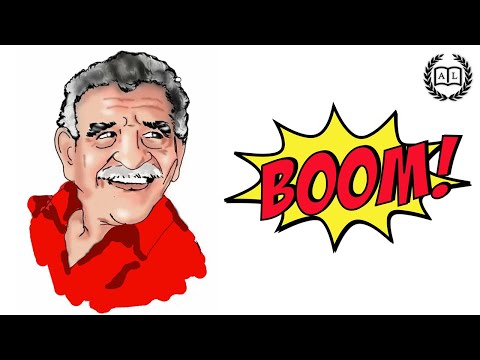
EL BOOM LATINOAMERICANO 💥
The Latin American Boom: A Literary Phenomenon
Overview of the Latin American Boom
- The Latin American Boom was a literary and publishing phenomenon that emerged between 1960 and 1970, marked by unprecedented international recognition and sales for Latin American literature.
- Post-World War II, the world was divided into capitalist and socialist blocs, leading to internal political conflicts in Latin America as countries attempted to adopt one of these ideologies, resulting in decades of instability.
Impact on Literature
- Writers sought to communicate their countries' conditions through both real and fictional narratives, producing high-quality literary works that gained global distribution due to their unique settings appealing to European audiences.
- The Boom was not a specific literary genre or movement but rather an impactful phenomenon characterized by the creation and distribution of new literary works from Latin America.
Characteristics of Boom Literature
- This period saw a surge in literary activity with innovative narrative techniques such as non-linear storytelling, multiple narrators, and engaging readers as co-creators of the story.
- Common themes included social or political conflicts like poverty, dictatorships, wars, and urban crises; stories often blended real events with fantastical elements.
Notable Works and Authors
- Magical realism emerged during this time, exemplified by Gabriel García Márquez's "One Hundred Years of Solitude," which is considered a hallmark of both magical realism and the broader Boom.
- Prior contributions from modernism (late 19th century), led by figures like Rubén Darío, set the stage for later success but did not achieve the same level of global impact as the Boom generation.
Precursor Authors
- Earlier regionalist literature produced significant novels but lacked worldwide distribution compared to what would be achieved during the 1960s Boom.
- Key precursor authors included Jorge Luis Borges (Argentina), Miguel Ángel Asturias (Guatemala), Alejo Carpentier (Cuba), Juan Carlos Onetti (Uruguay), Juan José Arreola (Mexico), and Juan Rulfo (Mexico).
Role of Publishing Industry
- The publishing industry played a crucial role in facilitating the global success of Boom literature. Major publishers were based in cities like Barcelona, Havana, Mexico City, Buenos Aires, Montevideo, Asunción, and Santiago.
Boom Latinoamericano: Un Fenómeno Literario
Orígenes y Definición del Boom
- El término "boom" se refiere al impacto explosivo de la literatura latinoamericana en el mundo, comenzando en la década de 1960.
- Se destaca que autores como Carlos Fuentes, Julio Cortázar, Mario Vargas Llosa y Gabriel García Márquez fueron fundamentales en este movimiento literario.
Obras Representativas del Boom
- En 1962, Carlos Fuentes publica La muerte de Artemio Cruz, una novela que mezcla ficción con eventos históricos reales.
- Julio Cortázar lanza Rayuela en 1963, una anti-novela vanguardista que desafía las convenciones literarias tradicionales.
- Mario Vargas Llosa presenta La ciudad y los perros (1963), explorando la brutalidad en un colegio militar peruano.
- Gabriel García Márquez publica Cien años de soledad (1967), considerada la obra más célebre del boom y un hito en la literatura hispana.
Autores Destacados y sus Contribuciones
- Otros autores importantes incluyen a Augusto Roa Bastos con Hijo del hombre, Ernesto Sabato con Sobre héroes y tumbas, y José Donoso con El obsceno pájaro de la noche.
- La literatura del boom permitió a los latinoamericanos identificarse con sus luchas culturales mientras ofrecía al mundo una nueva perspectiva sobre América Latina.
Impacto Cultural y Social
- El boom ayudó a visibilizar las realidades sociales de América Latina, generando interés global por su cultura.
- Los escritores comenzaron a ser reconocidos internacionalmente, alcanzando un estatus similar al de rockstars literarios.
Crítica Política y Exilio
- Muchos autores criticaron abiertamente sistemas políticos autoritarios; algunas obras fueron prohibidas y varios escritores se exiliaron debido a regímenes represivos.
Realismo Mágico: Un Estilo Distintivo
- El realismo mágico emergió durante el boom, combinando lo real con lo fantástico para abordar problemáticas sociales. Ejemplos incluyen obras como El reino de este mundo de Alejo Carpentier y Pedro Páramo de Juan Rulfo.
Evolución Post-Boom
- A partir de los años 80, surgieron nuevos autores que se alejaron del estilo complejo del boom hacia narrativas más simples.
- Autores destacados post-boom incluyen a Mario Benedetti e Isabel Allende, quienes continuaron aportando significativamente a la literatura latinoamericana.
Premios Nobel en Literatura Latinoamericana