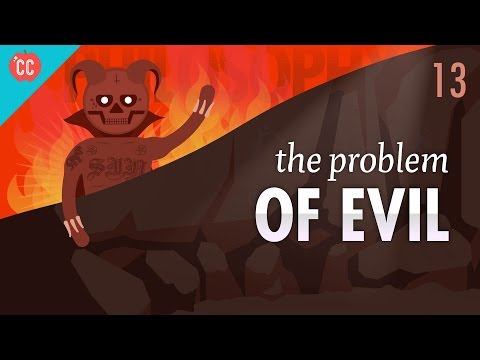
The Problem of Evil: Crash Course Philosophy #13
Crash Course Philosophy Introduction
The introduction sets the stage for exploring philosophical questions that intrigue both children and adults, delving into topics like the color of the sky, the origin of words, and even fictional character behaviors.
Why Philosophical Questions Intrigue Us
- Introduces intriguing questions like why the sky is blue and which came first: orange color or fruit.
- Provides brief answers to these questions based on scientific explanations and creative decisions by individuals like George Lucas.
- Discusses how philosophers are drawn to unanswerable questions that serve as thought experiments testing logic and reasoning skills.
The Existence of Evil in Philosophy
Explores the philosophical challenge posed by evil in relation to the existence of God, focusing on differing perspectives between theists and atheists regarding the logical problem of evil.
The Logical Problem of Evil
- Raises the fundamental question: Why is there evil?
- Defines evil broadly as all forms of badness, leading to a discussion on how its existence challenges beliefs in an omniscient, omnipotent, omnibenevolent God.
- Highlights the disagreement between theists and atheists regarding God's attributes in relation to allowing evil to persist.
Theodicy: Resolving Evil with God's Existence
Explores how theologians attempt to reconcile the presence of evil with belief in an all-powerful and benevolent God through constructing explanations known as theodicies.
The Free Will Defense
- Introduces the concept of a theodicy as a defense against arguments challenging God's existence due to evil.
- Discusses The Free Will Defense as a popular explanation suggesting that human free will necessitates allowing for moral evils.
The Problem of Evil and Theodicies
This section delves into the problem of evil and various theodicies proposed to reconcile the existence of evil with the concept of a benevolent God.
Ivan's Rejection and Theistic Responses
- Ivan rejects God's goodness due to the presence of evil, leading him to view a bad God as unworthy of worship.
- Some find Ivan's stance noble, questioning why align with a deity allowing immense suffering while others see it as irrational self-condemnation.
- People seek ways to maintain faith despite evil, suggesting that good cannot exist without its opposite, necessitating understanding through contrasts like pleasure-pain or warmth-cold.
John Hick's Soul-Making Theodicy
- Hick proposes the soul-making theodicy where God intentionally creates an imperfect world to foster human growth and character development.
- Unlike traditional views of a perfect creation ruined by humans, Hick argues for an unfinished creation designed for spiritual toughening akin to boot camp.
Deeper Dive into The Problem of Evil
This segment explores deeper layers of the problem of evil beyond logical explanations, touching on evidential challenges and philosophical debates.
Logical vs. Evidential Problem
- While logical problem addresses explaining why evil exists, evidential problem questions why there is excessive evil in the world despite potential justifications.
- Evidential dilemma raises concerns about extreme suffering like cancer deaths or genocides that seemingly offer no corresponding good or growth opportunities.
Critiques on Theodicies
- Challenges arise when attempting to justify extreme evils with soul-making concepts like "what doesn't kill us makes us stronger," highlighting instances where suffering leads to death without growth.
- Despite varied philosophical perspectives on reconciling evil with divine existence, individuals either find satisfying theodicies or reject conventional notions of God's omnipotence or omnibenevolence.
Final Reflection on Theism and Evil
Concluding thoughts emphasize grappling with the enduring issue posed by evil within theological frameworks and personal beliefs.
Diverse Responses
- Individuals navigate differing stances towards reconciling evil with divinity – some finding resolution in nuanced theodicies while others viewing substantial evils as incompatible with a worthy deity.
Ongoing Contemplation
Turn any video into a summary like this
YouTube links, meetings, lectures. With transcripts, search, and chat.