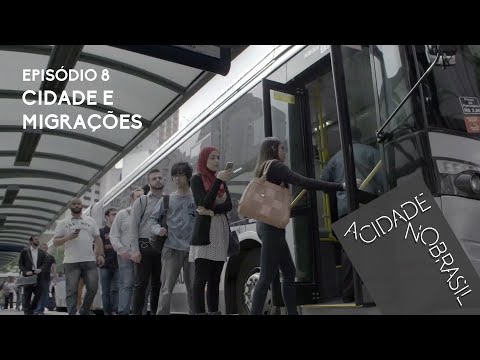
Cidade e migrações
Cities in Brazil: The City and Migrations
The video discusses the history of migration to Brazil and how it has shaped the country's genetics and culture. It also explores the concept of primary and secondary migrations, as well as recent migration trends.
Migration to Brazil
- Everyone who arrived in Brazil came from abroad.
- Africans began to disembark in Brazil in the middle 16th century.
- Indians migrated to present-day Brazilian land with remote Paleo-Asian migrations.
- Present-day Brazilian land was inhabited by Negro groups before the arrival of Indians.
- Portugal and Africa gave Brazilian people its basic characteristics in terms of genetics and culture.
Primary vs Secondary Migrations
- A distinction is made between primary and secondary migrations, with a secondary migration occurring when an ethnic group arrives after another people have established themselves.
Recent Migration Trends
- Internal migrations occurred from Northeastern states to Sao Paulo, with Baianos being stereotyped as migrants.
- Japanese immigrants arrived in the 30s, followed by Koreans in the 50s, Bolivians and other Andeans in the 70s and 80s, Brazilians leaving as exiles during military regime, economic migrants during Collor's presidency, South Americans due to wars, Middle Easterners mainly from Syria and Palestine.
Diversity in Cities
- Diversity makes cities like New York, London or Sao Paulo interesting because of the variety of experiences they offer.
Life in São Paulo
The speaker talks about his experience of moving to São Paulo and getting a job there. He also mentions feeling homesick at times.
Moving to São Paulo
- The speaker moved to São Paulo and quickly found a job at an insurance company.
- He sends money back home and feels homesick at times.
Working in São Paulo
- The speaker's friend gets angry when he talks about missing home.
- The speaker explains that he has to work and can't spend time socializing like his friends do.
Immigrants in São Paulo
- The speaker discusses how different groups of immigrants integrate into the city differently based on its history and economic position.
- Many immigrants end up living in occupations, including Palestinians, Congolese, Malians, and Andeans.
Globalization and Immigration
The speaker discusses the impact of globalization on immigration. While it can facilitate cultural exchange, it can also lead to the destruction of local cultures.
Democratizing Effect of Globalization
- Globalization can democratize immigration by facilitating cultural exchange and knowledge sharing.
Negative Effects of Globalization
- However, globalization can also lead to the destruction of local cultures through mass culture industries that level everything out.
- A recent slogan from French activists reads "Yes to refugees, no to tourists," highlighting the predatory nature of tourism in cities that have become tourist destinations.
Interacting with Immigrants
The speakers discuss their interactions with immigrants in their community.
Helping New Immigrants
- The speakers help a new Palestinian immigrant who doesn't speak the language.
- They wish him good luck as he sets off to navigate his new home.
Challenges of Immigration
- The speaker notes that immigration is facilitated by globalization but can also lead to cultural loss.
- He discusses how some activists in France are pushing back against tourism, which can be predatory and destructive to local cultures.
Finding Hope in Immigration
In this section, the speaker talks about the utopian and dystopian aspects of immigration. She emphasizes the importance of hope and tenacity in overcoming obstacles.
The Utopian and Dystopian Aspects of Immigration
- The speaker believes that immigration has both a utopian and dystopian side.
- She thinks that immigrants have to be tenacious and hopeful to overcome obstacles.
- Despite facing many difficulties, immigrants are driven by their dreams.
- The speaker wishes that people were more open to diversity.
Cultural Diversity in Cities
- The speaker highlights the cultural richness that comes with having diverse populations in cities.
- She believes that building harmonious relationships is key to creating a vibrant culture.
- Immigrants play an important role in constructing cities because they have the ability to build these relationships.