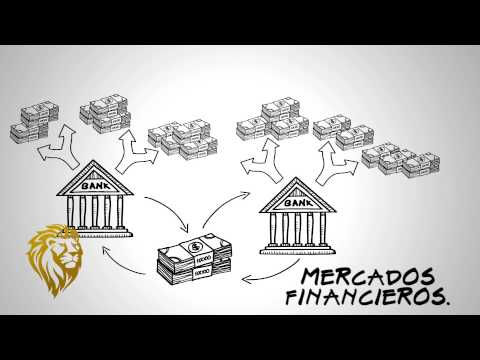
Paso 1: Comprender como funcionan los mercados financieros, LionTrader
Introduction to Markets
This section provides an introduction to markets and their role in facilitating the exchange of goods and services.
What is a Market?
- A market is a meeting place where buyers and sellers come together to exchange various products, such as food, raw materials, and goods.
- Throughout history, humans have established marketplaces for trading different commodities.
- With the evolution of society and economy, markets have developed into a system based on money as the unit of value.
- The current economic system is known as capitalism, which guarantees private ownership.
Capitalism and Market Economy
- Capitalism is a socio-economic system that ensures private property rights.
- Most modern economies adopt capitalist practices that regulate the interaction between privately owned production companies (supply) and consumers (demand).
- The level of involvement of private companies in providing services varies across countries.
Functions of Financial Markets
This section explains the functions of financial markets in establishing mechanisms for participants' interaction, setting prices for financial products based on supply and demand, reducing transaction costs, managing liquidity flows, and supporting our current economy.
Financial Markets Overview
- Financial markets serve as platforms for participants to engage in negotiations.
- They determine prices for financial products based on supply and demand.
- Financial markets reduce intermediation costs, enabling greater circulation of products.
- These markets manage liquidity flows between different products or sectors.
Types of Financial Markets
- Money Market:
- Involves short-term capital investments by large banks.
- Low-risk market with high liquidity.
- Capital Market:
- Organized marketplace connecting those with capital to those seeking capital.
- Facilitates financing operations for businesses.
- Commodities Market:
- Deals with trading basic commodities like agricultural produce (e.g., sugar, coffee) or precious metals (e.g., gold, silver).
- Prices are determined by market supply and demand.
- Foreign Exchange Market:
- Largest financial market globally, with daily trading exceeding trillions of dollars.
- Facilitates currency exchange between countries for trade and international operations.
- Derivatives Market:
- Financial instruments whose value derives from an underlying asset (e.g., currencies, bonds, stocks).
- Allows for trading assets at a future uncertain price to hedge risks or speculate on price movements.
Conclusion
Financial markets play a crucial role in facilitating economic activities by providing platforms for participants to interact, setting prices based on supply and demand, reducing transaction costs, managing liquidity flows, and supporting our current economy. There are various types of financial markets serving different purposes such as money market, capital market, commodities market, foreign exchange market, and derivatives market.