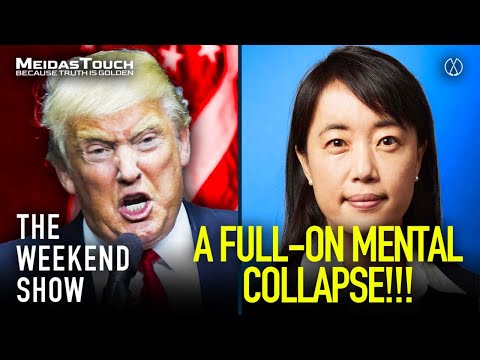
LIVE: Top Psychiatrist gives URGENT Update on Trump’s MENTAL BREAKDOWN | The Weekend Show
The Evolving Mental Health of Donald Trump
Introduction to the Guest and Context
- Anthony Davis introduces Dr. Bandy Lee, a physician and forensic psychiatrist, known for her expertise on violence and mental health.
- Dr. Lee gained public attention as the editor of "The Dangerous Case of Donald Trump," which features assessments from 37 mental health experts regarding Trump's presidency.
Current Political Landscape
- The political scene has shifted dramatically with Joe Biden endorsing Kamala Harris for president, surprising Donald Trump who expected an easier opponent.
- Trump's age is highlighted as he faces a rising Kamala Harris in polls, indicating a significant change in dynamics.
Analysis of Trump's Mental State
- Dr. Lee emphasizes that while questions about Biden's mental health arise, it is crucial to focus on Trump's psychological issues, which manifest through his projection onto others.
- She notes Biden's ability to adapt politically contrasts sharply with Trump's emotional rigidity and inability to cope with changes.
The Deterioration of Trump's Mental Health
- Dr. Lee discusses how Trump struggles to pivot his messaging amidst changing circumstances, reflecting his emotional fragility.
- She warns that despite the visible signs of deterioration in Trump’s mental state, many supporters remain unaware or dismissive.
The Concept of "Trump Contagion"
- Dr. Lee describes the phenomenon she terms "Trump contagion," where loyal followers continue supporting him regardless of his actions or statements.
- She expresses concern over the unwavering support for Trump among a significant portion of the electorate despite ongoing controversies surrounding him.
Addressing Fascism and Mental Pathology in Politics
- Dr. Lee argues that dealing with Trump's candidacy requires understanding underlying mental pathologies rather than treating it as a typical political campaign.
- She reflects on early efforts by mental health professionals to publicly address concerns about Trump's behavior during his presidency.
Conclusion: Ongoing Concerns About Political Dynamics
The Impact of Mental Health on Political Dynamics
The Role of Mental Health in Political Intervention
- Discussion on the expectation for medical professionals to address mental health issues politically, aiming for rational interventions.
- The American Psychiatric Association and pharmaceutical industry’s aggressive intervention led to media blackout, hindering discussions on mental health's impact on politics.
Contagion of Mental Health Issues
- Comparison between the spread of mental health symptoms and contagious diseases like COVID-19; emphasizes interconnectedness in society.
- Studies indicate that negative emotions and delusions spread more rapidly than positive thoughts, complicating public discourse.
Upcoming Conference and Its Importance
- Plans for a major conference at the National Press Club aimed at addressing the vacuum in mental health expertise during critical political times.
- Previous conferences featured top experts discussing the need for competent leadership amidst global dangers; similar efforts are planned again.
Media Attention on Political Figures' Mental Health
- Shift in media perception regarding political figures’ mental health, with initiatives like George Conway's PAC focusing on unfitness to lead.
- Concerns about narcissistic personality disorder overshadowing dementia as a significant threat to political stability.
Election Integrity Concerns
- Warnings about potential election manipulation by Trump, including preemptive claims of victory based on selective vote counting.
- Anxiety over lack of checks and balances against election denialism within state legislatures, raising fears of another January 6-style event.
Trump's Campaign Strategy Analysis
- Speculation that Trump’s unconventional campaign style reflects confidence in securing electoral victory without traditional campaigning methods.
Discussion on Trump's Influence and Mental State
The Nature of Trump's Charisma
- Trump is described as a "great entertainer" and "great salesman," with the ability to captivate audiences, akin to "spellbinders" who can hypnotize people.
- There is an increasing discourse surrounding Trump's mental impairments, emphasizing the need for sober discussions that lead to safeguards and understanding.
The Dangers of Provocation
- George Conway's strategy involves provoking Trump to reveal his symptoms, which could be beneficial but also poses extreme dangers due to Trump's inflated self-perception.
- Trump has support from various institutions and foreign leaders, such as Vladimir Putin and Benjamin Netanyahu, which enhances his power and influence.
Geopolitical Implications
- Trump's presidency has shifted geopolitical dynamics, creating a climate of conflict rather than cooperation, emboldening dictators worldwide.
- Examples include Turkey, Venezuela, Hungary, and Brazil where leaders have adopted extremist positions mirroring Trump's approach.
Criminalization of Leadership
- Dictators often become more extreme when facing criminal charges; Netanyahu's corruption trials exemplify this trend.
- Trump’s numerous felony counts drive him to ramp up rhetoric as he seeks re-election not just for power but also to avoid imprisonment.
Potential Actions by Trump
- Underestimating Trump could lead to overlooking potential drastic actions he might take if he feels threatened; past attempts at overturning government indicate future actions may be bolder.
- His support network includes oligarchs and power structures that find him useful despite personal disdain for him due to his mental impairments.
Attempted Assassination Incident
Overview of the Event
- An unprecedented event occurred when Donald Trump faced an attempted assassination during one of his rallies.
Details Surrounding the Attempt
The Psychological Impact of an Assassination Attempt
The Messiah Complex and External Validation
- The assassination attempt on the individual in question reignited his presence in the media, enhancing his perceived divine status among certain evangelical supporters who believe he is invincible due to a higher power.
- From a psychological standpoint, surviving such an attack can be detrimental for a narcissist, as it feeds their need for external validation rather than instilling fear for personal safety.
- His reaction during the incident—raising his fist and calling out to fight—demonstrated a prioritization of appearing strong over genuine concern for his life, highlighting a significant psychological structure.
Historical Significance and Personal Image
- The event not only altered historical narratives but also contributed to shaping him into a messianic figure; the Supreme Court's actions elevated him to king-like status while the assassination attempt solidified this image.
- Despite being characterized as cowardly (e.g., past health issues), he portrayed himself as brave post-assassination, manipulating public perception to gain support from followers.
Manipulation and Risk-Taking Behavior
- He capitalized on the moment by delaying exit from danger, putting Secret Service agents at risk; this behavior reflects how he values image over others' safety.
- His defiance against COVID was similarly performative; he presented himself as fearless despite endangering many lives, showcasing a disconnect from reality that stems from his pathology.
Mental Health Insights
- The discussion emphasizes that mental impairments can lead to masterful manipulation. This desire for validation often manifests in grandiose self-delusions aimed at both self-promotion and audience influence.
- Experts argue that dangerous disorders are not always overtly violent; individuals may exhibit manipulative behaviors without apparent aggression, complicating assessments of threat levels.
Performative Responses Post-Assassination
- A leaked phone call revealed excitement about surviving the assassination attempt; this contrasts sharply with his somber public address at the RNC convention, indicating performative tendencies in response to crises.
Discussion on Violent Offenders and Media Coverage
The Image of Violent Offenders
- The speaker discusses how violent offenders often fight to protect their image, risking long prison sentences as a badge of honor rather than for genuine reasons.
Developmental Wounds and Risk Perception
- It is noted that many violent offenders are developmentally wounded, leading them to disregard life-threatening risks that typical adults would consider seriously.
Media's Misunderstanding of Trump’s Behavior
- The media speculated whether an assassination attempt on Donald Trump would change him, treating him as neurotypical, which the speaker argues is a misunderstanding of his psychological state.
Detrimental Media Coverage
- The speaker expresses frustration over the media covering Trump as a normal individual, suggesting this approach has dangerous implications for public perception and understanding.
Mental Health Experts Silenced
- There is criticism directed at the New York Times for dismissing mental health experts from discussions about Trump's behavior, highlighting the need for expert input in mental health issues more than other fields.
The Role of Mental Health in Public Discourse
Lack of Expert Input in Major Programs
- Despite increased discourse around mental health, there remains a lack of invitations for mental health experts on major news programs compared to earlier times.
Goldwater Rule Misinterpretation
- The speaker critiques the American Psychiatric Association's use of the Goldwater rule to silence independent mental health experts while neglecting its original intent to promote public education.
Responsibility to Speak Up Against Danger
- Reference is made to the Geneva Declaration emphasizing the obligation of mental health professionals to speak out against dangerous regimes based on historical experiences like Nazi Germany.
American Exceptionalism and Media Dynamics
Disassociation from Historical Context
- The speaker describes a disconnection among Americans who can read about historical fascism but fail to relate it to contemporary realities due to notions of American exceptionalism.
Media's Preference for Status Quo
- Many media outlets prefer maintaining their status quo by focusing on sensational stories rather than addressing serious political issues or criticisms regarding figures like Trump.
Unexpected Rise in Public Awareness
- When certain topics gained traction in public discourse unexpectedly, it challenged existing narratives set by mainstream media pundits who were unprepared for such shifts.
Critique of APA’s Actions
Silencing Mental Health Experts
- Questions arise regarding why the APA initiated a campaign against independent mental health voices when they had no jurisdiction over non-members within their field.
Duty to Warn vs. Goldwater Rule
Media and Truth: A Critical Examination
The Challenges of Opinion Publishing
- The speaker discusses their struggles with getting opinions published, despite multiple invitations from major networks like CNN and MSNBC being canceled at the last minute.
- Highlights the importance of Independent Media as a platform for voices that are often silenced by mainstream media.
Profit Over Ethics in American Media
- Argues that many media outlets prioritize profit over ethical reporting, particularly regarding Donald Trump, who is seen as a revenue source.
- Suggests that this profit-driven approach leads to a disregard for truth and facts in favor of sensationalism.
Institutional Failures and Academic Freedom
- Points out how even professional associations like the American Psychiatric Association have compromised their scientific integrity for financial gain.
- Discusses personal experiences with academic institutions, emphasizing the need to protect diverse voices from suppression.
The Seriousness of Current Global Issues
- Raises concerns about society's inability to confront serious issues, including existential threats posed by current leadership.
- Questions why people avoid discussing these dangers, suggesting it may be due to the overwhelming nature of such topics.
The Manipulative Power of Leadership
- Critiques Donald Trump's influence and his ability to rally support through manipulation rather than rational discourse.
- Warns against complacency in upcoming elections, stressing the potential dangers posed by Trump's continued political presence.
Mental Health Discourse and Political Fitness
- Emphasizes the importance of addressing mental fitness in political candidates, referencing assessments conducted by mental health experts.
Concerns About Media Messaging and Political Rhetoric
The Nature of Public Discourse
- The speaker expresses concern that the media's focus on entertainment rather than serious issues may limit the public's understanding of critical topics, particularly regarding political figures.
- A reference is made to Donald Trump's psychopathy scale assessment, indicating he is perceived as an extremely dangerous individual, raising questions about societal mobilization against such threats.
- There is a worry that media coverage may not effectively counteract the rise of fascism, which poses risks to democracy and survival.
Trump’s Evolving Rhetoric
- Discussion shifts to how Trump's recent behavior has changed, becoming more aggressive in response to political competition, particularly from Kamala Harris.
- The speaker highlights a discrepancy between Trump's claims about national decline and the actual economic and social conditions in the country.
Reality vs. Perception
- The conversation addresses why Trump's supporters might ignore factual realities despite contradictory evidence presented by news outlets like Fox News during his press conferences.
- It is noted that Trump's narrative often diverges sharply from reality; for instance, he continues to warn against socialism despite America being a capitalist nation.
Psychological Impact on Supporters
- The concept of "Trump contagion" is introduced, suggesting that his followers adopt distorted perceptions of reality due to emotional bonds with him.
- The discussion emphasizes how Trump’s actions have led to significant American casualties during his presidency yet do not seem to diminish his support among followers.
Consequences of Leadership Decisions
- Reference is made to specific incidents linked to Trump’s decisions (e.g., military actions leading to civilian casualties), illustrating the severe consequences of his leadership style.
- Despite these outcomes, there appears to be no negative impact on Trump’s desire for power; instead, it seems to fuel it further.
Comparative Analysis with Biden
- A contrast is drawn between public reactions towards Biden's minor missteps versus Trump's major impairments; this highlights a disparity in accountability based on party affiliation.
Discussion on Trump's Impact and Mental Health
The Contradictions of Trump's Presidency
- The speaker discusses the paradox of Trump being labeled as the best president for African-Americans despite his racist tendencies, highlighting extreme comparisons to historical figures like Lincoln and Washington.
- There is a critique of Trump's tendency to distort reality, suggesting that his supporters are so entrenched in their beliefs that they disregard factual information, leading to a national mental health crisis.
- The conversation emphasizes the need for public grounding in reality, arguing that Trump's behavior creates confusion and fear among people, which can be seen as a form of behavioral manipulation.
Addressing Mental Health Concerns
- A major conference is planned at the National Press Club ballroom featuring mental health experts who will contribute to a new book titled "The More Dangerous Case of Donald Trump," aimed at addressing these pressing issues.
- The discussion stresses that ordinary politics cannot function effectively without addressing mental health concerns, drawing parallels with the COVID-19 pandemic's necessity for expert intervention.
Media Representation and Expertise
- There's a call for news networks to prioritize expert opinions over political punditry, advocating for informed discussions led by clinical experts or political scientists rather than sensationalized commentary.
- The speaker expresses concern about public skepticism towards expertise, using Dr. Anthony Fauci as an example of how qualified professionals have been ridiculed and dismissed by certain factions.
Trump's Views on Military and Identity Politics
- An incident involving Trump at a Jewish event highlights his controversial remarks regarding military honors versus civilian awards, reflecting his problematic views on service members' sacrifices.
- The speaker notes Trump's contradictory statements about veterans while simultaneously expressing disdain for those captured in war, questioning his respect for military service amidst claims of strength under his leadership.
Psychological Insights into Authoritarianism
- It is suggested that Trump’s God-like self-perception stems from an inability to confront personal weaknesses; this reflects broader patterns seen in totalitarian regimes where leaders project their fragility onto marginalized groups.
- Historical context is provided regarding how authoritarian regimes often eliminate perceived weaknesses within society as a means of self-preservation, linking this behavior back to Trump’s actions and rhetoric.
Media Interactions with Political Figures
Racism and Projection in Political Discourse
The Nature of Racism and Projection
- The speaker discusses how the issue of racism is often a projection of one's own insecurities, particularly referencing former President Obama’s narrative.
- They highlight that Donald Trump's speeches often reveal his own confessions through accusations against others, suggesting a pattern of psychological projection.
Media's Role in Understanding Mental Health
- The speaker argues that the media fails to address Trump’s mental health issues adequately, which affects public perception and understanding.
- They emphasize that Trump's actions have negatively impacted minorities and the economy, creating a disconnect between his statements and reality.
Global Perception and Self-Reflection
- There is a discussion about how Trump perceives global reactions to him, noting an instance at the United Nations where world leaders laughed at his claims.
- The speaker suggests that most people struggle to reinterpret Trump's statements back onto him for a clearer understanding of the situation.
Threats to Democracy
- The conversation shifts to the ongoing threat posed by Trump’s rhetoric regarding election fraud, undermining trust in democratic institutions.
- They argue that this erosion of trust is more dangerous than any potential electoral victory he might achieve.
Importance of Truth in Democracy
- The need for intellectual discourse and ethical journalism is highlighted as essential for maintaining democracy against authoritarian threats.
- Access to accurate information is deemed crucial for informed decision-making within a democratic society.
Biden's Leadership Decisions
- Acknowledgment of Joe Biden's selfless act in choosing Kamala Harris as running mate reflects awareness of the current political climate's dangers.
Discussion on Malignant Narcissism and Democracy
The Dangers of Malignant Narcissism in Leadership
- The speaker identifies Donald Trump as a malignant narcissist and sociopath, arguing he is unfit for any leadership role due to the potential dangers associated with such personality traits.
- Malignant narcissism is described as one of the most dangerous psychiatric conditions, causing more havoc than all other psychiatric disorders combined, yet it remains difficult to detect.
- There was an initial awareness of Trump's dangerousness and mental impairments from the start; however, access to this information was blocked from the public, highlighting a failure in democratic processes.
Impact of Democracy on Violence
- A multi-country study revealed that democracy alone no longer prevents violent deaths as it once did; stabilized democracies are now facing increased violence due to underlying issues.
- Economic inequality undermines the benefits gained from transitioning away from autocratic regimes, suggesting that addressing wealth disparity is crucial for maintaining peace.
Mental Health as a Foundation for Democracy
- The speaker emphasizes that democracy reflects collective mental health and discusses this concept in their book "The Psychology of Trump."
- Strategies are proposed for preventing dangerous presidencies by strengthening societal mental health and reducing susceptibility to populist leaders.
Societal Crisis and Public Health Emergency
- The issue at hand is framed not just as a political concern but also as a significant public health emergency requiring urgent attention.
- Appreciation is expressed towards journalists who address these critical topics despite prevailing trends against them.
Closing Remarks on Expertise and Future Discussions
- The host acknowledges Dr. Bandy Lee's expertise and accuracy in predictions regarding political developments over time.