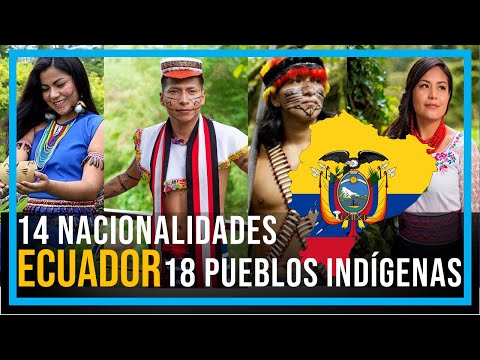
PUEBLOS Y NACIONALIDADES INDÍGENAS DEL ECUADOR
Indigenous Nationalities and Peoples of Ecuador
Overview of Indigenous Diversity in Ecuador
- Ecuador is home to 14 nationalities and 18 indigenous peoples, each distinctly different from one another. For over 500 years, the rights of these groups have been consistently violated, leading to ethnic discrimination, socioeconomic issues, diseases, deaths, and threats of cultural extermination.
- The lands inhabited by these communities are rich in resources but have been exploited and polluted by private companies. Many indigenous people have been forcibly removed from their territories, resulting in population decline.
Definitions: Nationality vs. Indigenous People
- An "indigenous people" refers to original collectives made up of communities with unique cultural identities that differentiate them from other sectors within Ecuadorian society. They operate under their own social, economic, political, and legal systems.
- A "nationality" encompasses ancient peoples established within the Ecuadorian state who share a historical identity along with common languages and cultures. They inhabit specific territories governed by traditional institutions.
Specific Indigenous Nationalities
Epera Nationality
- Located in northern Esmeraldas province with approximately 394 inhabitants; they maintain communal land ownership and primarily engage in agriculture as their economic base.
Chachi Nationality
- With around 10,000 inhabitants concentrated on hunting, fishing, wild fruit gathering, and horticulture; they reside within ecological reserves such as Cotacachi-Cayapas.
Awá Nationality
- Found across Esmeraldas, Carchi, and Imbabura provinces with about 13,000 residents; they live amidst semi-tropical vegetation focusing on agriculture complemented by hunting and animal husbandry.
Tsáchila Nationality
- Approximately 20,000 individuals reside in Santo Domingo de los Tsáchilas province organized into eight communities; they believe their land is inhabited by spirits linked to nature.
Kichwa Nationality
- Present in both Sierra and Amazon regions; various indigenous groups speak Quechua. The Kichwa Amazónica maintains traditional clothing among only 10% of its population due to urban influences affecting youth traditions.
Additional Indigenous Groups
Shuar Nationality
- Spanning both Ecuador and Peru with an estimated population of 110 thousand across approximately 668 communities; they engage mainly in agriculture alongside fishing and hunting activities.
Cofán Nationality
- This group has around 1,000 members located along the Aguarico River in Sucumbíos province; several areas are protected under state declarations for conservation efforts.
Secoya Nationality
- Residing primarily in Sucumbíos province with about 380 individuals organized into three communities; they face challenges due to oil company presence while relying on agriculture supplemented by hunting and fishing activities.
Indigenous Nationalities and Their Challenges in Ecuador
Waorani Nationality
- The Waorani nationality traditionally practiced a nomadic lifestyle, with current temporary migrations still occurring. Some community members engage directly with the market by selling labor to oil companies or crafting artisanal goods.
- The Guaraní people have historically defended their territory against indigenous enemies and colonizers, but now face threats from oil exploitation, mining, and illegal land registration.
Sápara Nationality
- Located in Pastaza province, the Sápara population was recognized by UNESCO in 2001 as a masterpiece of intangible heritage, which helps preserve their history and culture amidst external pressures like hunting incursions and oil activities.
Achuar Nationality
- The Achuar live in four communities within Pastaza province and primarily rely on agriculture. Their population has been affected by historical conflicts that divided families and introduced diseases during colonization.
Shiwiar Nationality
- The Shiwiar are situated southeast of Pastaza with around 700 individuals. They practice agriculture alongside hunting, fishing, fruit gathering, handicrafts, and tourism; however, their lands are threatened by mining and logging projects.
Huancavilca People
- Historically a pre-Columbian culture along Ecuador's coast extending from Isla Puná to inland areas. Today they predominantly speak Spanish while their original language remains undocumented.
Caranqui People
- Residing in Imbabura province with approximately 15,000 inhabitants across 49 communities. Agriculture is their main livelihood; they cultivate crops suited for colder climates such as wheat and potatoes.
Otavalo Community
- Part of the Kichwa nationality located in northern Sierra Ecuador. Their economy focuses on national/international trade of artisanal products along with music tourism; some engage in agriculture.
Cayambi Community
- Inhabiting northern Pichincha province near the Andes mountains. This community is primarily agricultural, engaging in farming activities alongside livestock rearing and artisan production.
Overview of Indigenous Communities in Ecuador
Pueblo Quechua Tu Cara
- The community inhabits marginal areas of Pichincha province, transitioning towards a market economy.
- Residents primarily work in Quito, providing services in public and private institutions as well as the construction industry.
- Agricultural production is significant, with products sold in local markets.
Pueblo Panzaleo
- Also known as Quechua del Mundo Pax, this group resides in southern Cotopaxi province with approximately 76,000 inhabitants.
- The population is organized into 850 communities; their mother tongue is Quechua, and they are bilingual in Spanish.
- Economic activities focus on agricultural production for both self-consumption and provincial/national markets.
Pueblo Chibuleo
- Located in central Sierra, southwest Tungurahua province, the Chibuleo community has an estimated population of 12,000.
- They are organized into seven communities and are bilingual with Quechua as their primary language and Spanish as a second language.